Surfer's Eye: What It Is, Why It Happens, and How to Treat It
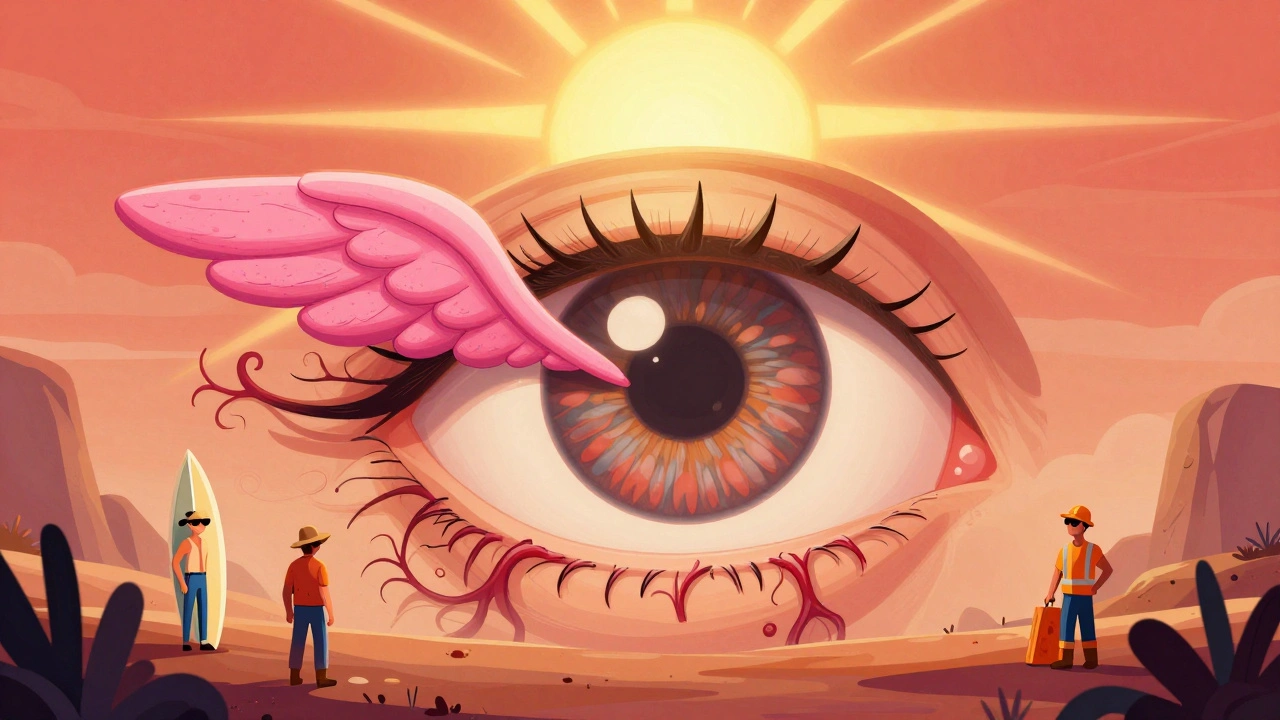
When you spend a lot of time outdoors—especially near water, sand, or snow—you’re exposing your eyes to more than just glare. Surfer's eye, a noncancerous growth on the white of the eye caused by long-term UV exposure. Also known as pterygium, it can start as a small bump and slowly creep toward the pupil, making your eye look red, irritated, or even distorted. It’s not just for surfers. Anyone who spends hours outside without proper eye protection—fishermen, farmers, construction workers, or even weekend hikers—is at risk.
This isn’t just a cosmetic issue. A growing pterygium, a fleshy tissue that forms on the conjunctiva and can extend onto the cornea can change how light enters your eye, causing blurred vision or astigmatism. In severe cases, it can block your vision entirely. And while it’s not cancer, it can feel like a constant foreign object in your eye—gritty, dry, and annoying. The good news? Most cases don’t need surgery. Simple steps like wearing UV-blocking sunglasses and a wide-brimmed hat can stop it from getting worse. Even if it’s already there, lubricating eye drops and avoiding wind and dust can ease discomfort.
What makes surfer’s eye tricky is that it develops slowly. You might not notice it until it’s already grown. That’s why regular eye checks matter, especially if you live in a sunny climate. And if you’ve had it before, it can come back—even after removal. That’s why prevention isn’t optional. Look for sunglasses labeled UV400 or 100% UV protection. Wraparound styles work best because they block light from the sides. Don’t assume cloudy days are safe—up to 80% of UV rays penetrate clouds.
You’ll find real stories and practical advice in the posts below. Some explain how people managed surfer’s eye without surgery. Others break down the best sunglasses for outdoor work. There’s also info on what happens during removal, how to reduce swelling after surgery, and why some people get it twice. You’ll learn what actually helps—like artificial tears and protective gear—and what doesn’t, like cheap UV sunglasses that give false confidence. Whether you’re just noticing a red spot on your eye or you’ve been told you have a pterygium, this collection gives you clear, no-fluff guidance on what to do next.
Pterygium: How Sun Exposure Causes Eye Growth and What Surgery Can Do
Pterygium is a sun-induced eye growth that can blur vision. Learn how UV exposure causes it, what surgery options exist, and how to prevent it before it affects your sight.
read more