Managing Postpartum Pain Without Stopping Breastfeeding
You just gave birth. Your body is healing-maybe from a vaginal tear, episiotomy, or C-section. You’re exhausted. And now you’re told you need pain relief, but you’re also determined to breastfeed. The last thing you want is to choose between feeling better and giving your baby the best start possible. The good news? You don’t have to. Most pain medications are safe while breastfeeding, but not all. Knowing which ones to take-and which ones to avoid-can make all the difference.
First-Line Choices: Acetaminophen and Ibuprofen
When it comes to postpartum pain, acetaminophen (Tylenol) and ibuprofen (Advil, Motrin) are the clear first choices. Both pass into breast milk in tiny amounts-less than 1% of your dose-and there’s no evidence they harm babies when used as directed.
Acetaminophen reaches peak levels in breast milk about 1 to 2 hours after you take it. Ibuprofen peaks around the same time. Neither builds up in your baby’s system. Studies show babies who are breastfed by mothers taking these medications show no changes in behavior, feeding, or development.
Doctors in Australia, the U.S., and the U.K. all agree: start here. For the first 24 hours after a C-section, some hospitals even give moms Toradol (ketorolac) via IV instead of oral pills. But once you’re home, stick with acetaminophen and ibuprofen. You can alternate them every 3 hours for steady pain control without doubling up on one drug. That’s the smart way to stay comfortable without overmedicating.
Opioids: Use Only When Necessary-and Only the Right Ones
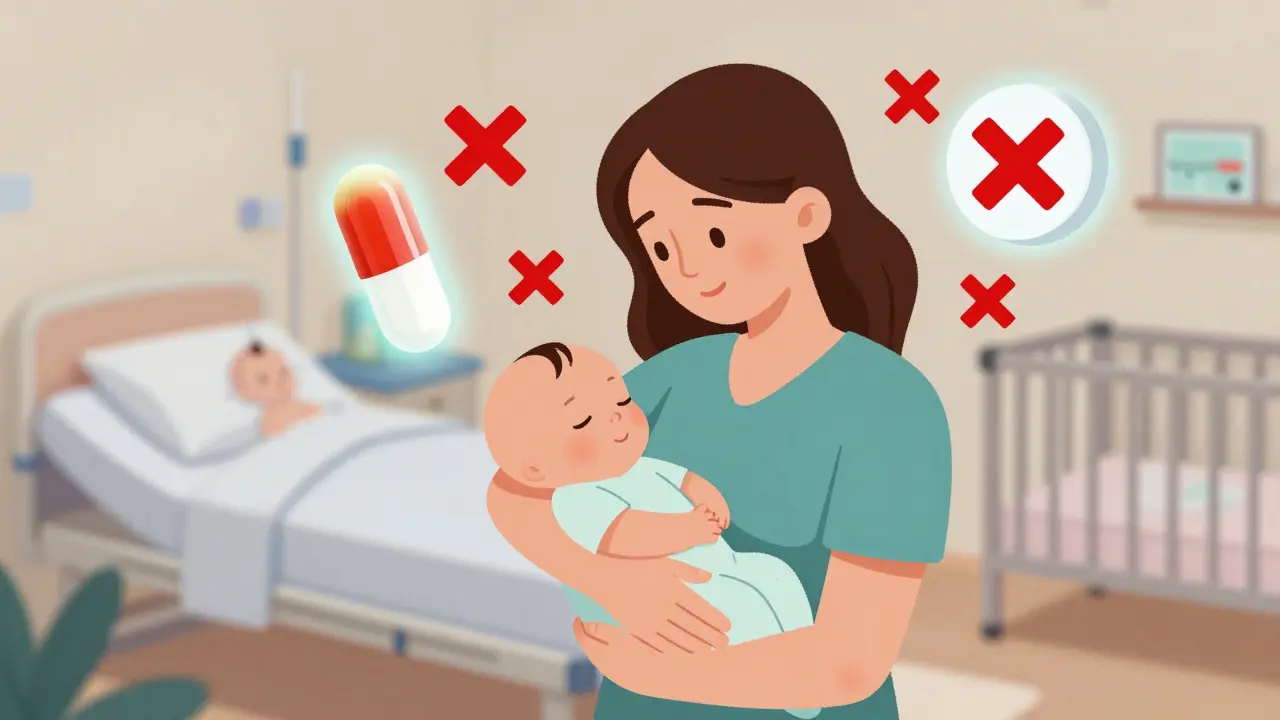
If acetaminophen and ibuprofen aren’t enough, you might need something stronger. But not all opioids are created equal. Codeine and tramadol are off-limits. The FDA banned their use in breastfeeding mothers after multiple infant deaths linked to these drugs.
Why? Some women are ultra-rapid metabolizers. That means their bodies turn codeine into morphine-or tramadol into its active form-much faster than normal. One in 100 Caucasian women is like this. You won’t know unless you get tested. And even if you’re not, the risk is too high. Infants exposed to extra morphine through breast milk can become dangerously sleepy, struggle to breastfeed, or stop breathing.
Instead, if you need an opioid, morphine is the safest option. It doesn’t cross into breast milk easily, and even when it does, babies absorb less than 1% of it through their gut. That’s why hospitals often use morphine for C-section patients who need stronger pain relief. Oxycodone is also considered moderately safe, but it carries a warning: it can cause drowsiness in babies. Use it only for breakthrough pain, not as a regular schedule.
Hydrocodone, fentanyl, and hydromorphone are also options-but only for short-term use. The goal is to get off opioids within 4 to 6 days. Long-term use increases the chance of your baby developing tolerance or withdrawal symptoms.
Timing Matters: When to Take Medication
It’s not just about which drug you take. It’s when you take it.
If you’re on an opioid, take it right after you breastfeed. That gives your body time to process the medication before the next feeding. Peak levels in your milk happen 1 to 2 hours after you swallow the pill. So if you feed at 8 p.m., take your pain pill at 9 p.m. Your next feed won’t be until 11 p.m. or midnight-by then, most of the drug has cleared from your system.
For acetaminophen and ibuprofen, timing isn’t as critical. You can take them before or after feeding. But if you’re mixing opioids with these, stick to the schedule: pain meds after feeding, feed again when baby is hungry. This keeps your baby’s exposure as low as possible.
What to Watch For in Your Baby
Even with safe medications, you need to keep an eye on your baby. Signs of trouble include:
- Excessive sleepiness-hard to wake for feeds
- Poor latch or weak suck
- Slow or shallow breathing
- Constipation or reduced pooping
- Unusual fussiness or limpness
If you notice any of these, especially after starting a new pain med, stop the medication and call your doctor. Don’t wait. Infants under two months are especially vulnerable because their livers can’t process drugs as well as older babies.
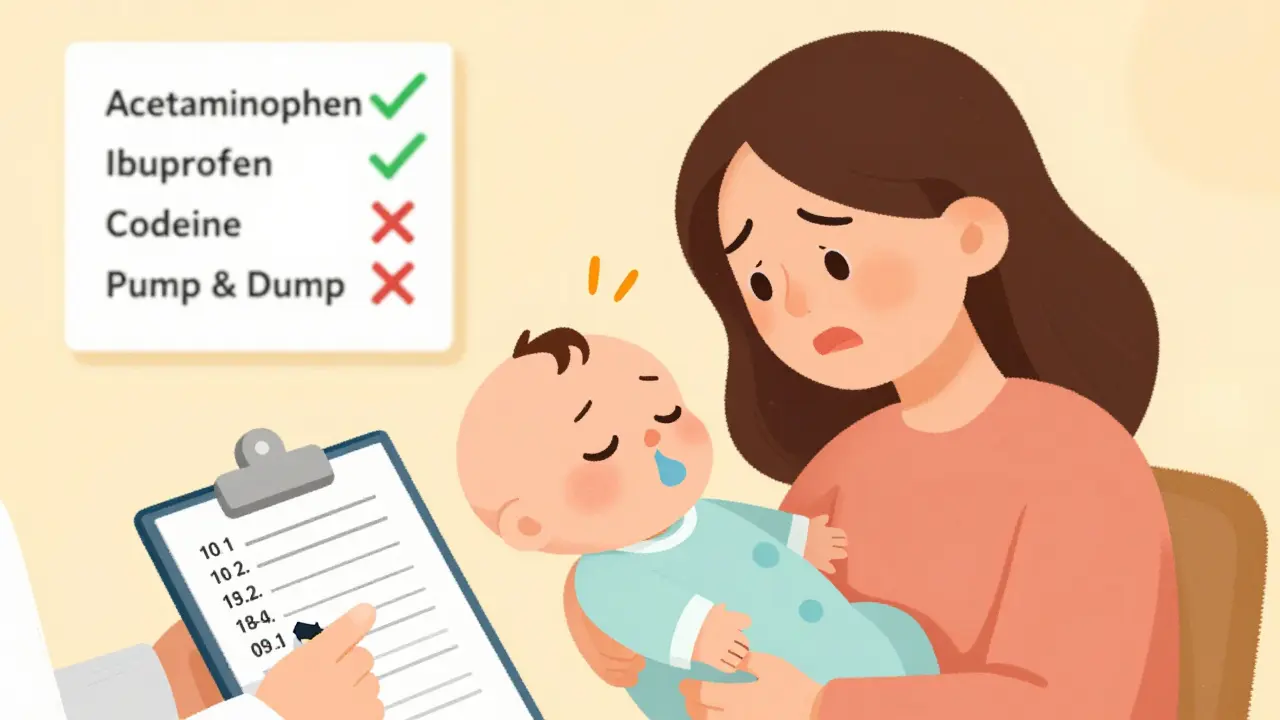
Keep a log: note the time you took your medication, when you fed, and how your baby acted afterward. This helps your doctor spot patterns quickly.
Medications to Avoid Completely
Some painkillers are just too risky. Avoid these while breastfeeding:
- Codeine-FDA warning: breastfeeding is not recommended
- Tramadol-same warning, same danger
- Naproxen-can build up in milk over time, especially in newborns
- Indomethacin-linked to kidney issues and bleeding in premature babies
Even if you’ve used naproxen before without problems, it’s not safe for newborns. The concentration in breast milk can hit 1.5-2% of your dose after 24 hours. That’s too high for a tiny baby’s system.
And forget the old advice to “pump and dump” after anesthesia or pain meds. That’s outdated. The Academy of Breastfeeding Medicine updated its guidelines in 2021 after reviewing 15 years of data. Most medications don’t accumulate in milk. You don’t need to throw away your milk. Keep feeding. Your baby benefits more from your milk than they’re at risk from the tiny amount of medicine in it.
What About Herbal or Over-the-Counter Remedies?
Just because something is “natural” doesn’t mean it’s safe. Many herbal pain relievers-like willow bark (natural aspirin), devil’s claw, or turmeric supplements-have no safety data for breastfeeding. Some can reduce milk supply or cause allergic reactions in babies.
Stick to the proven: acetaminophen, ibuprofen, and-when absolutely needed-morphine or oxycodone. Don’t mix in supplements unless your doctor or lactation consultant says it’s okay.
When to Call Your Doctor
You don’t have to manage this alone. Call your provider if:
- Your pain isn’t improving after 3-4 days of acetaminophen and ibuprofen
- You’re needing opioids more than twice a day
- Your baby seems unusually sleepy, weak, or is feeding less
- You’re considering any new medication, even a cold pill or muscle relaxant
Your doctor can adjust your plan. Maybe you need physical therapy for pelvic pain. Maybe you need a different opioid dose. Or maybe you need help with breastfeeding positioning to reduce strain. There are options. You just need to speak up.
The Bottom Line
You can manage postpartum pain and still breastfeed. Start with acetaminophen and ibuprofen. Avoid codeine and tramadol at all costs. Use opioids only if needed, and only morphine or oxycodone. Time your doses after feeds. Watch your baby closely. And don’t let outdated advice scare you away from breastfeeding.
Breastfeeding is powerful medicine for your baby. And with the right pain plan, you can heal without giving it up.
Can I take ibuprofen while breastfeeding?
Yes, ibuprofen is one of the safest pain relievers for breastfeeding mothers. Only about 0.6-0.7% of your dose passes into breast milk, and it doesn’t build up in your baby’s system. It’s recommended as a first-line option by the American College of Obstetricians and Gynecologists and the Academy of Breastfeeding Medicine.
Is acetaminophen safe for breastfeeding moms?
Yes, acetaminophen is considered safe and is often the first choice for postpartum pain. Less than 1% of your dose enters breast milk, and no adverse effects have been linked to its use in nursing infants. It’s safe to take every 4-6 hours as needed.
Why is codeine dangerous while breastfeeding?
Codeine is converted by the body into morphine. Some women are ultra-rapid metabolizers and turn codeine into morphine much faster than normal. This can lead to dangerously high levels of morphine in breast milk, causing infants to become overly sleepy, have trouble breathing, or even stop breathing. The FDA has issued strong warnings against codeine use during breastfeeding because these risks can’t be predicted.
Can I take tramadol while breastfeeding?
No. Tramadol is not recommended for breastfeeding mothers. Its active metabolite, M1, can reach high levels in breast milk and cause life-threatening respiratory depression in infants. The FDA has specifically warned against its use in nursing women due to documented cases of infant deaths.
Should I pump and dump after taking pain meds?
No. The idea that you need to pump and dump after taking pain medication is outdated. Most medications, including acetaminophen, ibuprofen, and even morphine, transfer in such small amounts that discarding milk offers no benefit. The Academy of Breastfeeding Medicine removed this recommendation in 2021. Keep breastfeeding-it’s safer for your baby than stopping.
What if my baby is premature?
Premature babies have less mature livers and kidneys, so they process medications slower. Stick to acetaminophen and ibuprofen only. Avoid all opioids unless absolutely necessary and under close supervision. Naproxen and indomethacin should be avoided entirely. Always consult your neonatologist or pediatrician before giving any medication to a preemie through breast milk.