
Why tracking generic understanding matters more than test scores in patient education
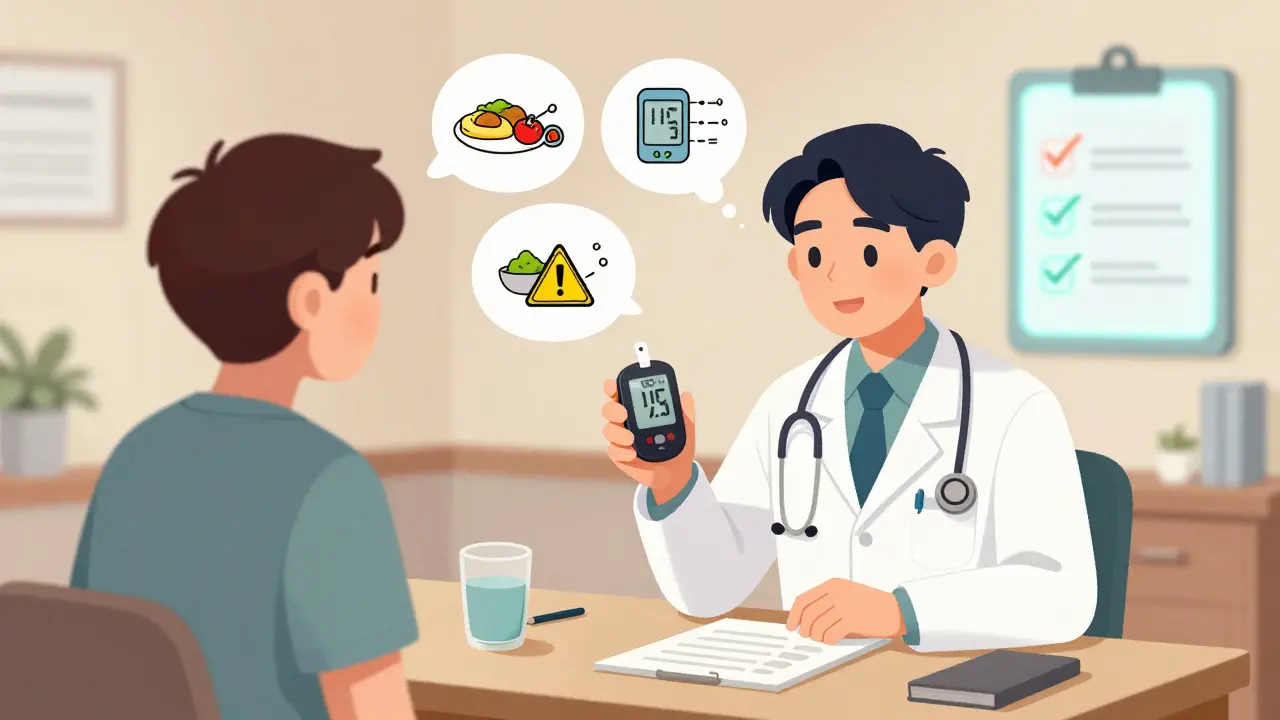
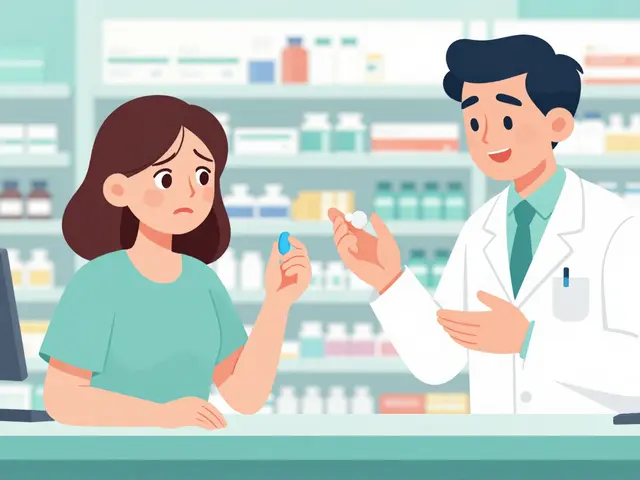
When a patient leaves a doctor’s office after a diabetes diagnosis, what do they really walk away with? Do they know how to check their blood sugar? Can they recognize the signs of low blood sugar? Do they understand why skipping meals matters? It’s not enough to hand them a pamphlet and call it education. Generic understanding-the ability to apply knowledge across situations-is what keeps people healthy long after the appointment ends.
Most healthcare systems still measure education success by whether a patient says "I understand" or checks a box on a form. But those answers don’t tell you if the patient can actually manage their condition at home. A 2023 study from the University of Northern Colorado found that patients who could explain their treatment plan in their own words, not just repeat it, were 60% more likely to stick to their medication schedule over six months. That’s the difference between surface-level compliance and real understanding.
Direct vs. indirect methods: What actually shows learning?
There are two main ways to measure if patient education is working: direct and indirect methods. Direct methods look at what the patient does. Indirect methods ask what they think they learned. One is evidence. The other is opinion.
Direct methods include:
- Teach-back: Asking the patient to explain the instructions in their own words
- Demonstration: Watching them use an inhaler, insulin pen, or glucose monitor correctly
- Scenario-based questions: "What would you do if your blood sugar dropped while driving?"
- Checklists: Using a simple rubric to score each step of a task
These methods give you real data. A 2022 study in Journal of Patient Education showed that using teach-back with heart failure patients reduced hospital readmissions by 32% over one year. That’s not because they memorized the brochure-it’s because they could actually do the thing.
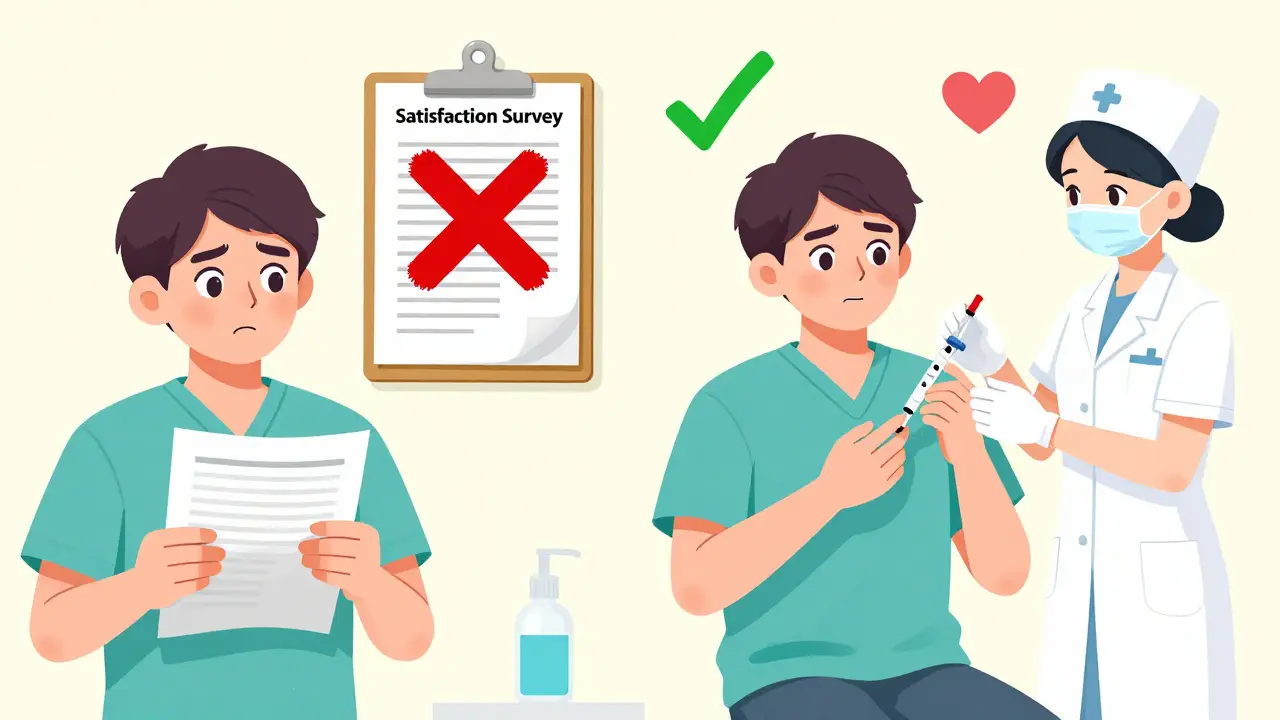
Indirect methods? Surveys, feedback forms, satisfaction scores. They’re easy to collect, but they’re misleading. A patient might say they "understand everything" because they don’t want to disappoint the nurse. Or they might feel overwhelmed and say they "don’t get it" even if they do. Relying only on these is like judging a driver’s skill by whether they smile during a driving lesson.
Formative assessment: The secret weapon in patient education
Most clinics use one big education session and call it done. That’s like giving someone a driver’s license after one practice turn. The real breakthrough comes from formative assessment-small, ongoing checks that happen during the learning process.
Here’s how it works in practice:
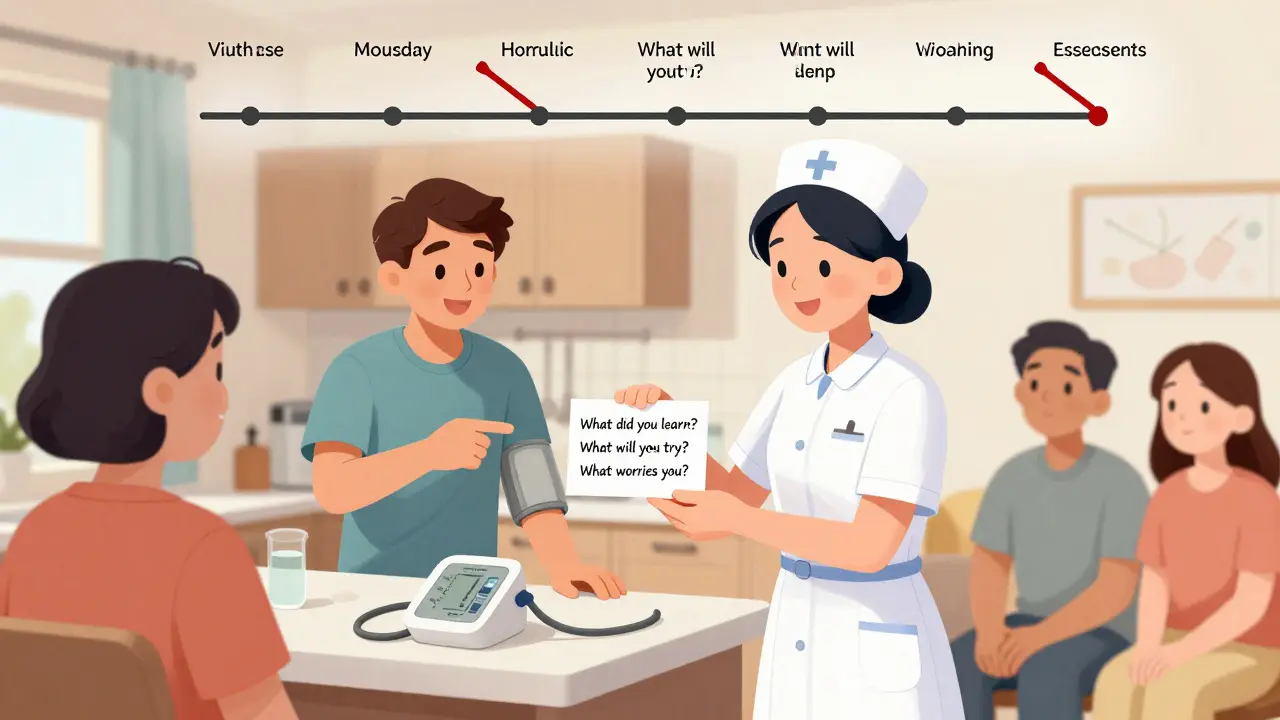
- After explaining how to use a blood pressure monitor, ask: "What’s the one thing you’re not sure about?"
- At the next visit, have them show you how they did it at home. Did they record the numbers? Did they notice a pattern?
- If they struggled, adjust: Use a bigger display monitor, simplify the steps, or bring in a family member.
This isn’t extra work-it’s smarter work. A 2023 survey of 142 community health nurses in Australia found that using quick 2-minute formative checks after each education session cut down on repeat visits by 45%. Why? Because problems were caught early, before they became emergencies.
Some clinics use "exit tickets"-a single question written on a card before the patient leaves: "What’s one thing you’ll do differently this week?" It takes 30 seconds. The insight? Priceless.
Criterion-referenced vs. norm-referenced: Why comparing patients doesn’t work
Some health systems compare patients to each other. "80% of our diabetic patients got their A1C below 7% this quarter." Sounds good-until you realize that doesn’t tell you if the 20% who didn’t improve actually understood their treatment.
That’s the trap of norm-referenced assessment: judging performance based on how others do. The better approach is criterion-referenced: measuring against a clear standard, no matter who you are.
For example:
- Criterion: Can the patient correctly identify three warning signs of high blood sugar?
- Norm: Did they score better than 70% of other patients?
The first tells you if education worked. The second tells you who did better than whom. In patient care, you need to know if everyone can do the basics-not just who’s ahead of the pack.
One clinic in Adelaide switched to criterion-based checklists for asthma education. They didn’t care if patients were "better than average." They cared if each one could name their triggers, use their inhaler correctly, and know when to call for help. Within nine months, emergency visits dropped by 40%.
The hidden gap: What you can’t measure with tests
There’s something no checklist or quiz can capture: how the patient feels. Fear. Shame. Distrust. Hope. These aren’t "soft" factors-they directly affect whether someone follows through.
A 2022 NIH study found that patients who felt judged by their provider were 3x more likely to skip medications-even if they knew exactly what to do. That’s why the best programs pair direct assessment with simple, open-ended conversations:
- "What’s been hardest about sticking to your plan?"
- "What would make it easier?"
- "Have you told anyone else about your diagnosis?"
These questions don’t go in a report. But they change outcomes. One nurse in Melbourne started asking these after each session. Within six months, her patients’ adherence rates jumped from 58% to 82%.
It’s not about collecting data. It’s about building trust. And trust can’t be measured with a rubric-but it can be felt, heard, and responded to.
What works now: Real-world tools and simple steps
You don’t need fancy software to measure real understanding. Here’s what’s working in clinics today:
- Teach-back + checklist: Explain, ask them to repeat, score each step (0-3 points). Do this in 5 minutes.
- 3-question exit ticket: What’s one thing you learned? What’s one thing you’ll try? What’s one worry you still have?
- Video follow-up: Send a 60-second video asking them to show you their medication routine. Most patients will do it.
- Family involvement: If someone helps them at home, include them in the teach-back. Two minds are better than one.
One rural clinic in South Australia started using teach-back with a simple 3-point rubric for hypertension education. Within a year, their control rate went from 49% to 76%. No new tech. No extra staff. Just better questions.
What to avoid: Common mistakes in patient education tracking
Even well-meaning clinics make the same errors:
- Using satisfaction surveys as proof of learning. People say they "understand" to be polite.
- One-and-done education. No follow-up means no real learning.
- Assuming literacy = understanding. A patient might read well but not grasp why a low-salt diet matters.
- Ignoring emotional barriers. Fear of needles, distrust of doctors, financial stress-all affect adherence.
- Comparing patients. "Our group did better than last year" doesn’t tell you if your patient learned.
The most dangerous mistake? Thinking you’ve done enough because you gave them a handout. Education isn’t information delivery. It’s skill building.
Where the field is headed
AI-powered tools are starting to help. Some platforms now use voice analysis to detect confusion in patient responses. Others use chatbots to quiz patients between visits. But the core idea stays the same: observe, listen, adjust.
UNESCO’s 2023 report called this "assessment for learning, not assessment of learning." It’s about helping patients grow-not just grading them. That’s the future. And it’s already here, in clinics that ask better questions.
How do I know if my patient really understood the education I gave them?
The best way is to use the teach-back method. After explaining something, ask the patient to explain it back in their own words. Then watch them do it-like using an inhaler or checking blood sugar. If they can describe it and demonstrate it correctly, they’ve understood. Don’t rely on yes/no answers or nodding. Real understanding shows up in action.
Are patient surveys useful for measuring education effectiveness?
Surveys can tell you how patients feel about the education, but not whether they learned. A patient might say they "understood everything" but still can’t perform the task. Use surveys as a supplement-not the main tool. Pair them with direct observation. For example, if 90% say they felt confident, but only 50% can correctly demonstrate their medication routine, the confidence is misleading.
What’s the quickest way to start tracking understanding in my clinic?
Start with a 3-question exit ticket after each education session: 1) What’s one thing you learned? 2) What’s one thing you’ll try this week? 3) What’s one thing you’re still unsure about? Write it on a slip of paper. Review the answers daily. You’ll spot patterns fast-like patients struggling with timing doses or afraid of side effects. Adjust your approach based on what you see.
Do I need special training to use formative assessment?
No. You don’t need a degree in education. Formative assessment is just asking better questions and listening closely. Start small: After explaining a new medication, pause and ask, "What’s the one thing you’re worried about?" That’s it. The more you do it, the more natural it becomes. Many nurses report that within two weeks, they notice patients open up more and ask better questions.
How do I handle patients who are embarrassed to show they don’t understand?
Normalize confusion. Say something like: "Most people find this tricky at first. Can I walk you through it again?" Or: "I’ve seen this confuse even experienced patients. Let’s try it together." Create a safe space by admitting you’ve seen others struggle too. It takes the pressure off. When patients feel safe, they’ll admit what they don’t know-and that’s when real learning begins.


9 Comments