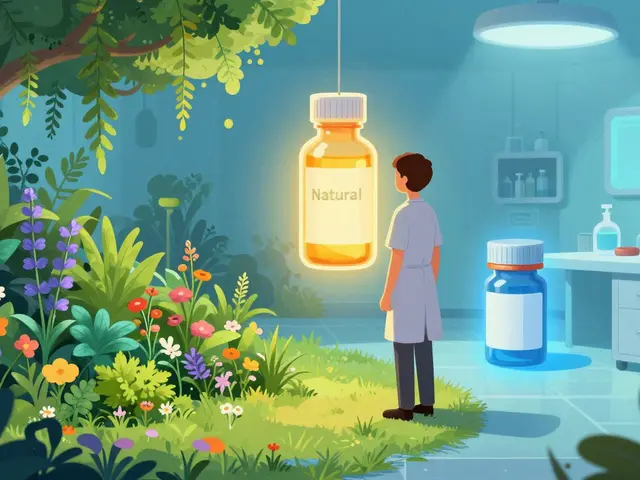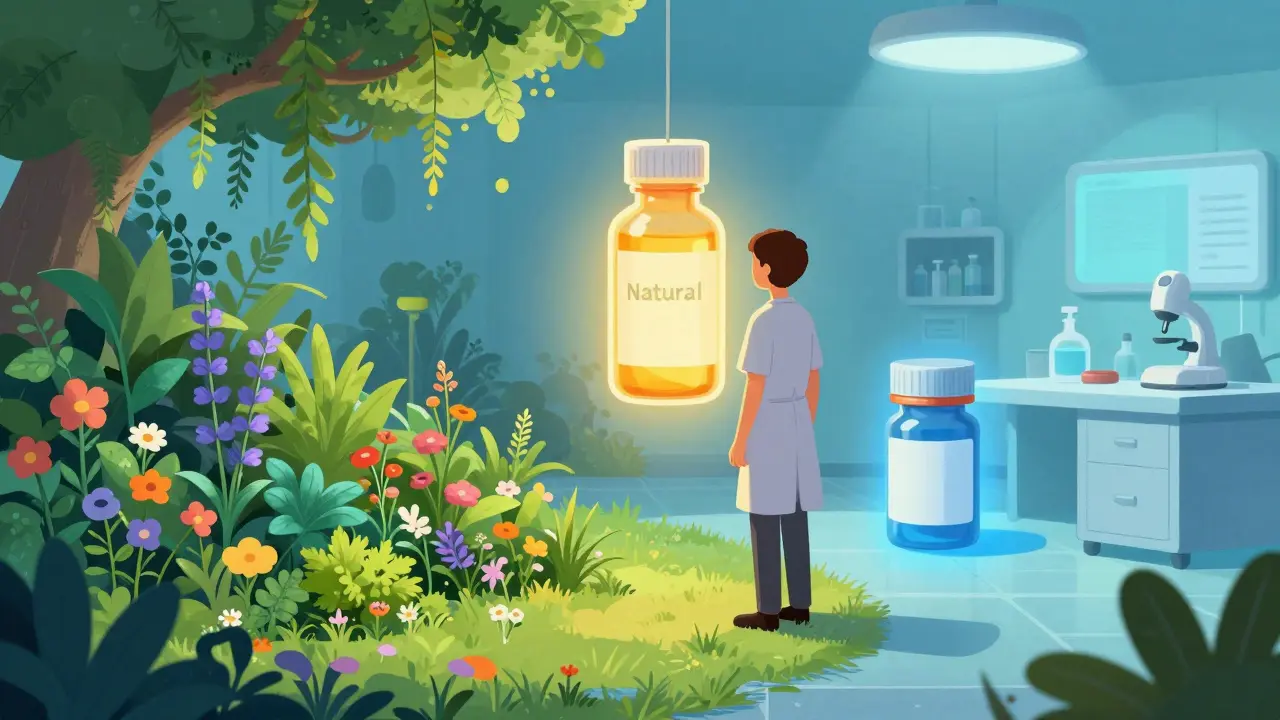
Just because a product is labeled "natural" doesn't mean it's harmless. Many people assume that herbs and botanicals are safer alternatives to prescription meds, but that's a dangerous misconception. In reality, herbal supplement drug interactions is a pharmacological phenomenon where natural products alter how a conventional medication works in the body . Whether it's a mood-boosting tea or a memory-enhancing capsule, these substances can either block your medicine from working or amplify its effects to a toxic level.
If you're taking prescription drugs, you need to be incredibly careful. Statistics show that about 38% of supplement users also take prescriptions, yet a huge number of patients never mention their herbs to their doctors. This creates a blind spot in your healthcare that can lead to everything from an unplanned pregnancy to organ rejection after a transplant.
How Herbs Mess With Your Meds
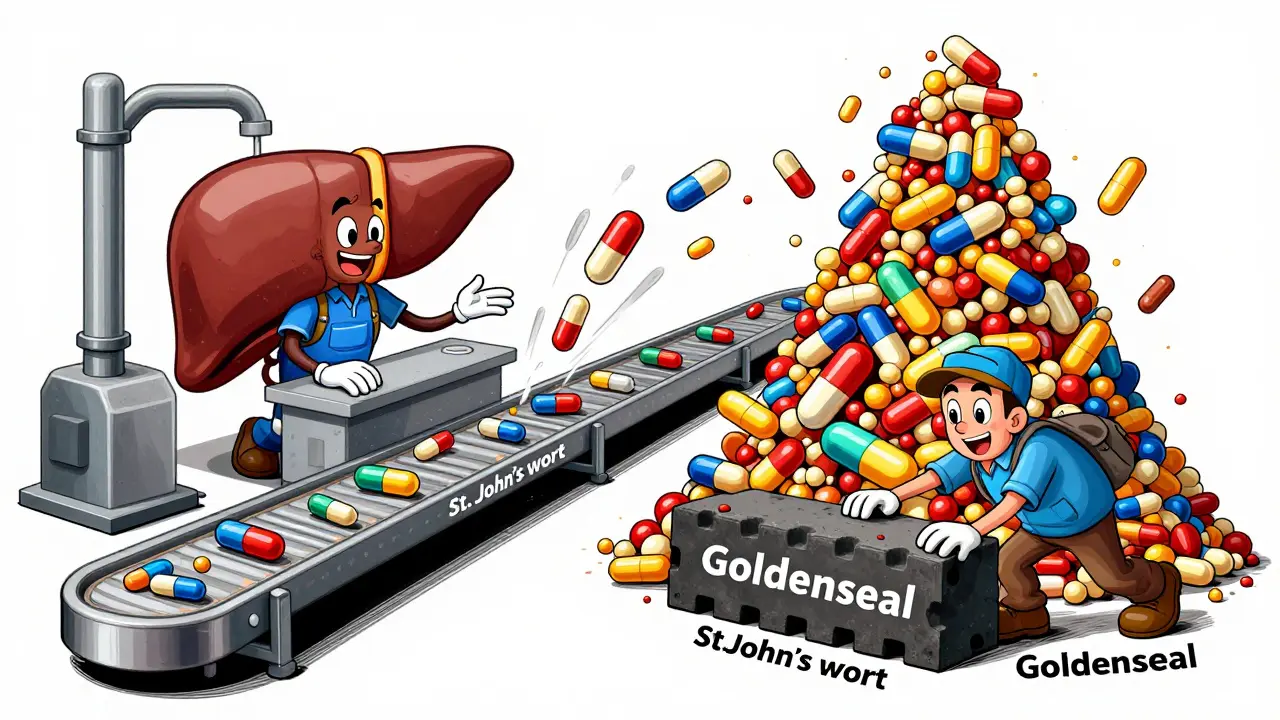
To understand why this happens, we have to look at how your body processes chemicals. Most drugs are broken down in the liver by a group of proteins called Cytochrome P450 enzymes (or CYP enzymes). Think of these as the body's chemical processing plant. One specific enzyme, CYP3A4, handles about 50% of all medications. When an herb interferes with this enzyme, it causes one of two problems: induction or inhibition.
Induction is when an herb speeds up the enzyme. It's like putting the processing plant into overdrive, causing your body to flush out the medication before it can actually work. You might feel like your dose is too low, even though you're taking the right amount.
Inhibition is the opposite. The herb blocks the enzyme, slowing down the breakdown of the drug. This causes the medication to build up in your bloodstream, which can lead to an overdose or severe toxicity, even at a normal dose.
There's also another player called P-glycoprotein (P-gp). This is a transporter protein that acts like a security guard, pumping drugs out of cells. If an herb disables this "guard," the drug stays in your system longer and at higher concentrations.
The High-Risk Offenders
Not every herb is dangerous, but a few are notorious for causing chaos. St. John's wort is widely considered the "king of drug interactions." It's a potent inducer of both CYP3A4 and P-gp. In a 2014 study, it was found to drop cyclosporine levels by 57% in transplant patients, which is a recipe for organ rejection. It also makes oral contraceptives less effective, and there are documented cases of unplanned pregnancies because of it.
Then there's Ginkgo biloba. While people use it for memory, it can be a nightmare for those on blood thinners like warfarin. It inhibits certain enzymes and can increase bleeding risks by roughly 30%. We've seen real-world reports from hematologists who've dealt with unexpected bleeding incidents simply because a patient didn't mention their Ginkgo habit.
Other common herbs with significant risks include:
- Garlic: In high supplement doses, it can drop the levels of certain HIV medications (like saquinavir) by over 50%.
- Goldenseal: This one inhibits CYP3A4 and CYP2D6, potentially spiking the levels of drugs like metoprolol or dextromethorphan by 20-50%.
- Danshen: Used in traditional medicine, but it inhibits platelet aggregation, which increases bleeding risks when paired with anticoagulants.
- Hawthorn: This can drop blood pressure by an extra 10-15 mmHg if you're already on beta-blockers, sometimes leading to emergency-level hypotension.
| Herbal Entity | Primary Mechanism | Typical Drug Conflict | Potential Outcome |
|---|---|---|---|
| St. John's wort | CYP3A4 / P-gp Induction | Birth control, Cyclosporine | Reduced drug efficacy |
| Ginkgo biloba | CYP2C19 Inhibition | Warfarin, Phenytoin | Increased bleeding risk |
| Goldenseal | CYP3A4/2D6 Inhibition | Metoprolol, Dextromethorphan | Increased drug toxicity |
| Hawthorn | Pharmacodynamic additive | Beta-blockers, Digoxin | Dangerously low blood pressure |
The "Natural" Safety Trap
Why do so many people risk this? It's a psychological trap. A 2023 survey showed that 77% of supplement users believe "natural" products are safer than prescriptions. This leads to a lack of disclosure. In one study of hospital patients, 72% of the medical teams had no idea their patients were taking herbs.
The problem is made worse by the laws governing these products. In the U.S., the 1994 Dietary Supplement Health and Education Act (DSHEA) means companies don't have to do pre-market safety testing for drug interactions. You're essentially the guinea pig. Only about 15% of herbal products actually include interaction warnings on the label.
Even professionals struggle. One assessment showed a 62% error rate among providers when identifying interactions with American ginseng. This is why you can't rely solely on a quick check-in during a 10-minute appointment; you have to be the advocate for your own safety.
How to Stay Safe: A Practical Checklist
You don't have to stop taking supplements entirely, but you do need a system to manage the risk. Here is how to handle your regimen safely:
- Audit Your Cabinet: Make a complete list of every tea, tincture, capsule, and "wellness" gummy you take. Don't forget the "occasional" herbs you only take once a week.
- Be Explicit with Your Doctor: Instead of saying "I take some vitamins," say "I take 500mg of Ginkgo biloba and a daily St. John's wort supplement." Specificity saves lives.
- Watch for "Symptom Drift": If your blood pressure suddenly spikes or your mood meds stop working, don't just assume you need a higher dose. It could be that a new supplement is inducing the enzymes that clear the drug.
- Check for the "Double-Up": Some supplements contain multiple herbs. For example, a "stress-relief" blend might contain Valerian, which can make benzodiazepines (sedatives) way too strong, leading to extreme drowsiness.
- Consult a Pharmacist: Pharmacists are often better trained in chemical interactions than general practitioners. Ask them specifically about CYP450 interactions.

The Future of Interaction Detection
We are moving toward a world where we won't have to guess. New AI tools, like the Herb-Drug Interaction Prediction Engine released in 2024, are now capable of predicting risks with about 87% accuracy by analyzing thousands of known interactions. This should eventually move from a research tool to something your pharmacist uses at the counter.
Regulatory bodies are also tightening up. The European Medicines Agency now requires comprehensive interaction studies for herbal medicinal products, and the FDA is moving toward mandatory testing for new botanical drugs. While this is good news, it takes years for these rules to affect the bottles currently sitting on pharmacy shelves.
Are all herbal supplements dangerous when taken with meds?
No. Many herbs, like milk thistle or saw palmetto, generally have low interaction potential for most people. However, because the supplement market is loosely regulated, the purity and concentration of these herbs can vary, meaning you should still run them by a professional.
Can a supplement make my medication stop working?
Yes. This is called enzyme induction. Herbs like St. John's wort speed up the liver's processing of drugs, which clears the medication from your system too quickly. This is particularly dangerous with birth control, anti-rejection drugs, and some HIV medications.
What is the most dangerous herbal interaction?
While it depends on the drug, St. John's wort is the most broadly problematic due to its effect on the CYP3A4 enzyme. However, for someone on blood thinners, Ginkgo biloba or Garlic supplements can be just as dangerous by increasing the risk of internal bleeding.
Should I stop taking my supplements if I start a new prescription?
You should not stop them without consulting your doctor, as some supplements can act like drugs themselves. Sudden cessation can cause withdrawal or a shift in how your body reacts to the new medication. Always coordinate the transition with your healthcare provider.
How do I know if I'm having an interaction?
Look for changes in how your medication feels. If your symptoms return despite taking your meds, the drug may be less effective. Conversely, if you feel increased side effects (like extreme dizziness or bruising), the supplement might be boosting the drug to toxic levels.
Next Steps and Troubleshooting
If you are a patient: Start a "medication diary." List every supplement and the exact dosage. Take this list to your next appointment and specifically ask, "Do any of these interfere with my CYP450 enzymes?" If you notice a change in your health, don't ignore it-especially if you've recently added a new "natural" remedy to your routine.
If you are a caregiver: Be the bridge between the patient and the doctor. Patients often forget to mention "tea" or "herbs" because they don't view them as medicine. Gently remind them that a ginger root or a Ginkgo pill is a chemical compound that interacts with their heart or blood pressure medication.