
Serotonin Syndrome Risk Assessment Calculator
This tool estimates your risk of developing serotonin syndrome based on your current medications, age, and genetic factors. Serotonin syndrome is a potentially life-threatening condition that can occur when medications that affect serotonin interact. The calculator uses data from recent medical studies to provide personalized risk assessment.
Your Risk Factors
Your Risk Assessment
When you're feeling nauseous from chemotherapy, surgery, or even a bad case of food poisoning, antiemetics like ondansetron (Zofran) can be a lifesaver. But if you're also taking an antidepressant like fluoxetine or citalopram, that same medication might be quietly pushing your serotonin levels into dangerous territory. Serotonin syndrome isn't a myth-it's a real, sometimes deadly condition that’s getting more common, and many people don’t even know they’re at risk.
What Exactly Is Serotonin Syndrome?
Serotonin syndrome happens when too much serotonin builds up in your nervous system. It’s not just about feeling "a little off." Symptoms can range from mild shivering and restlessness to full-blown seizures, high fever, and organ failure. The condition was first recognized in the 1960s when doctors noticed patients on certain antidepressants started acting strangely. Today, it’s mostly caused by drug combinations-not single medications.Most cases (85%) happen when two or more serotonergic drugs are taken together. The risk has been climbing steadily: between 2004 and 2011, reported cases went up by 14% every year. And while SSRIs and SNRIs are the usual suspects, antiemetics-especially ondansetron-are showing up more often than you’d think.
Why Do Antiemetics Even Matter?
Not all antiemetics are the same. There are three main types, and each interacts with serotonin differently:- 5-HT3 antagonists (ondansetron, granisetron): These block serotonin receptors in the gut to stop nausea. They’re designed to *reduce* serotonin activity, not increase it. But here’s the twist: some studies suggest they might have off-target effects on serotonin reuptake or metabolism, especially in people with certain genetic variations.
- Dopamine antagonists (metoclopramide, prochlorperazine): These work differently, but metoclopramide has weak serotonin reuptake inhibition. The FDA has logged 17 confirmed cases of serotonin syndrome from metoclopramide combined with SSRIs between 2004 and 2018.
- NK1 antagonists (aprepitant): These don’t directly affect serotonin, but they can slow down how fast your body breaks down SSRIs. That means more of the antidepressant stays in your system longer.
The biggest concern? Ondansetron. It’s one of the most prescribed antiemetics in the U.S.-over 22 million prescriptions in 2022 alone. Nearly 4 out of 10 of those were given to people already taking an SSRI or SNRI. And while most of those combinations are fine, a small number of patients end up in the ER.
The Hidden Risk: Genetics and Age
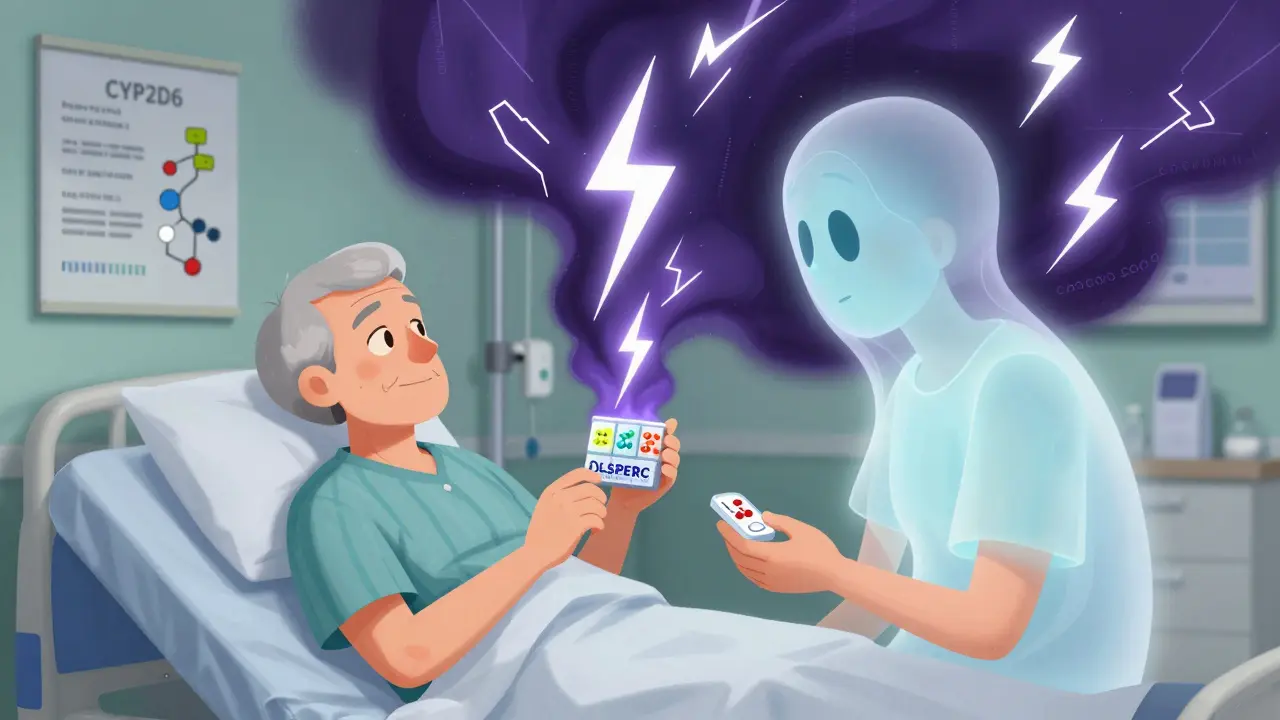
You might be wondering: if so many people take these drugs together, why don’t more get sick? The answer lies in biology.Some people have genetic variations in the CYP2D6 enzyme, which handles how quickly the body breaks down drugs like ondansetron and certain SSRIs. About 7-10% of people of European descent are "poor metabolizers"-their bodies can’t clear these drugs efficiently. In these patients, ondansetron levels can spike 2.3 times higher than normal. That’s not just a small increase. That’s enough to tip the balance toward serotonin syndrome.
And age? Older adults are more vulnerable. Patients over 65 made up 41.3% of serotonin syndrome cases involving ondansetron and SSRIs-even though they’re only 18.7% of the population. Their livers and kidneys don’t process drugs as well. They’re also more likely to be on multiple medications, increasing the chance of overlap.
What Symptoms Should You Watch For?
The Hunter Serotonin Toxicity Criteria is the gold standard doctors use to diagnose serotonin syndrome. It looks for three key signs:- Spontaneous clonus (involuntary muscle contractions)
- Inducible clonus + agitation or diaphoresis
- Eye clonus + agitation or diaphoresis
Common symptoms include:
- Tremor (78.2% of cases)
- Overactive reflexes (63.4%)
- Confusion, agitation, or hallucinations (54.1%)
- High body temperature (over 101.3°F)
- Rapid heart rate and high blood pressure
These symptoms usually show up within hours of taking a new drug or increasing a dose. If you’re on an SSRI and get ondansetron for nausea, and then start feeling shaky, anxious, or sweaty-don’t wait. Go to the ER.
What’s the Real Risk?
Let’s be clear: serotonin syndrome from antiemetics alone is extremely rare. Most cases involve multiple drugs. A 2022 analysis found that 96.4% of reported cases included at least one other serotonergic medication. That means the real danger isn’t ondansetron by itself-it’s the combination.Still, the numbers are rising. Emergency visits for serotonin syndrome involving antiemetics jumped 29% between 2018 and 2022. That’s not because the drugs are suddenly more dangerous. It’s because doctors are better at spotting it, and more people are on multiple serotonergic drugs.
The FDA says the benefits of ondansetron still outweigh the risks. But they also updated Zofran’s label in 2022 to include a warning about serotonin syndrome, citing 12 post-marketing cases. That’s not a lot-but it’s enough to warrant caution.
How to Stay Safe
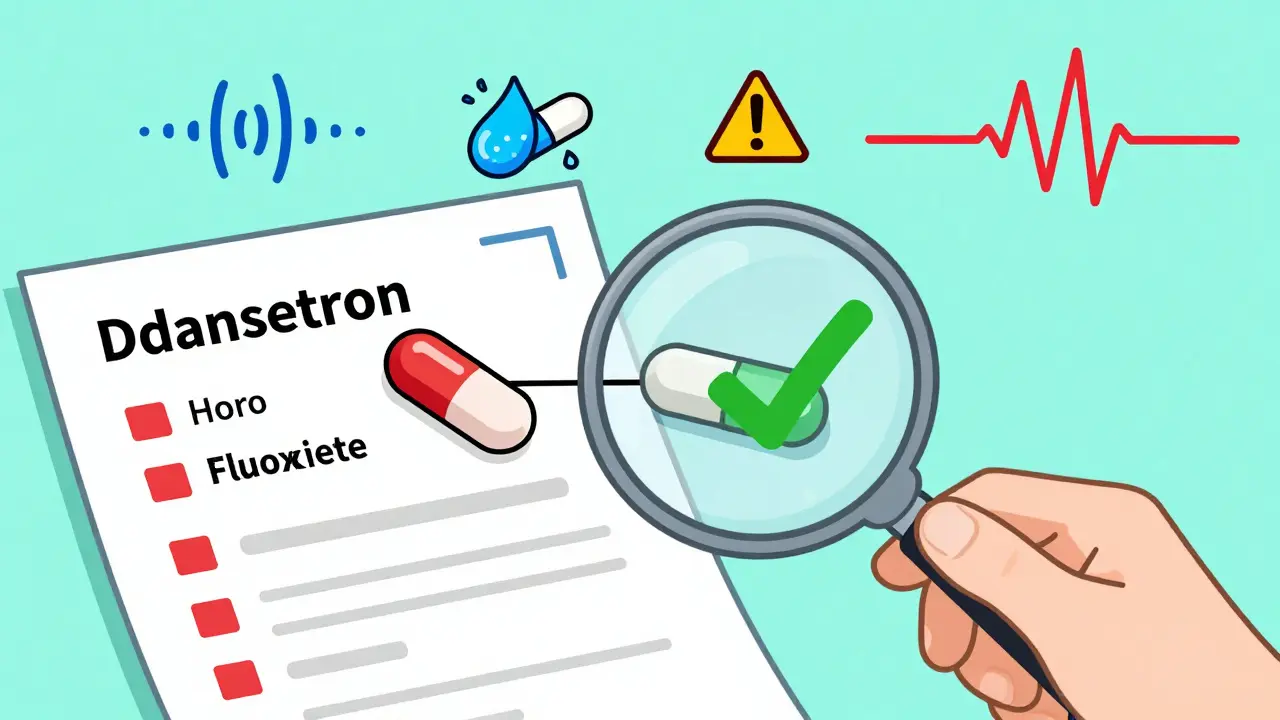
If you’re taking an SSRI, SNRI, MAOI, or any other antidepressant, here’s what you should do:- Know your meds. Make a list of everything you take, including over-the-counter supplements like St. John’s Wort or dextromethorphan (found in some cough syrups).
- Talk to your pharmacist. They can run a quick check for interactions. Many pharmacies now flag high-risk combinations automatically.
- Ask about alternatives. Dexamethasone (a steroid) is just as effective for nausea and has zero serotonin activity. It’s often used in cancer patients for this reason.
- Check your genetics. If you’re on long-term SSRIs and need frequent antiemetics, ask your doctor about CYP2D6 testing. It’s not routine-but it’s becoming more common in high-risk groups.
- Don’t skip the dose. If you’re on a strong CYP2D6 inhibitor like fluoxetine or paroxetine, your doctor may reduce your ondansetron dose by 50%.
What If It Happens?
If serotonin syndrome is suspected, stop all serotonergic drugs immediately. That includes antidepressants, antiemetics, and even recreational drugs like MDMA.The first-line treatment is cyproheptadine (Periactin), an antihistamine that blocks serotonin receptors. Dosing is usually 4-8 mg orally, repeated every 2 hours until symptoms improve. Benzodiazepines like lorazepam help with agitation and seizures, but they don’t fix the root problem.
New research is showing promise with dexmedetomidine, a sedative that reduces serotonin release. A 2015 animal study found it worked better than benzodiazepines. It’s not yet standard, but it’s being tested in ICUs.
What’s Changing Now?
The field is evolving fast. In January 2023, the Clinical Pharmacogenetics Implementation Consortium recommended CYP2D6 testing for patients on ondansetron and SSRIs. And in 2023, researchers found switching from ondansetron to palonosetron (a newer 5-HT3 blocker) cut serotonin syndrome risk by over 60% in a group of 1,247 patients. Why? Palonosetron binds differently to receptors and doesn’t seem to trigger the same off-target effects.Pharmaceutical companies are updating labels. Hospitals are creating risk-assessment tools. The American Geriatrics Society now advises avoiding ondansetron in patients over 65 taking MAOIs and to use caution with SSRIs.
But here’s the bottom line: antiemetics aren’t going away. They’re too effective. The goal isn’t to avoid them-it’s to use them smarter.
Can ondansetron cause serotonin syndrome by itself?
No, ondansetron alone is extremely unlikely to cause serotonin syndrome. It blocks serotonin receptors rather than increasing serotonin levels. Nearly all documented cases involve at least one other serotonergic drug, such as an SSRI, SNRI, or MAOI. The risk comes from combinations, not single-agent use.
Is serotonin syndrome common with antiemetics?
No, it’s rare. Only about 4.2 cases occur per 100,000 antiemetic prescriptions. But the number of emergency visits has increased by 29% since 2018, mostly because more people are on multiple serotonergic drugs. While the absolute risk is low, the consequences can be severe, so awareness matters.
What antiemetics are safest with SSRIs?
Dexamethasone is the safest option-it has no serotonergic activity and works just as well for nausea in many cases. Among 5-HT3 antagonists, palonosetron appears to carry lower risk than ondansetron. Dopamine blockers like metoclopramide carry moderate risk, and NK1 antagonists like aprepitant are low risk unless combined with drugs metabolized by CYP3A4.
Should I get genetic testing before taking ondansetron?
If you’re on long-term SSRIs and need frequent antiemetics-especially if you’re over 65 or of European descent-genetic testing for CYP2D6 may be helpful. Poor metabolizers have a 2.3-fold increase in ondansetron levels, raising their risk. Talk to your doctor about whether testing makes sense for your situation.
What should I do if I think I have serotonin syndrome?
Stop all serotonergic medications immediately and go to the emergency room. Symptoms like tremors, confusion, high fever, or rapid heartbeat require urgent care. Treatment includes cyproheptadine (a serotonin blocker), supportive care, and sometimes dexmedetomidine. Do not wait for symptoms to pass-this can escalate quickly.



8 Comments
It’s terrifying how often we’re handed prescriptions without anyone explaining the hidden interactions. I had no idea ondansetron could stack with my SSRI like this. My mom ended up in the ER last year after a chemo session, and they didn’t even connect it until a pharmacist asked about her meds. Knowledge isn’t power-it’s survival.
My oncology nurse just told me to switch from ondansetron to dexamethasone. Said it’s just as good and zero serotonin risk. I was shocked no one mentioned it before. Why do we still default to the most popular drug instead of the safest one?
Oh great another article scaring people into thinking every pill is a death trap. You take one Zofran and suddenly you’re one step away from a serotonin meltdown? Spare me. I’ve been on fluoxetine for 12 years and took ondansetron three times after surgery. Still here. Stop the fearmongering.
Let’s be real. The FDA updated the label because lawyers made them. They’re not worried about you. They’re worried about lawsuits. Meanwhile, the real problem? Doctors don’t ask about OTC meds. I took Robitussin DM with my Zoloft last winter. No one warned me. Now I’m paranoid every time I get a cold.
And don’t get me started on genetic testing. My insurance won’t cover it unless I’m already in the ICU. So we’re supposed to gamble with our nervous system until we’re too sick to care?
Also, why is palonosetron better? Because it’s more expensive? Because Big Pharma wants us to upgrade? Don’t pretend this is science-it’s economics.
And for the love of God, if you’re over 65 and on SSRIs, just avoid ondansetron. Period. No testing needed. No debate. It’s not rocket science. Stop making it complicated.
My aunt died from this. Not because she was careless. Because no one told her. And now we’re all just reading articles and nodding like we learned something. We didn’t. We just got another warning. And the next person? They’ll be just as clueless.
As a clinician in the UK, I’ve seen this pattern repeatedly. The rise in serotonin syndrome cases correlates directly with increased polypharmacy in elderly populations, particularly with antidepressants and antiemetics prescribed in isolation without coordination.
Our hospital now uses a digital alert system that flags high-risk combinations at the e-prescribing stage. It’s not perfect, but it’s reduced incidents by nearly 40% in two years.
The real takeaway? Communication between prescribers, pharmacists, and patients must be systematic-not opportunistic. One conversation, one checklist, one shared record can prevent tragedy.
Genetic testing is valuable, but not scalable. Systemic change is what’s needed.
People think serotonin syndrome is rare so it’s not worth worrying about. That’s the exact mindset that gets people killed. I’ve worked in ERs for 15 years. We see three to four cases a month. Half of them are preventable. Half of them involve ondansetron + SSRI. And every time, the patient says, ‘My doctor said it was fine.’
Doctors aren’t malicious. They’re overwhelmed. But that doesn’t absolve them. Or us. We have to stop trusting ‘common sense’ and start demanding documentation. If a drug combo has a warning label, it’s not ‘probably fine.’ It’s ‘high risk.’
And yes, I’ve seen patients die from this. Not because they were reckless. Because they trusted the system. And the system failed them.
Thank you for this comprehensive and clinically grounded overview. The data presented is both alarming and actionable. I particularly appreciate the inclusion of the Hunter Criteria and the distinction between drug classes. It is imperative that healthcare providers, pharmacists, and patients alike recognize that serotonin syndrome is not an abstract concept-it is a time-sensitive medical emergency with a clear diagnostic pathway and evidence-based interventions.
Furthermore, the recommendation to consider dexamethasone as a first-line alternative in high-risk populations is not only prudent but aligns with current clinical guidelines from the American Society of Health-System Pharmacists. I encourage all readers to discuss these options with their providers, especially when managing chronic conditions requiring ongoing antiemetic therapy.
Proactive management, not reactive crisis response, must become the standard.
Just got back from my mom’s oncologist appointment. She’s 72, on Lexapro, and they switched her from ondansetron to palonosetron. I asked why. They said, ‘It’s safer with SSRIs.’ I looked it up. Turns out it’s not just marketing-it’s science. The receptor binding is different. Less off-target stuff. Also, her CYP2D6 test came back poor metabolizer. So yeah. This isn’t theoretical. It’s personal. And now I’m telling everyone I know.