
25 Feb |
11:38 AM
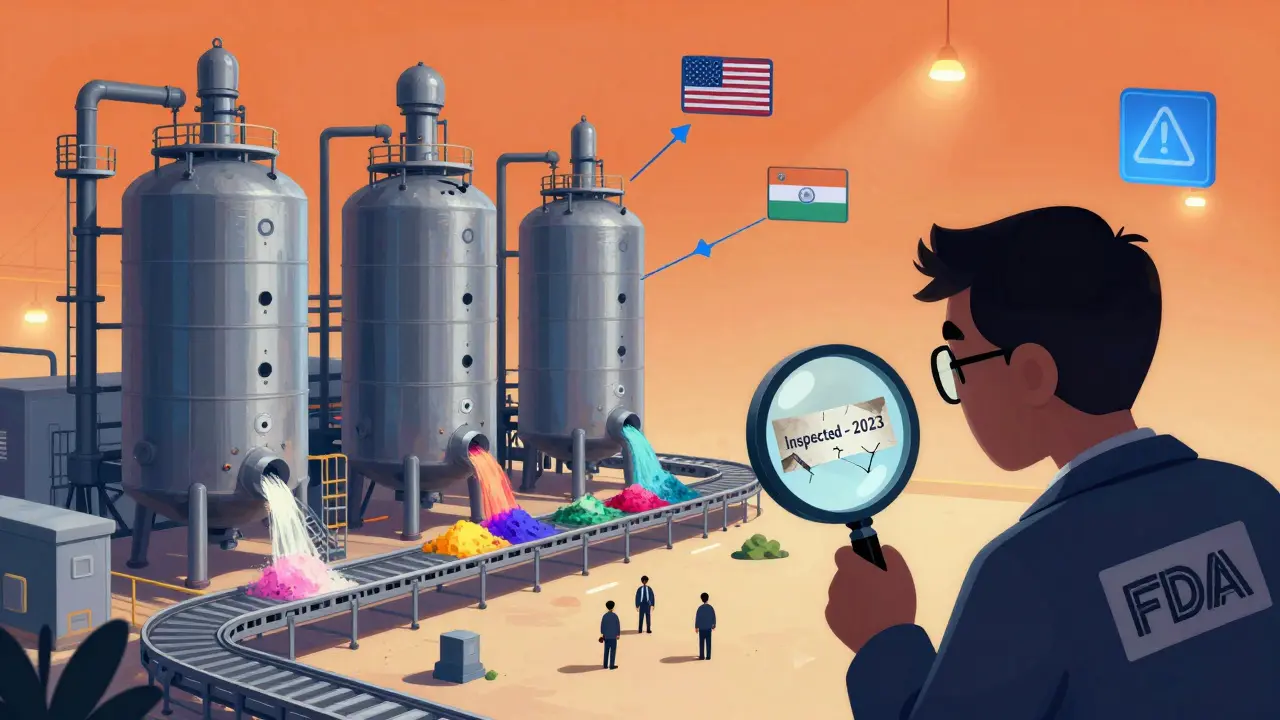
When you take a generic pill for blood pressure, antibiotics, or diabetes, there’s a good chance the active ingredient came from China. About 80% of the world’s active pharmaceutical ingredients (APIs) - the core chemical components that make drugs work - are produced in China. That’s not a guess. It’s a fact backed by data from Drug Patent Watch in 2023. But behind that number lies a complicated story: incredible scale, deep cost savings, and serious quality risks that no one can ignore.
Why China Dominates the API Market
China didn’t become the world’s API factory overnight. After joining the WTO in 2001, the government poured billions into building chemical plants, training workers, and creating supply chains for raw materials. Today, companies like Sinopharm and Shijiazhuang Pharma Group run massive facilities that churn out 500 to 2,000 metric tons of APIs per year. That’s enough to supply millions of prescriptions. Their advantage? Cost. Chinese manufacturers produce APIs at 30-40% lower cost than U.S. or European rivals. That’s because they control nearly 70% of the production chain - from the starting chemicals to the final purified ingredient. They use older, batch-based methods that are cheaper to run, even if they’re less precise. And they don’t face the same environmental or labor costs as Western countries. The result? A global system built on dependency. The U.S. gets 88% of its APIs from overseas. Of those, nearly 28% come from China. That means if a factory in Zhejiang shuts down - whether from an inspection, a flood, or a trade ban - patients in America could face shortages. The Neurology Advisor warned in 2024 that this isn’t just a supply chain issue - it’s a public health risk.The Quality Gap: What the FDA Keeps Finding
Cost doesn’t always mean quality. The U.S. Food and Drug Administration (FDA) inspects Chinese manufacturing sites regularly - but not nearly enough. Dr. Margaret Hamburg, former FDA commissioner, testified in 2024 that inspections in China happen at one-tenth the rate of those in the U.S. Why? Access restrictions, language barriers, and political friction make it harder to get inspectors in. When inspectors do get in, they find problems. Between 2022 and 2023, FDA warning letters to Chinese facilities cited:- 78% had inadequate lab controls - meaning they didn’t properly test samples
- 65% didn’t validate their manufacturing processes - so they couldn’t prove each batch was consistent
- 52% had data integrity issues - records were altered, deleted, or never created
China’s Efforts to Fix the Problem - and Why They’re Not Enough
China knows the quality issues are damaging its reputation. Since 2016, the National Medical Products Administration (NMPA) launched the Generic Consistency Evaluation (GCE) program. The goal? Make sure Chinese generics match the effectiveness of branded drugs. Sounds good - but progress has been slow. As of 2024, only 35% of approved generics have passed the evaluation. That means over 60% of drugs sold in China - and exported abroad - still haven’t proven they work the same way as the original. Meanwhile, the government has shut down 4,500 non-compliant factories since 2018. That cut the number of generic manufacturers from 7,000 to just 2,500. There’s also new tech on the horizon. China’s 2024 “Pharma 2035” plan promises $22 billion to upgrade factories. By 2026, 30% of high-volume products must use continuous manufacturing - a modern method that reduces errors. But right now, 65% of Chinese API production still uses outdated batch methods. In contrast, 35% of U.S. and EU facilities already use continuous systems. And then there’s the problem of trust. Even when a factory passes inspection, companies still report issues. A 2023 PhRMA survey found 68% of U.S. generic makers had quality problems with Chinese APIs. One quality assurance specialist on Reddit said they had to retest 37% of Chinese-sourced metformin - compared to just 8% from India.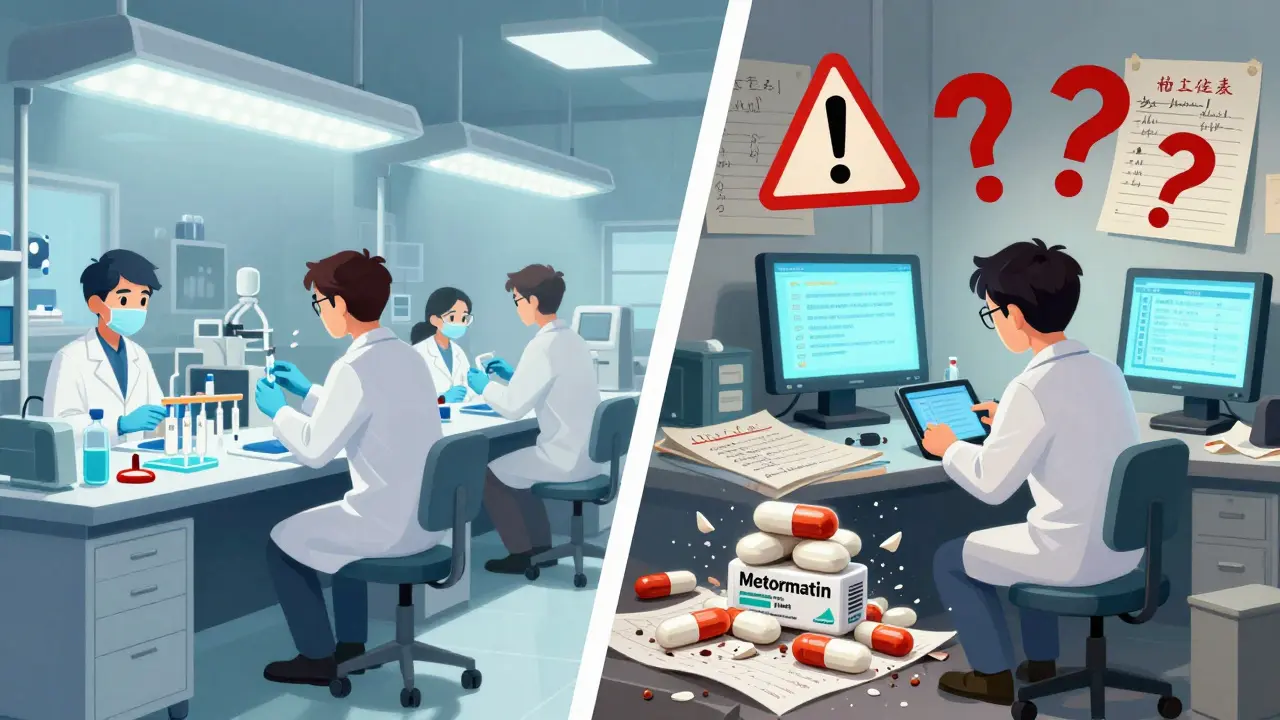
Who’s Really in Charge: China vs. India
Here’s something most people don’t realize: China doesn’t make the pills you swallow. It makes the powder inside them. India makes the actual tablets - and 65% of India’s APIs come from China. So you have a chain: China produces the raw chemical → India turns it into a pill → The pill gets sold in the U.S., Germany, or Japan. That’s why India controls 20% of the global finished drug market, while China only holds 5-7%. This dependency creates a fragile link. If China cuts off API exports - whether for political reasons or because of a factory shutdown - India’s entire generic drug industry could stall. And since India supplies 40% of U.S. generic drugs, the ripple effect would be huge. Meanwhile, China’s own domestic market is changing. The National Volume-Based Procurement (NVBP) program has slashed generic drug prices by over 50% since 2018. That squeezed profit margins from 40-50% down to 15-20%. Now, companies are cutting corners to survive. Quality control? First to go.What’s Being Done - and What’s Not
Governments are waking up. The U.S. CHIPS and Science Act set aside $500 million to build domestic API production. The EU’s 2024 Pharmaceutical Strategy aims to cut reliance on China from 80% to 40% by 2030. Vietnam and Mexico are stepping up, building new facilities with Western standards. But it’s not easy. Building an FDA-compliant API plant in China costs $85-120 million - twice as much as a non-compliant one. Maintaining it? $3-5 million a year. Pfizer spent 36 months and $22 million just to get its joint venture with Zhejiang Huahai approved for U.S. sales. And cultural differences matter. In China, documentation is often seen as a formality. In the U.S. and EU, it’s a legal record. One PwC survey found 63% of Western companies struggled with how Chinese teams handled paperwork. A missing signature or an unexplained data point can derail an entire shipment.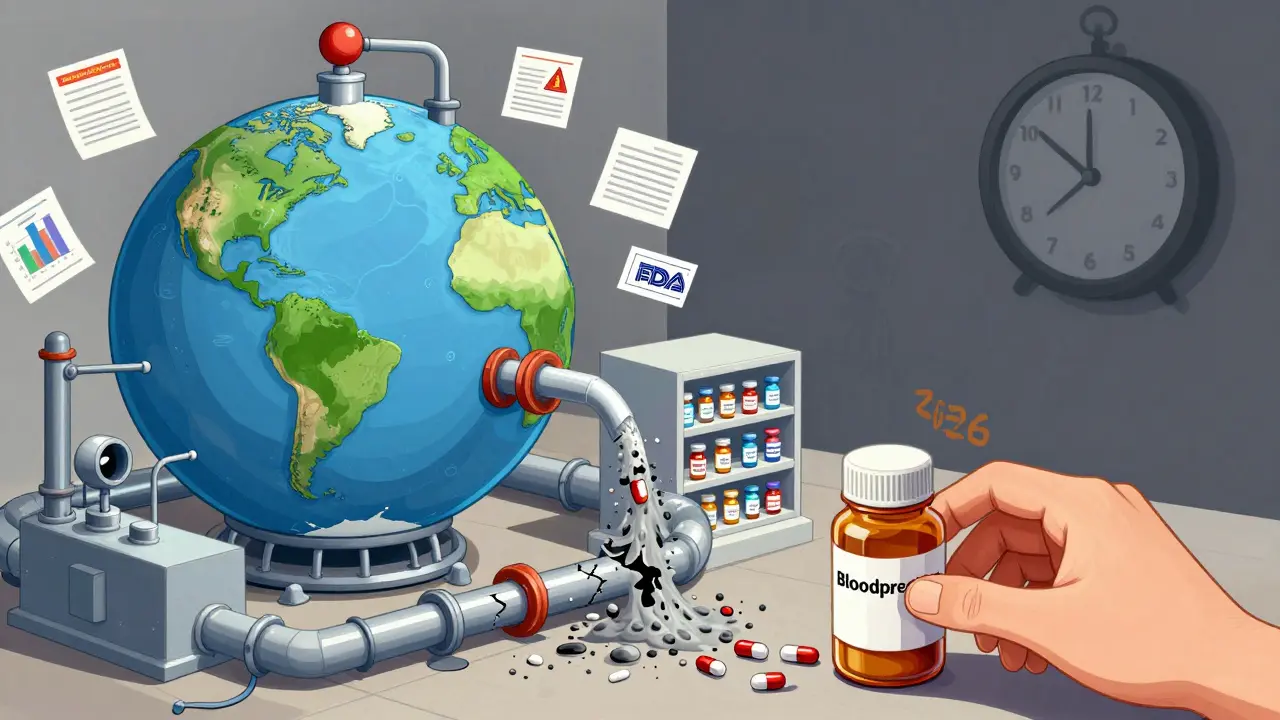


8 Comments