
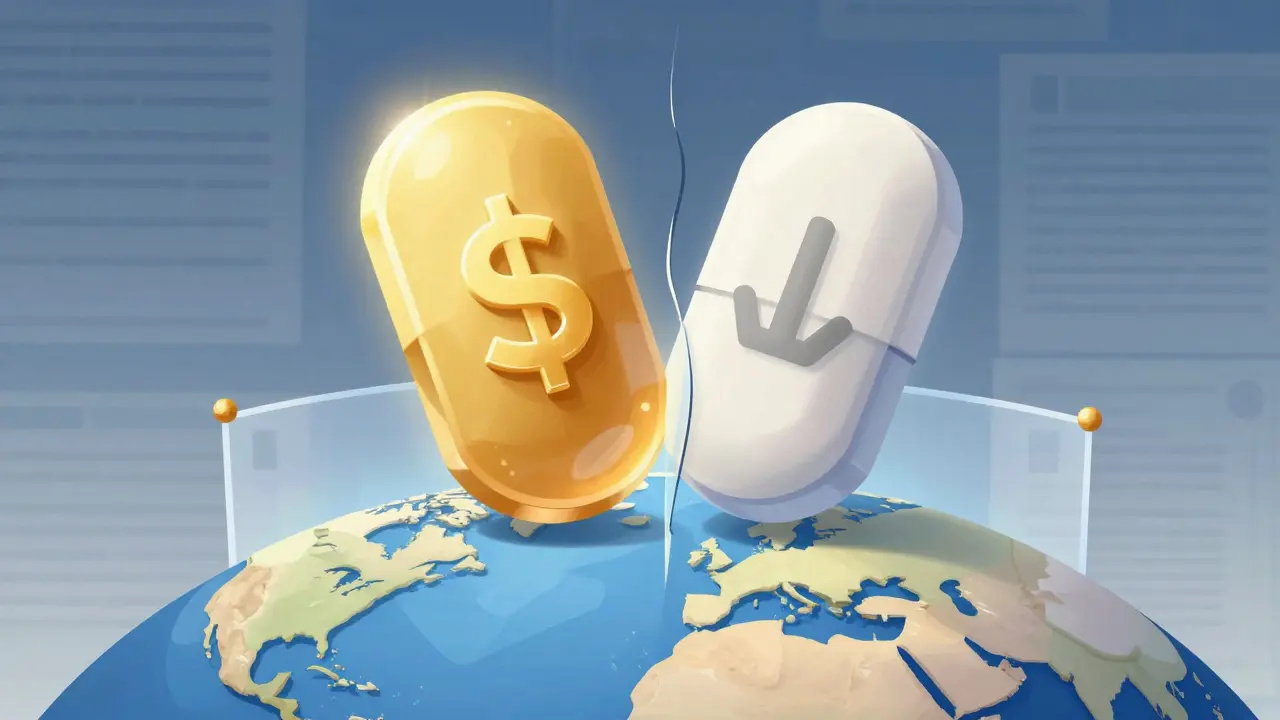
Why does a life-saving medicine cost $10,000 in one country and $100 in another? It's often not about the ingredients or the factory costs. It's about the law. If you've ever wondered why generic medicines aren't available everywhere, the answer lies in a complex web of trade rules set nearly thirty years ago. These rules determine who owns a drug formula and who gets to sell it.
The backbone of this system is the TRIPS Agreement. This stands for the Trade-Related Aspects of Intellectual Property Rights Agreement. It is the global rulebook that dictates how countries protect patents. While designed to encourage innovation by giving companies time to profit, critics argue it has created massive barriers for poor nations trying to get affordable treatment. Let's unpack how this agreement changed the world and why it still matters today.
What is the TRIPS Agreement?
To understand the struggle for affordable drugs, we have to look at the history. Before the mid-1990s, there was no single global standard for patents. One country might protect a drug recipe (a product patent), while another only protected the method of making it (a process patent). This lack of uniformity meant generic manufacturers could legally produce cheaper versions of medicines using different manufacturing methods. Then came the Uruguay Round of trade negotiations.
From 1986 to 1994, wealthy nations pushed for stricter intellectual property standards to protect their industries. By January 1, 1995, the WTO(World Trade Organization) enforced these rules through the TRIPS framework. Every member state-164 of them-had to adopt minimum standards. The most impactful change was Article 33, which mandated a minimum 20-year patent protection period from the filing date. Suddenly, countries that previously allowed cheap generic competition had to close their borders to off-patent copies for two decades. The goal was consistency, but for developing nations, the result was an immediate loss of local manufacturing capacity and higher prices for essential treatments.
How Patents Changed the Market for Generics
Before TRIPS, many countries operated under systems that favored public health over profit margins. For instance, in the 1970s, India only required process patents. This meant you couldn't steal someone's secret way of making a chemical compound, but once that compound was known, others could manufacture it differently and sell the generic version. This fueled a booming Indian pharmaceutical sector that became the "pharmacy of the developing world," supplying HIV and antiretroviral drugs at tiny fractions of Western prices.
Under TRIPS, the landscape shifted dramatically. To comply with international law, India eventually had to transition to product patents by 2005. When this happened, studies published in the Lancet Oncology noted a spike in cancer drug prices, sometimes jumping by 300% to 500%. The logic was simple: once a company holds a patent on the drug molecule itself, no one else can touch it for 20 years without permission. During that monopoly period, prices remain high to recoup research and development costs, as argued by industry groups like the International Chamber of Commerce. However, for diseases like HIV/AIDS or malaria, which disproportionately affect low-income regions, those prices were often astronomical relative to local purchasing power.
The Compulsory License Exception
Did TRIPS completely shut down all hope for affordable access? Not quite. The architects of the deal knew that public health emergencies might require overrides. This led to Article 31, which establishes the concept of compulsory licensing. In short, this provision allows a government to authorize a third party to produce a patented medicine without the consent of the patent holder, usually in cases of national emergency or public non-commercial use.
In theory, this sounds like a safety valve. In practice, the mechanism is loaded with friction. To issue a compulsory license, a country generally has to prove it tried to negotiate a voluntary deal with the patent owner first-a step that takes months and signals political vulnerability. Furthermore, early interpretations of the agreement required that licensed production be primarily for the domestic market. This created a loophole disaster for countries like Rwanda or Botswana, which lacked the factories to produce the drugs themselves. They needed to import generics made elsewhere, but the exporting country also had to grant permission. It wasn't until a 2005 amendment, known as the "Paragraph 6 Solution," that cross-border trade became legally clearer. By 2016, records showed only one shipment of malaria medicine had actually moved successfully through this channel. The rules exist, but the red tape makes them nearly unusable.
Doha Declaration and Public Health Rights
The pressure on developing nations built up quickly after implementation. By 2001, the crisis in sub-Saharan Africa regarding HIV treatment forced a reckoning within the WTO. Leaders gathered in Doha, Qatar, to discuss the intersection of trade and health. The resulting Doha Declaration on the TRIPS Agreement and Public Health was a landmark victory for activists and patient groups.
The declaration explicitly stated that "the TRIPS Agreement does not and should not prevent members from taking measures to protect public health." It confirmed that countries had the right to prioritize people over profits when issuing licenses. However, it stopped short of rewriting the core patent terms. It clarified the ambiguity but didn't remove the financial burden. For many policymakers, it was a moral win that lacked the teeth to stop aggressive litigation. Pharmaceutical giants continued to monitor compliance closely, and lawsuits against generic producers remained a frequent threat, keeping governments hesitant to exercise their rights even when legally permitted.
Real-World Battles: Brazil, India, and Beyond
Theoretical agreements meet real-world consequences when countries actually try to follow them. Brazil serves as a prime example. In 2000, the US government initiated legal action against Brazil under Section 301 of its Trade Act, threatening sanctions over the country's plan to produce generic antiretrovirals. The US cited the need to protect American patent holders. Under international pressure, the US eventually withdrew the complaint, but the message sent to other nations was chilling: push too hard, and face trade retaliation.
South Africa faced a similar ordeal in 1998. After passing the Medicines and Related Substances Control Amendment Act to allow cheaper imports, forty pharmaceutical companies sued the South African government in Pretoria. The lawsuit lasted three years and attracted massive global condemnation before being withdrawn. It highlighted how multinational corporations could use legal resources to intimidate nations. Meanwhile, India became the primary manufacturing hub for generic exports following the 2005 patent transition. Because India granted licenses to smaller local firms before the deadline, it maintained a buffer stock of knowledge and capacity. Today, despite restrictions, India remains crucial for the supply chains of organizations like the Global Fund to Fight AIDS, Tuberculosis and Malaria.
| System Type | Protection Level | Generic Entry Time | Typical Price Impact |
|---|---|---|---|
| Pre-TRIPS (Process Only) | Low/Moderate | Immediate | Price drops within 6-12 months |
| TRIPS Compliant (Product Patent) | High (20 Years) | Only after expiration | Prices stay high for 20 years |
| With Compulsory License | Restricted Override | During Patent Term | Significant reduction (often 70-90%) |
TRIPS Plus: Going Beyond the Basics
If complying with the baseline TRIPS agreement was difficult for poor nations, many found an even higher wall called "TRIPS Plus." Developed countries began signing bilateral free trade agreements that demanded protections exceeding the WTO standards. For example, while TRIPS sets the term at 20 years, many of these side deals extend data exclusivity periods to 5-8 years. This prevents regulators from accepting clinical trial data to approve generic versions even after a patent expires.
This phenomenon is prevalent in agreements negotiated by the US and EU with Asian and Latin American partners. According to analyses from the late 2010s, 85% of US free trade agreements contained provisions stricter than TRIPS requirements. This effectively extends monopolies further, pushing the availability of generics back even more. For a disease with a rapidly changing virus profile, delaying generic entry by just a few extra years can mean millions of unmet needs. Critics label this "evergreening," where minor tweaks to a drug formulation earn fresh patents, keeping competitors out indefinitely.
The COVID-19 Waiver Debate
The arrival of the pandemic in 2020 brought the topic of intellectual property back into the spotlight. With urgent demand for vaccines, diagnostics, and therapeutics, India and South Africa proposed a complete waiver of TRIPS enforcement for pandemic-related technologies. Over 100 WTO members supported the idea, citing the need to maximize production capacity globally.
The backlash from wealthier nations was swift and firm. The European Union, US, and Switzerland opposed a full waiver, arguing it would hurt future R&D investment. The compromise reached in June 2022 resulted in a partial exemption for COVID-19 vaccines only, leaving testing kits and treatments largely untouched. By 2023, a formal WTO agreement solidified these limited concessions. While symbolic, the debate revealed that the fundamental tension between patent rights and human survival remains unresolved. Even during a global emergency, the machinery of intellectual property law proved remarkably resistant to rapid dismantling.
Moving Forward: Innovating Without Barriers
As we move further into the 2020s, the conversation isn't just about waiving rules anymore; it's about structural reform. Models like the Medicines Patent Pool have emerged as middle-ground solutions. Established in 2010, this pool negotiates voluntary licenses with patent holders to allow generic manufacturers to scale up production. By 2022, it covered dozens of medicines for HIV, Hepatitis C, and tuberculosis, helping reach millions of patients in lower-income settings.
However, voluntary pools rely on the goodwill of big pharma. Many advocates argue that relying on charity isn't sustainable for chronic diseases or neglected tropical conditions. The challenge for the next decade is balancing the need for incentive (so companies keep inventing) with the need for access (so people live). Whether that comes through stronger compulsory licensing frameworks, better technology transfer support from rich nations, or revised treaty terms, the gap between patent law and human health continues to widen in some corners of the globe.
Does TRIPS ban generic medicines?
No. TRIPS sets minimum standards for patent protection (usually 20 years), but once a patent expires, any country can produce or import generics. It restricts generics during the patent term unless exceptions like compulsory licensing are used.
What is a compulsory license?
A compulsory license is a government authorization that allows a third party to produce a patented product without the consent of the patent owner. It is typically used during national emergencies to ensure public health access.
How did TRIPS affect drug prices in developing countries?
Studies indicate that implementation led to significant price increases, sometimes over 200%, particularly for patented HIV and cancer medications, because local generic production was restricted by new product patent laws.
Are there alternatives to TRIPS for getting affordable drugs?
Yes. Organizations like the Medicines Patent Pool negotiate voluntary licenses, and countries can issue compulsory licenses for public health emergencies. Additionally, pooled procurement mechanisms help lower costs for nations buying together.
What is the Doha Declaration?
Issued in 2001, the Doha Declaration affirms that the WTO TRIPS agreement should be interpreted flexibly to allow countries to protect public health. It recognizes that intellectual property rights should not prevent access to essential medicines.


12 Comments
We have to fight harder for justice here because the status quo is clearly failing everyone except the greedy! I see the data showing rising costs and it makes me angry that innovation is used as an excuse to deny basic rights. The only way we move forward is by recognizing that profit cannot come before human survival in any ethical framework. We must demand change now instead of waiting for politicians to wake up to this crisis. Every day we delay is another day someone suffers preventably due to policy decisions made in boardrooms.
It is honestly frustrating how much bureaucracy blocks actual help for people.
It really breaks my heart reading all of this stuff about medicine pricing.
You know people are literally dying because companies want to protect their bottom lines instead of saving lives.
We often forget that profit margins are built on the backs of regular folks who just need a cure for their sickness.
I remember my own grandmother struggling to find her insulin when the prices went up suddenly.
She had to choose between eating dinner and taking the medication that kept her alive during those difficult days.
Those kinds of choices should never exist in any modern society on our planet today.
The laws seem written by bankers rather than doctors who actually understand patient needs better.
It creates a massive divide between the wealthy nations and the developing regions that rely on affordable care.
Everyone deserves a fair shot at staying healthy without worrying about bankruptcy every single month.
When governments get scared to enforce rules that help people it shows a distinct lack of courage.
We need to push for compassion to be the main metric of success instead of quarterly earnings reports.
Sometimes I feel hopeless watching the news cycle spin around these corporate interests endlessly.
But we cannot lose sight of the fact that human life is worth more than any stock ticker number.
Small changes in policy could save millions of lives if leaders were brave enough to try them.
We have to keep talking about this until the systems shift toward fairness and away from greed.
None of this is natural behavior for a civilized world anymore.
The philosophical underpinning of intellectual property suggests that knowledge belongs to the creator indefinitely, yet health requires access universally.
This tension defines the modern era of medicine development and distribution globally.
We must consider the ethics of ownership when the product of said ownership determines mortality rates across different continents.
You clearly do not understand the economic drivers involved in research funding models here.
Without exclusive rights pharmaceutical giants would simply stop pouring billions into clinical trials entirely.
Your romanticized view ignores the risk capital that fuels the discovery process itself.
Oh my gosh!!! This is absolutely mind blowing information!!! Who knew law could cost so many lives?!?!???
Patents expire after twenty years which allows generics to enter the market eventually.
Many countries use compulsory licenses during emergencies to bypass delays in access.
Voluntary licensing pools also help share technology between large firms and local producers.
Clearly you lack a proper understanding of the complexities inherent in intellectual property law systems!
One does not simply override decades of established legal frameworks without considering consequences!
True expertise involves acknowledging the nuance rather than suggesting simplistic solutions!
I suspect the big pharma lobbies pull strings behind the curtain to keep these secrets locked down forever.
They want us dependent on their expensive formulations because free competition threatens their control.
Funny how the rich always win while the rest of us wait for the truth to come out someday.
America leads the way on innovation and protecting the rights of inventors against foreign copying.
We see less discussion about how this helps our global standing and economy immensely.
The structural integrity of international trade relies heavily on standardized enforcement of patent terms globally.
National sovereignty is limited when members sign binding agreements through organizations like the WTO.
This analysis provides a factual basis for understanding the geopolitical implications of drug pricing.