Warfarin: What You Need to Know About Blood Thinners, Risks, and Managing Side Effects
When you take warfarin, a prescription blood thinner used to prevent dangerous clots in the heart, brain, or legs. Also known as Coumadin, it works by blocking vitamin K, which your body needs to make clotting proteins. It’s not a drug you take lightly—small changes in diet, other meds, or even your sleep schedule can throw off its balance. This is why millions of people on warfarin get regular blood tests to check their INR, a number that tells doctors if the drug is working right. Too low, and you risk a stroke or clot; too high, and you could bleed internally without warning.
Warfarin doesn’t work in a vacuum. It’s affected by vitamin K, a nutrient found in leafy greens like spinach and kale that directly opposes warfarin’s effect. Eat more kale one week, and your INR might drop. Skip it for a few days, and you could bleed. That’s why consistency matters more than perfection. It also interacts with antibiotics, like amoxicillin or metronidazole, which can make warfarin stronger and raise bleeding risk. Even over-the-counter painkillers like ibuprofen can increase your chance of stomach bleeding when mixed with warfarin. And don’t forget alcohol—drinking even a few drinks can mess with your liver’s ability to process it.
People on warfarin often worry about bleeding, and rightly so. It doesn’t always come with a scream—sometimes it’s just a bruise that won’t fade, nosebleeds that won’t stop, or dark, tarry stools. If you fall hard or hit your head, don’t wait for symptoms. Go to the ER. Emergency teams have reversal agents like vitamin K or fresh plasma to stop the bleeding fast, but time matters. That’s why carrying a medical ID card with your warfarin dose and INR target is one of the smartest things you can do.
The posts below cover real-world issues you might face while on warfarin: how to handle missed doses, what foods to watch, why some people need higher doses than others, and how to avoid dangerous interactions with other meds. You’ll also find advice on recognizing bleeding emergencies, managing side effects like fatigue or nausea, and how to talk to your pharmacist about alternatives. This isn’t theory—it’s what people actually deal with when they’re on this drug every day.
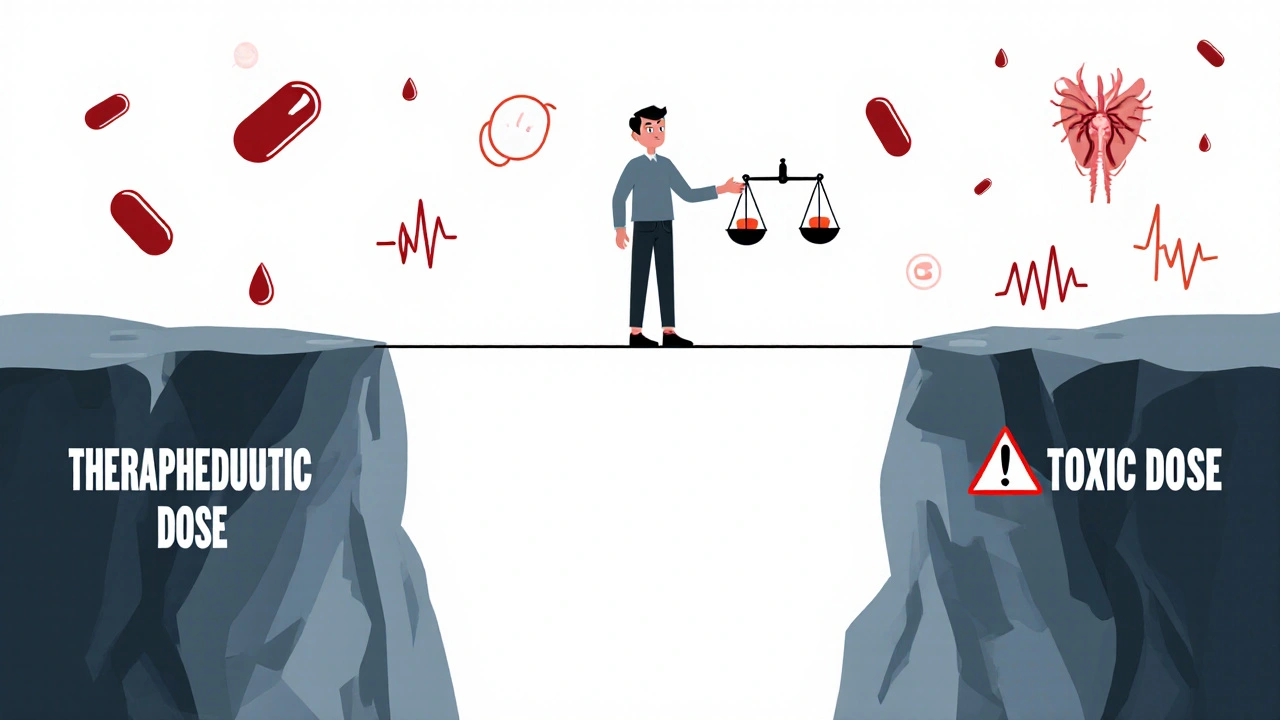
Narrow Therapeutic Index Drugs: What Patients Need to Know
Narrow therapeutic index drugs require precise dosing and regular monitoring. Learn how warfarin, lithium, levothyroxine, and others work, why generic switches can be risky, and what you must do to stay safe.
read more