
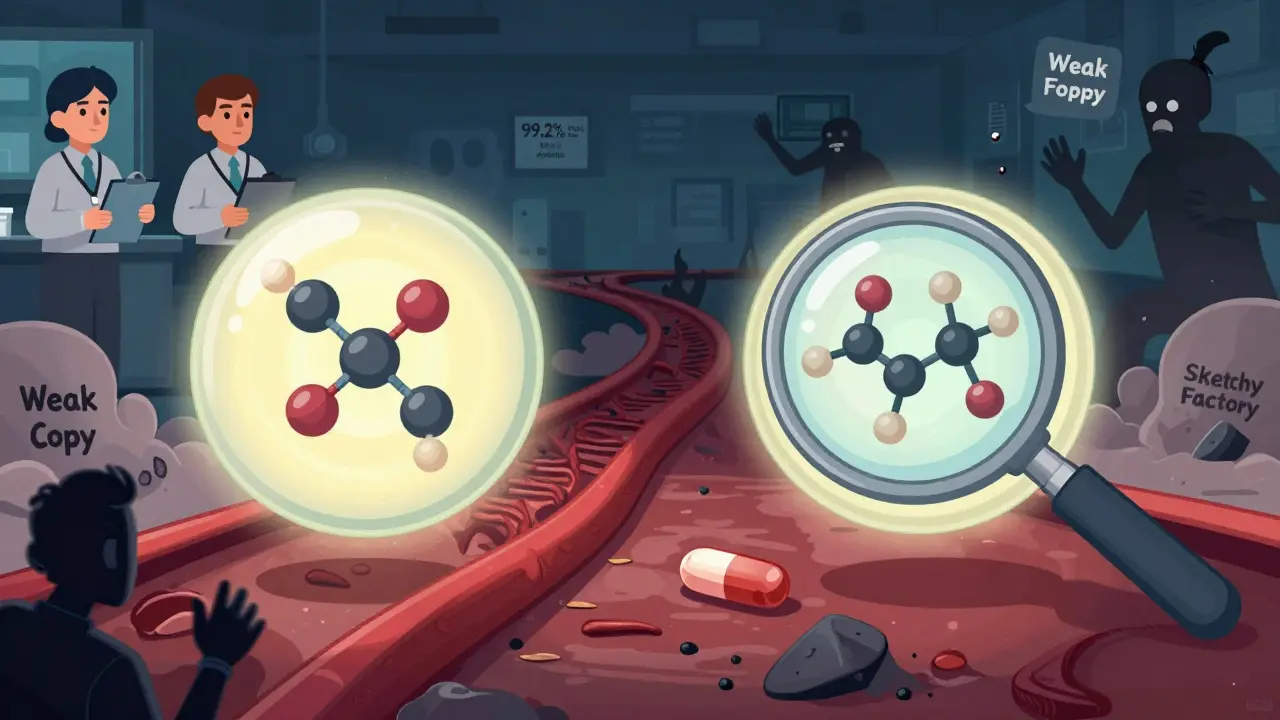
Are generic drugs copies? Let’s cut through the noise.
You’ve probably heard it: generic drugs are just copies. Maybe you’ve been told they’re weaker, less safe, or made in sketchy factories. Some people even refuse them out of fear. But here’s the truth: generic drugs aren’t copies in the way you think. They’re not knockoffs. They’re not fakes. They’re scientifically proven to work the same as the brand-name version - and they’ve been holding up under intense scrutiny for decades.
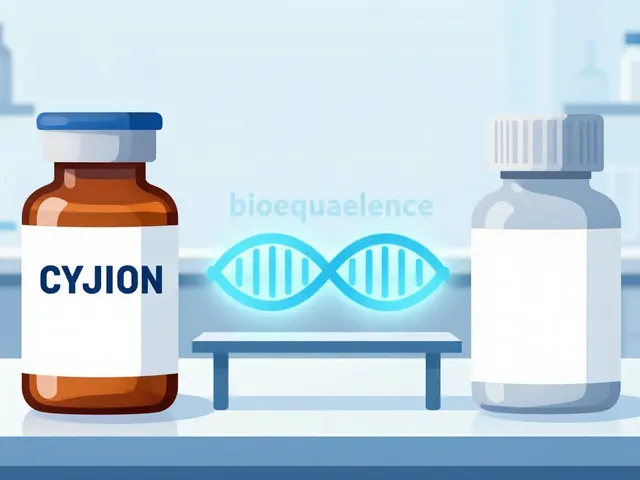
The U.S. Food and Drug Administration (FDA) doesn’t approve a generic drug unless it delivers the exact same amount of active ingredient into your bloodstream at the same rate as the brand-name drug. That’s not opinion. That’s hard science. The standard? The 90% confidence interval for absorption must fall between 80% and 125% of the brand-name drug’s levels. That’s tight. Tighter than most people realize. And it’s not just a theory - it’s tested in real people using blood samples before a single pill hits the shelf.
How generic drugs are approved - no shortcuts, just smarter science
Before 1984, bringing a generic drug to market meant repeating the same expensive clinical trials that the original drug maker spent years and billions on. That made generics rare and expensive. Then came the Hatch-Waxman Act. It changed everything.
The law created the Abbreviated New Drug Application (ANDA) process. Instead of redoing human trials, generic manufacturers only need to prove their product is bioequivalent. That means matching the brand-name drug in strength, dosage form, route of administration, and - most importantly - how your body absorbs it. The FDA doesn’t require new safety or efficacy trials because the active ingredient is identical. The brand-name drug’s safety profile is already established. The generic just has to prove it behaves the same way inside your body.
And it’s not a quick process. The average approval time for a generic drug is 38 months. In 2018, there were over 4,200 applications backed up. Today, thanks to the FDA’s GDUFA IV program, that timeline is shrinking. By 2027, they aim to cut it to just 10 months for priority drugs. That’s not laziness - that’s precision.
What’s actually different - and why it doesn’t matter
Yes, generic pills look different. They’re a different color. They might have a different shape. The name on the pill is not the same. That’s not because the manufacturer is trying to trick you. It’s because trademark law requires it. You can’t sell a pill that looks exactly like a brand-name drug. So they change the inactive ingredients - the fillers, dyes, flavors, and coatings.
These inactive ingredients - called excipients - do nothing to treat your condition. They help the pill hold together, dissolve properly, or taste better. But they can sometimes cause minor reactions in people with rare allergies. For example, someone allergic to a specific dye might get a rash from one brand but not another. That’s not a failure of the generic. It’s a reaction to something that wasn’t in the original formulation.
And here’s what the FDA found after testing over 2,000 generic drugs: the active ingredient concentration is 99.2% on average. Not 80%. Not 90%. 99.2%. That’s nearly identical. The FDA doesn’t allow a generic to be more than 10% off in dissolution rate across different pH levels. That’s how tightly they control it.
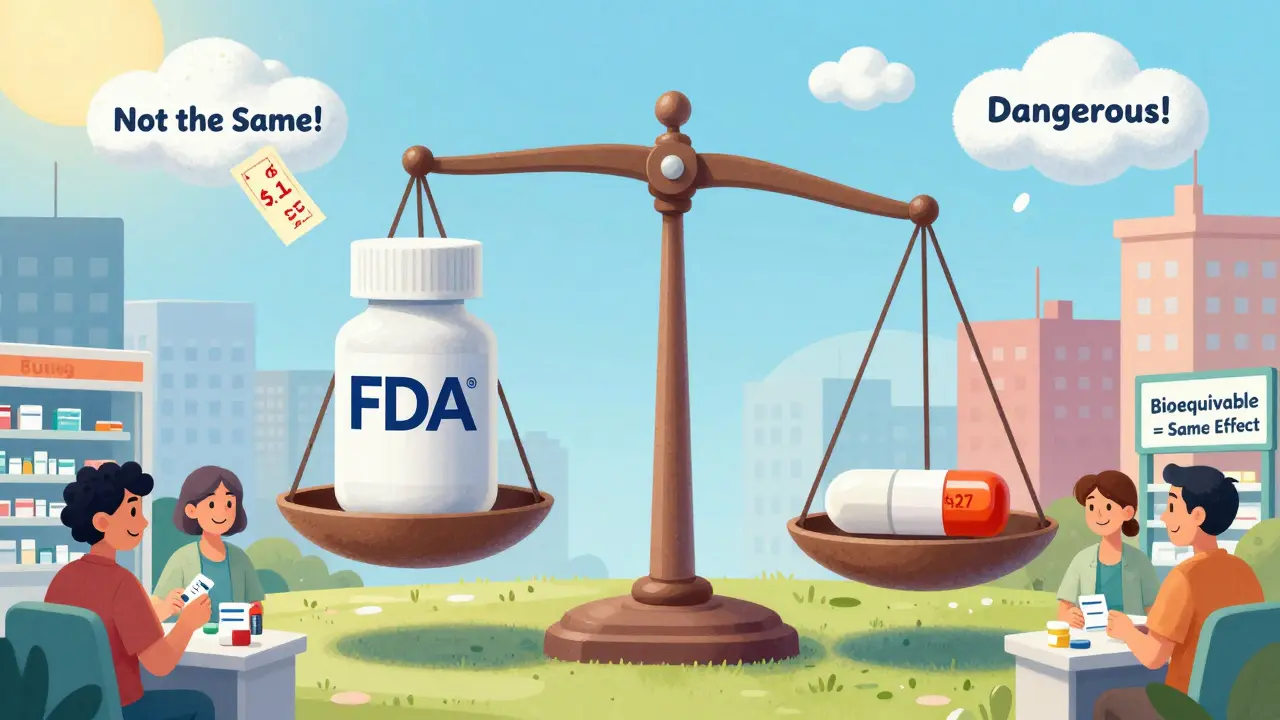
When generics might need extra care - the NTI exception
There are exceptions. Not many - but they matter.
Some drugs have a narrow therapeutic index (NTI). That means the difference between a dose that works and one that’s dangerous is very small. For these, even tiny changes in how your body absorbs the drug can matter. The FDA lists specific NTI drugs: warfarin (a blood thinner), levothyroxine (for thyroid conditions), and certain seizure medications like phenytoin and carbamazepine.
For these, doctors and pharmacists often recommend sticking with the same brand - generic or brand - to avoid any fluctuation. But here’s the twist: studies show that even with NTI drugs, 92% of substitutions work fine with proper monitoring. The issue isn’t the generic. It’s the need for careful tracking. A patient on warfarin might need more frequent blood tests when switching, but that’s standard practice regardless of which version they take.
And let’s be clear: most people aren’t on NTI drugs. For the vast majority - statins, blood pressure meds, antidepressants, acid reflux pills - switching to generic is not just safe. It’s routine. In fact, 98.7% of atorvastatin prescriptions are generic. 99.2% of lisinopril. 97.8% of omeprazole. No chaos. No outbreaks. Just people getting the same treatment at a fraction of the cost.
The real cost difference - and why it changes lives
Let’s talk numbers. In 2023, the average brand-name prescription cost $61.85. The average generic? $4.27. That’s an 85% drop. For someone on multiple medications, that’s hundreds - sometimes thousands - of dollars saved each year.
Medicare Part D beneficiaries saved over $500 annually on average just by switching to generics. A Kaiser Family Foundation survey found that 89% of people who got generics were satisfied. And here’s the kicker: 25% of people prescribed brand-name drugs skip doses or don’t fill prescriptions because of cost. Only 8% of those on generics do. That’s not just savings. That’s better health.
States with mandatory generic substitution laws saw prescription drug costs drop 12.7% compared to states without them. And no increase in hospitalizations. No rise in treatment failures. Just lower bills and better adherence.
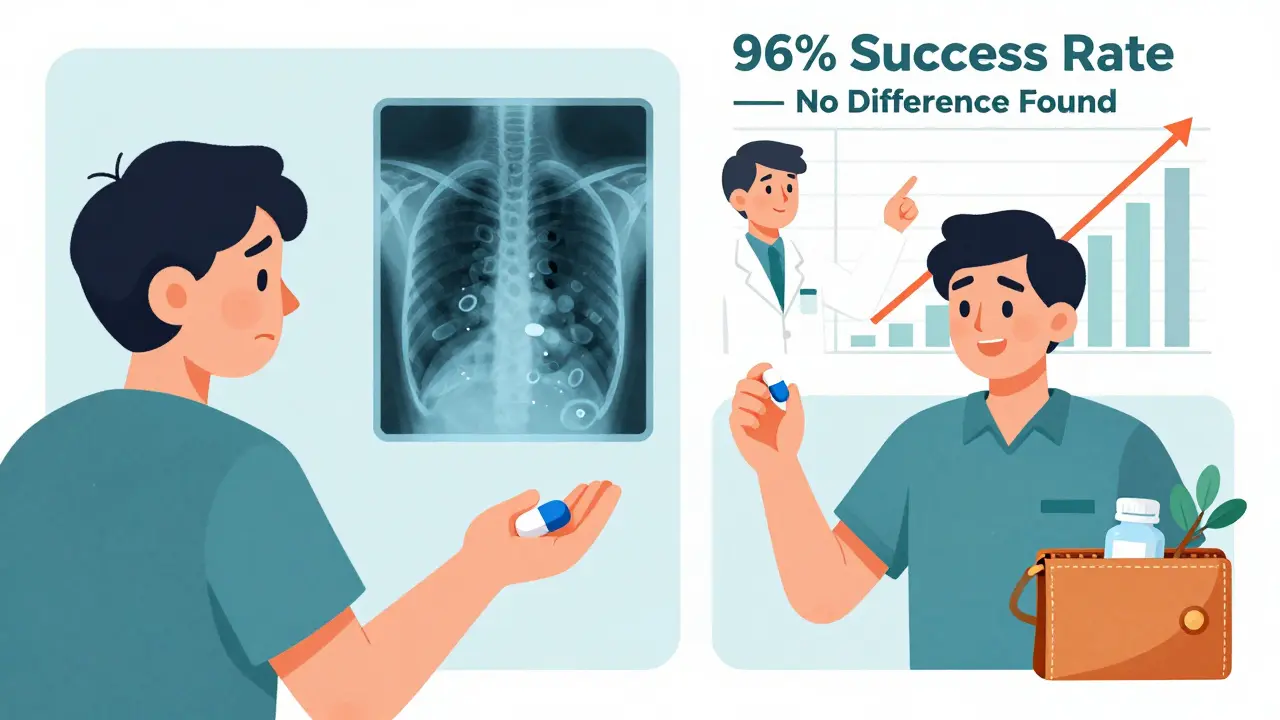
What patients really think - and where the myths come from
On Drugs.com, generics average a 7.2 out of 10 rating. Brand-name drugs? 7.5. That’s a tiny gap. And 82% of users say they feel no difference in effectiveness.
But people still worry. Why? Because they’re told they’re getting a lesser product. Because a pill looks different. Because they’ve heard a story - maybe a friend’s uncle had a bad reaction after switching. Those stories stick. But they’re not the norm.
The FDA reviewed over 1,800 adverse event reports tied to generic drugs between 2018 and 2022. Only 5.5 cases per year were confirmed as actual bioequivalence failures. That’s 0.3%. The rest? Misattributed side effects, unrelated health changes, or placebo effects from expecting something to go wrong.
And here’s something most people don’t know: 65% of patients ask for brand-name drugs because they believe generics contain only 20-80% of the active ingredient. That’s completely false. The FDA tests every batch. If a generic doesn’t meet 99% purity, it’s rejected. No exceptions.
What you can do - and what to ask your pharmacist
If you’re prescribed a medication, ask: Is there a generic? If yes, ask: Is it safe for me? Especially if you’re on a chronic condition like high blood pressure, diabetes, or epilepsy.
For most people, the answer is yes. For a small number on NTI drugs, your doctor might recommend staying with one version. That’s fine. But don’t assume you need the brand-name version just because it’s more expensive.
Pharmacists spend an average of 3.2 minutes per prescription explaining this to patients. That’s time they could spend helping you understand your meds - not defending their quality. You have the right to ask for the brand if you’re uncomfortable. But you also have the right to know you’re not sacrificing safety.
And if you’re on Medicare Part D? By 2025, you’ll likely be switched to generics automatically unless your doctor says otherwise. That’s not a policy against you. It’s a policy to help you stay healthy without going broke.
The bottom line
Generic drugs aren’t copies. They’re equivalent. They’re tested. They’re regulated. They’re cheaper - and they work.
For 96% of all prescriptions, switching to generic causes zero issues. For the other 4%, it’s not because the drug is flawed. It’s because those drugs require careful management. That’s not a flaw in the system. It’s a reason to be smarter about how we use it.
Stop fearing the generic. Start asking for it. Your wallet - and your health - will thank you.
Are generic drugs as effective as brand-name drugs?
Yes, for the vast majority of medications. The FDA requires generic drugs to have the same active ingredient, strength, dosage form, and route of administration as the brand-name version. They must also prove bioequivalence - meaning they deliver the same amount of medicine into your bloodstream at the same rate. Studies show 96% of patients experience no difference in effectiveness when switching to generics.
Why do generic drugs look different?
Generic drugs look different because U.S. trademark laws require them to be visually distinct from brand-name versions. This means changes in color, shape, size, or markings. These differences are only in inactive ingredients like dyes or fillers - not the active medicine. The active ingredient is identical, and the drug works the same way.
Can generic drugs cause more side effects?
Side effects from the active ingredient are the same as the brand-name version. But some people may react to different inactive ingredients - like a dye or preservative - in a specific generic. These reactions are rare and usually mild, like a rash or stomach upset. If you notice a change after switching, talk to your pharmacist or doctor. It’s not the drug failing - it’s a possible sensitivity to an excipient.
Are generic drugs made in lower-quality factories?
No. Generic drugs are made in facilities that meet the same FDA standards as brand-name manufacturers. In fact, many brand-name companies also produce generic versions of their own drugs. The FDA inspects all manufacturing sites - whether in the U.S., India, or elsewhere - with the same rigor. There’s no evidence that generic drugs are made in "lower-quality" facilities.
Should I always choose the generic version?
For most people, yes. Over 90% of prescriptions in the U.S. are filled with generics because they’re safe, effective, and affordable. Exceptions include narrow therapeutic index (NTI) drugs like warfarin or levothyroxine, where your doctor might recommend sticking with one version for consistency. Always discuss your options with your doctor or pharmacist - but don’t assume brand-name is better unless there’s a specific medical reason.
Why are generic drugs so much cheaper?
Generic drugs cost less because manufacturers don’t have to repeat expensive clinical trials. Once a brand-name drug’s patent expires, other companies can produce the same active ingredient using the existing safety data. This creates competition, which drives prices down. On average, generics cost 85% less than brand-name drugs - saving patients and the healthcare system billions each year.
Can I switch back to the brand-name drug if I don’t like the generic?
Yes. You can always ask your doctor for a brand-name prescription, or request that your pharmacist dispense the brand even if a generic is available. In 28 states, you can even ask to pay the generic price for the brand-name drug if it’s therapeutically equivalent. But before switching back, make sure it’s not just a perception issue - many people feel different after switching simply because they expect to.
Are biosimilars the same as generic drugs?
No. Biosimilars are not exact copies like traditional generics. They’re highly similar versions of complex biologic drugs - like those used for cancer, arthritis, or autoimmune diseases. Because biologics are made from living cells, they can’t be replicated exactly. Biosimilars must show no clinically meaningful differences in safety or effectiveness, but the approval process is more complex than for traditional generics. As of 2023, biosimilars make up less than 5% of the biologics market, but that’s growing fast.



8 Comments