C. diff prevention: How to Stop Deadly Infections Before They Start
When you take antibiotics, you’re not just killing bad bacteria—you’re also wiping out the good ones that keep your gut in balance. That’s when Clostridioides difficile, a bacteria that causes severe diarrhea and life-threatening colon inflammation can take over. Often called C. diff, this infection doesn’t just happen in hospitals—it’s spreading in homes, nursing facilities, and even among healthy people who’ve recently taken antibiotics. It’s not rare. In the U.S., over 500,000 cases happen every year, and nearly 30,000 people die from it. The good news? Most cases are preventable with simple, proven steps.
One of the biggest triggers is antibiotic use, especially broad-spectrum ones like clindamycin, fluoroquinolones, and cephalosporins. These drugs don’t pick and choose—they clear out entire neighborhoods of gut bacteria, leaving room for C. diff to grow unchecked. But it’s not just about what you take. hand hygiene, specifically soap and water (not just hand sanitizer) is your first real defense. C. diff spores survive on doorknobs, phones, and toilet handles for weeks. Alcohol-based sanitizers don’t kill them. Only soap and water scrub them off your skin. And if you’re in a hospital or care facility, ask staff to wash their hands before touching you. It’s not rude—it’s essential.
Probiotics, especially Saccharomyces boulardii, show promise in reducing C. diff risk during antibiotic treatment, but they’re not magic. The strongest protection is avoiding unnecessary antibiotics altogether. If your doctor says you need one, ask: Is this really needed? Are there narrower options? And if you’ve had C. diff before, your risk of getting it again is high—up to 20% after the first episode. That’s why doctors now recommend fecal microbiota transplants (FMT) for recurring cases. It sounds extreme, but it works better than most drugs. You don’t need to wait until you’re sick to act. Start now: wash your hands, question every antibiotic, and don’t assume "it won’t happen to me." The posts below show real-world strategies—from how pharmacies track infection risks to how patients recovered after multiple relapses—so you know exactly what to do before, during, and after treatment.
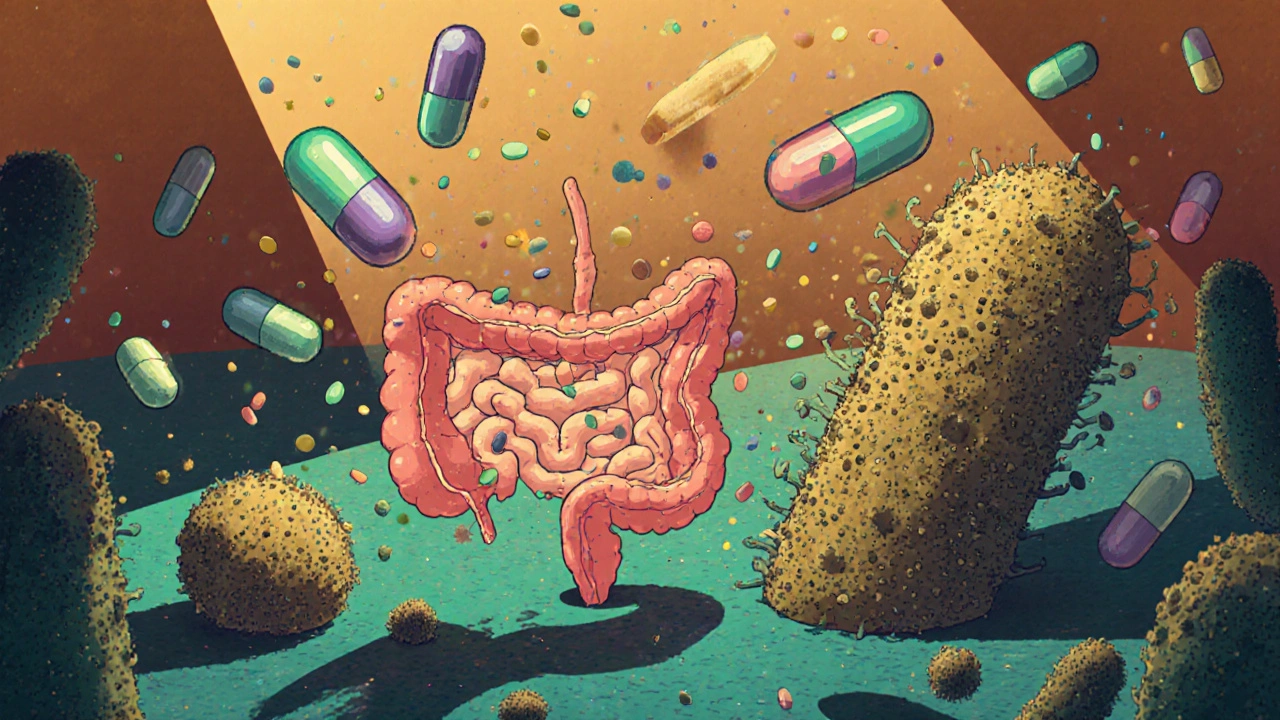
Clostridioides difficile: Understanding Antibiotic-Associated Diarrhea and How to Prevent It
Clostridioides difficile causes severe antibiotic-associated diarrhea and can be life-threatening. Learn how it spreads, who’s at risk, why probiotics don’t work for prevention, and what treatments actually work today.
read more