
More than 1 in 10 Americans take an SSRI antidepressant. If you’ve been prescribed one-or are considering it-you’ve probably heard conflicting things. Some say it’s life-changing. Others say it left them feeling numb or worse. The truth? SSRIs work for many, but not everyone. And understanding how they work-and what might go wrong-is the first step to making a smart decision.
What SSRIs Actually Do in Your Brain
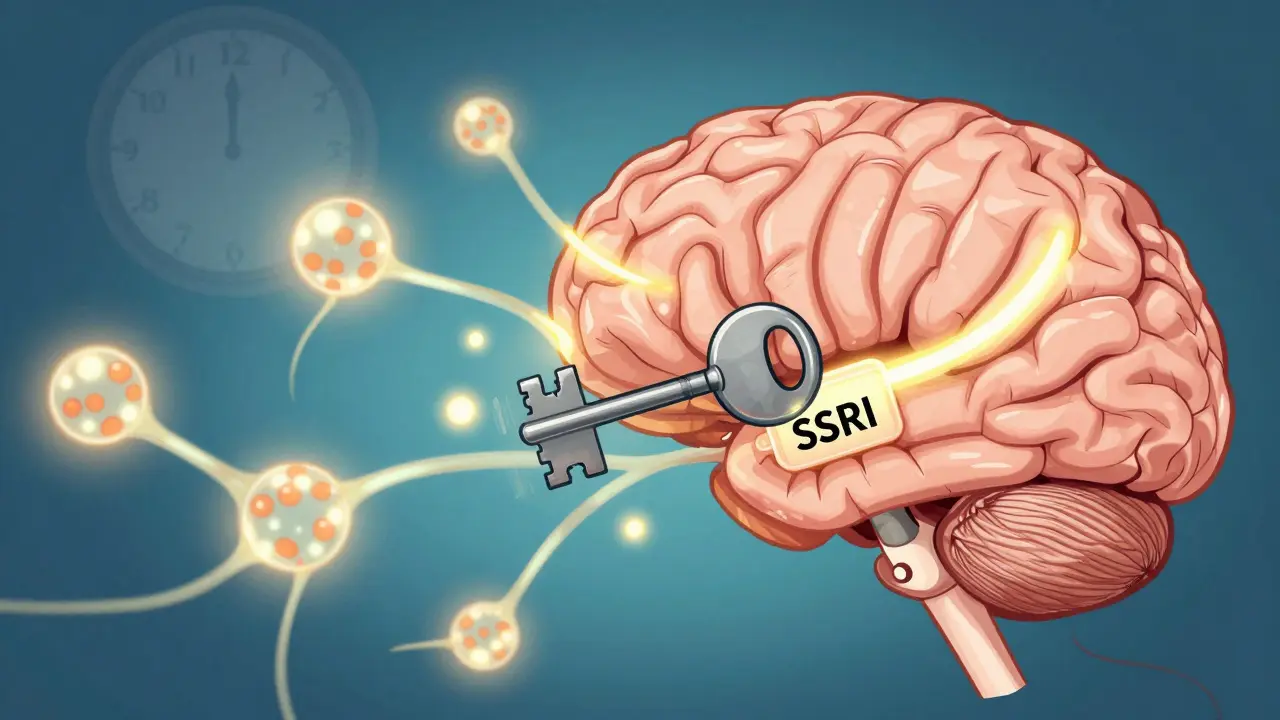
SSRIs stand for Selective Serotonin Reuptake Inhibitors. That’s a mouthful, but here’s what it really means: your brain uses a chemical called serotonin to help regulate mood, sleep, and anxiety. After serotonin is released between nerve cells, it’s usually sucked back up like a vacuum cleaner. SSRIs block that vacuum. By doing so, they leave more serotonin floating around in the space between neurons, giving your brain more of it to work with.
This isn’t magic. It’s chemistry. The key protein involved is called the serotonin transporter, or SERT. SSRIs latch onto SERT like a key in a lock and stop it from pulling serotonin back in. Studies using brain scans show that within an hour of taking an SSRI, serotonin levels in the synaptic space rise from about 0.1-0.5 nanomolar to 2-3 nanomolar. That’s a big jump. But here’s the catch: you won’t feel better right away.
It takes 4 to 6 weeks to notice real improvement. Why? Because the brain doesn’t respond to more serotonin by just turning up the volume. Instead, it adapts. Over time, receptors called 5HT1A autoreceptors-located on the serotonin-producing neurons themselves-become less sensitive. This lets the neurons fire more freely, releasing even more serotonin over time. It’s like turning on a faucet and waiting for the pipes to fill up before the water flows out strong. That’s why doctors tell you to stick with it, even if you feel worse at first.
The Six Main SSRIs You’ll Encounter
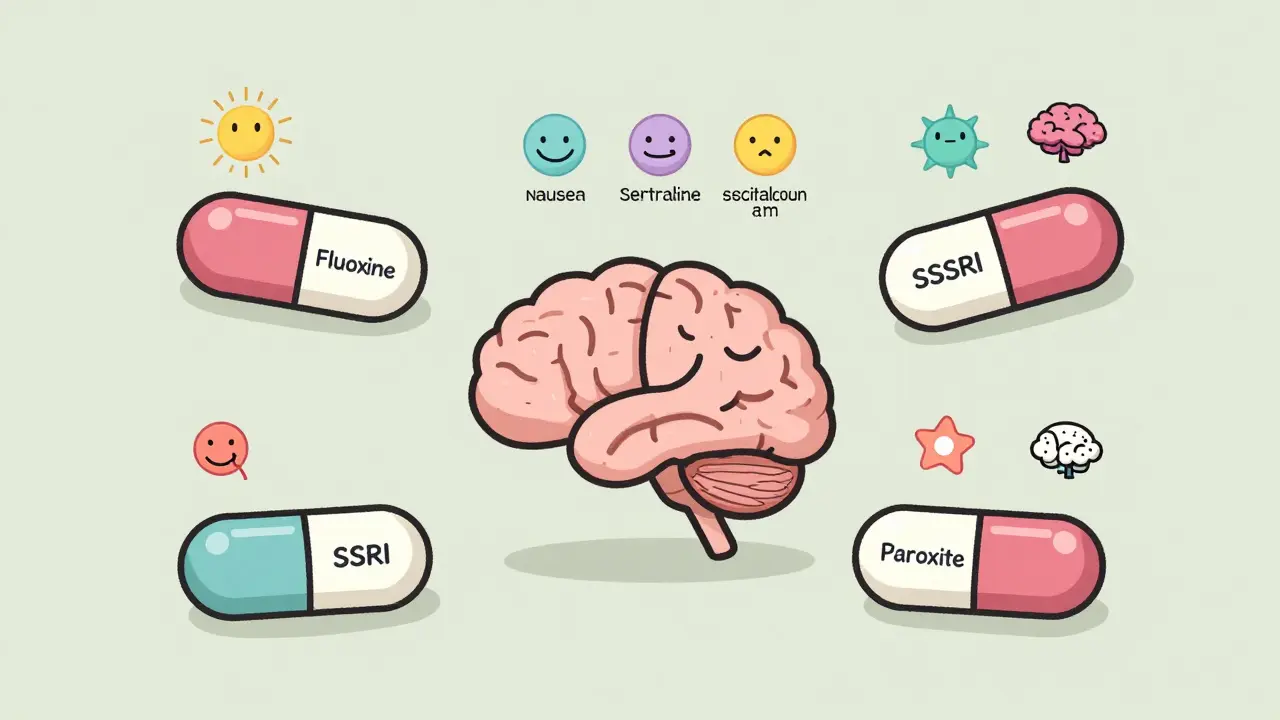
Not all SSRIs are the same. There are six main ones approved in the U.S., each with different strengths and quirks:
- Fluoxetine (Prozac): Longest half-life-up to 16 days. This means it stays in your system longer, which can help if you miss a dose. Often used for depression, OCD, and bulimia.
- Sertraline (Zoloft): One of the most prescribed. Good balance of effectiveness and tolerability. Used for depression, anxiety, PTSD, and OCD.
- Escitalopram (Lexapro): The active form of citalopram. Often better tolerated than citalopram. High user ratings for anxiety and depression.
- Citalopram (Celexa): Older, cheaper, and widely used. Limited to 40 mg/day due to heart rhythm concerns.
- Paroxetine (Paxil): Shortest half-life (21 hours). Easy to miss doses, which can trigger withdrawal. Known for more sexual side effects and weight gain.
- Fluvoxamine (Luvox): Less commonly used for depression, but approved for OCD and sometimes anxiety. Also has some activity on sigma-1 receptors, which may help with focus.
Doctors often start with sertraline or escitalopram because they have the best mix of effectiveness and fewer side effects. Fluoxetine is sometimes chosen for patients who struggle with adherence-its long half-life means fewer withdrawal issues if you forget a pill.
Common Side Effects: What Most People Experience
Side effects are real. And they’re common-especially in the first few weeks. About 74% of users report at least one side effect early on, according to user surveys from mental health forums. Most fade with time, but some stick around.
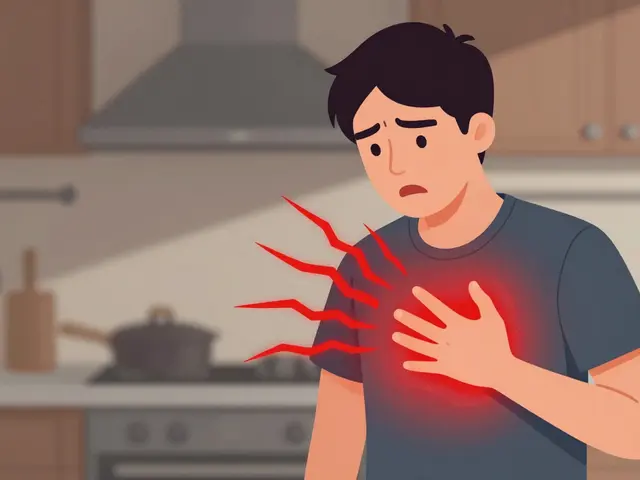
- Nausea and stomach upset: Happens in up to 30% of users. Usually improves within 1-2 weeks. Taking the pill with food helps.
- Insomnia or drowsiness: SSRIs can either wake you up or make you tired. Sertraline is more likely to cause insomnia; paroxetine more likely to cause sleepiness.
- Sexual side effects: This is the most reported long-term issue. Up to 58% of users say they experience reduced libido, delayed orgasm, or erectile dysfunction. Escitalopram and sertraline are slightly better here than paroxetine or fluoxetine.
- Emotional blunting: Some people feel like they’re not themselves-less joy, less sadness, just flat. Around 42% of users report this. It’s not depression returning-it’s a side effect. Reducing the dose or switching can help.
- Weight gain: Not universal, but common with long-term use. Paroxetine and fluoxetine are most linked to weight gain. Escitalopram and sertraline are less likely to cause it.
These side effects don’t mean the drug isn’t working. They mean your body is adjusting. But if they’re unbearable after 6-8 weeks, talk to your doctor. There are options.
The Dangerous Myths and Real Risks
There’s a myth that SSRIs fix depression by “rebalancing serotonin.” That’s not quite right. We don’t know if depression is caused by low serotonin. A 2022 analysis in Molecular Psychiatry found that only 25-30% of depressed people actually have low serotonin levels. So why do SSRIs help? It’s likely not about fixing a chemical imbalance-it’s about changing how your brain adapts over time. Think of it more like training a muscle than refilling a tank.
There’s also a real risk: increased suicidal thoughts in people under 25. The FDA added a black box warning in 2004 after studies showed a 1.5-2 times higher risk in teens and young adults during the first month of treatment. This doesn’t mean SSRIs cause suicide-it means they can temporarily increase agitation or anxiety before mood improves. That’s why close monitoring in the first 4 weeks is critical. Parents, partners, and clinicians need to watch for worsening anxiety, irritability, or talk of self-harm.
Another risk: discontinuation syndrome. If you stop suddenly-especially with paroxetine or fluvoxamine-you can get dizziness, brain zaps, nausea, or flu-like symptoms. This isn’t addiction. It’s your nervous system adjusting. Always taper off slowly under medical supervision.
What Works Better? Comparing SSRIs to Other Options
SSRIs aren’t the only choice. But they’re the most common for good reason.
Compared to older antidepressants like tricyclics (TCAs), SSRIs are much safer. TCAs can cause dangerous heart rhythm changes and are deadly in overdose. SSRIs? Far less risky. A 2019 meta-analysis found TCAs caused 80-90% more heart-related side effects.
MAOIs (monoamine oxidase inhibitors) can be more effective for atypical depression-think fatigue, oversleeping, overeating-but they require strict diet rules (no aged cheese, wine, or cured meats) and risky drug interactions. Most doctors avoid them unless SSRIs have failed.
Studies like the STAR*D trial-which tracked over 4,000 patients-found SSRIs led to remission in 28-33% of people in the first treatment step. That’s not amazing, but it’s better than older drugs. The 2022 Cochrane Review ranked SSRIs 5th in effectiveness out of 21 antidepressants-but 2nd in acceptability. That means people stick with them longer than most other options.
There are newer drugs like vortioxetine and agomelatine that may be slightly more effective, but they’re expensive and not always covered by insurance. SSRIs? Most are available as generics for $4-$40 a month.
When SSRIs Don’t Work
One in three people don’t respond to the first SSRI they try. That doesn’t mean you’re broken. It means depression is complicated. Genetics, inflammation, stress levels, and even gut health play roles.
Research from 2024 shows that people with high inflammation (C-reactive protein over 3 mg/L) are 40% less likely to respond to SSRIs. That’s why some doctors now check blood markers before prescribing.
Genetic testing is also emerging. A test can look at your SLC6A4 gene (the one that makes the serotonin transporter) and predict whether you’re likely to respond to a specific SSRI with 78% accuracy. It’s not perfect-but it’s getting there.
If SSRIs don’t help, options include:
- Switching to another SSRI (some people respond to one but not another)
- Adding therapy (CBT is proven to work alongside medication)
- Trying a different class, like SNRIs (venlafaxine, duloxetine)
- Considering non-drug options like TMS (transcranial magnetic stimulation)
What to Expect When Starting an SSRI
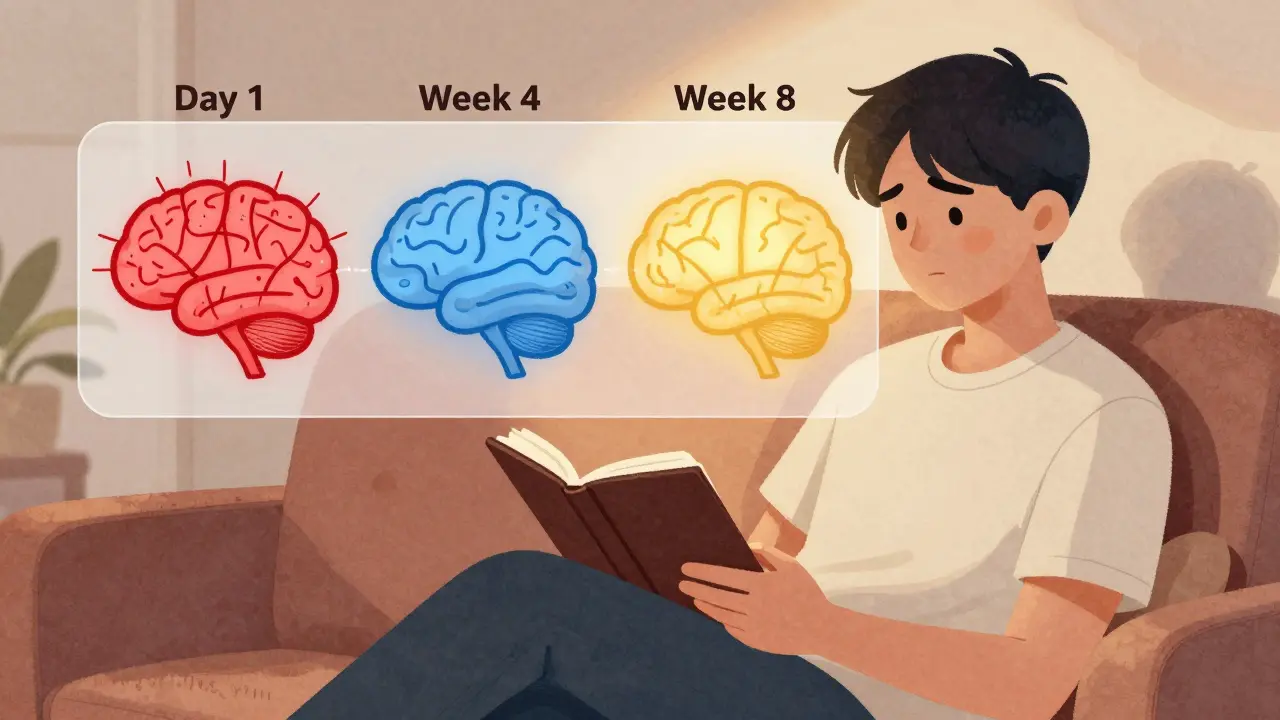
Here’s a realistic timeline:
- Days 1-7: Side effects hit hardest. Nausea, jitteriness, insomnia. This is normal. Don’t quit.
- Weeks 2-4: Side effects start to fade. Some people feel a little better. Others feel worse. Anxiety can spike. This is common.
- Weeks 4-6: You might notice small changes: sleeping better, less crying, more energy.
- Weeks 8-12: Full effect. If you haven’t felt improvement by now, talk to your doctor about adjusting the dose or switching.
Keep a mood journal. Note sleep, energy, irritability, and anxiety levels weekly. It helps you and your doctor see patterns.
And remember: SSRIs don’t make you happy. They help you feel your emotions again. For some, that means crying more at first. For others, it means finally feeling calm instead of wired.
Final Thoughts
SSRIs aren’t a cure. But they’re one of the most studied, safest, and widely used tools we have for depression and anxiety. They work for millions. They don’t work for others. That’s not failure-it’s biology.
If you’re considering one, go in with eyes open. Expect side effects. Give it time. Don’t stop suddenly. And know that if one doesn’t work, another might. There’s no shame in trying, failing, and trying again. Mental health isn’t about finding the perfect pill. It’s about finding what helps you live better.
Do SSRIs change your personality?
No, SSRIs don’t change your personality. But some people feel emotionally blunted-less intense joy, less sadness. This isn’t who you are; it’s a side effect. Lowering the dose or switching medications often restores natural emotional range.
Can you drink alcohol while on SSRIs?
It’s not recommended. Alcohol can worsen depression and anxiety over time. It also increases drowsiness and dizziness. Even moderate drinking can reduce the effectiveness of SSRIs. If you drink, talk to your doctor about safe limits.
How long should you stay on an SSRI?
Most doctors recommend staying on an SSRI for at least 6-12 months after symptoms improve. For recurrent depression, longer use (2-5 years or more) is common. Stopping too soon increases the risk of relapse. Always taper slowly under medical supervision.
Are SSRIs addictive?
No, SSRIs are not addictive. They don’t cause cravings or euphoria. But stopping abruptly can cause withdrawal-like symptoms (brain zaps, nausea, dizziness). This is called discontinuation syndrome and is not addiction. Tapering slowly prevents it.
Why do SSRIs take so long to work?
SSRIs increase serotonin within hours, but your brain needs weeks to adapt. The key is desensitization of 5HT1A autoreceptors, which takes 2-3 weeks. Only then do serotonin-releasing neurons fire more strongly, boosting serotonin in areas that regulate mood. That’s why you feel better after 4-6 weeks, not 4-6 hours.


12 Comments