
Antidepressant Matchmaker
How This Tool Works
Based on your responses to these questions, we'll identify which new antidepressant might best match your situation. This tool analyzes key factors like side effect priorities, treatment history, and medical conditions to provide personalized recommendations.
Note: This tool is for informational purposes only. Always consult with your healthcare provider before making any changes to your medication regimen.
Question 1: What's your most important priority?
Focus on reducing sexual dysfunction, weight gain, and other common side effects
Prefer treatment that improves symptoms in days rather than weeks
Need to avoid medications that cause significant weight changes
Need the most affordable option that works for you
Question 2: What's your current situation?
You've never taken an antidepressant before
You've stopped previous antidepressants due to side effects
You've tried at least two other antidepressants with limited success
You're experiencing depression after childbirth
Question 3: Do you have any of these health conditions?
Question 4: How quickly do you need improvement?
Need rapid symptom relief, especially for suicidal thoughts
Can wait a couple weeks for significant improvement
Prefer quick improvement but not immediate
Comfortable with traditional antidepressant timeline
Question 5: What's your budget situation?
Your insurance covers most or all of medication costs
Can't rely on insurance to cover medication costs
Budget is a primary concern
Your Antidepressant Recommendations
Important note: This tool provides general guidance based on the information you've provided. Always discuss any medication decisions with your doctor or healthcare provider.
Next steps: When discussing these options with your doctor, ask about: 1) Whether the medication is covered by your insurance 2) How to manage potential side effects 3) The expected timeline for improvement
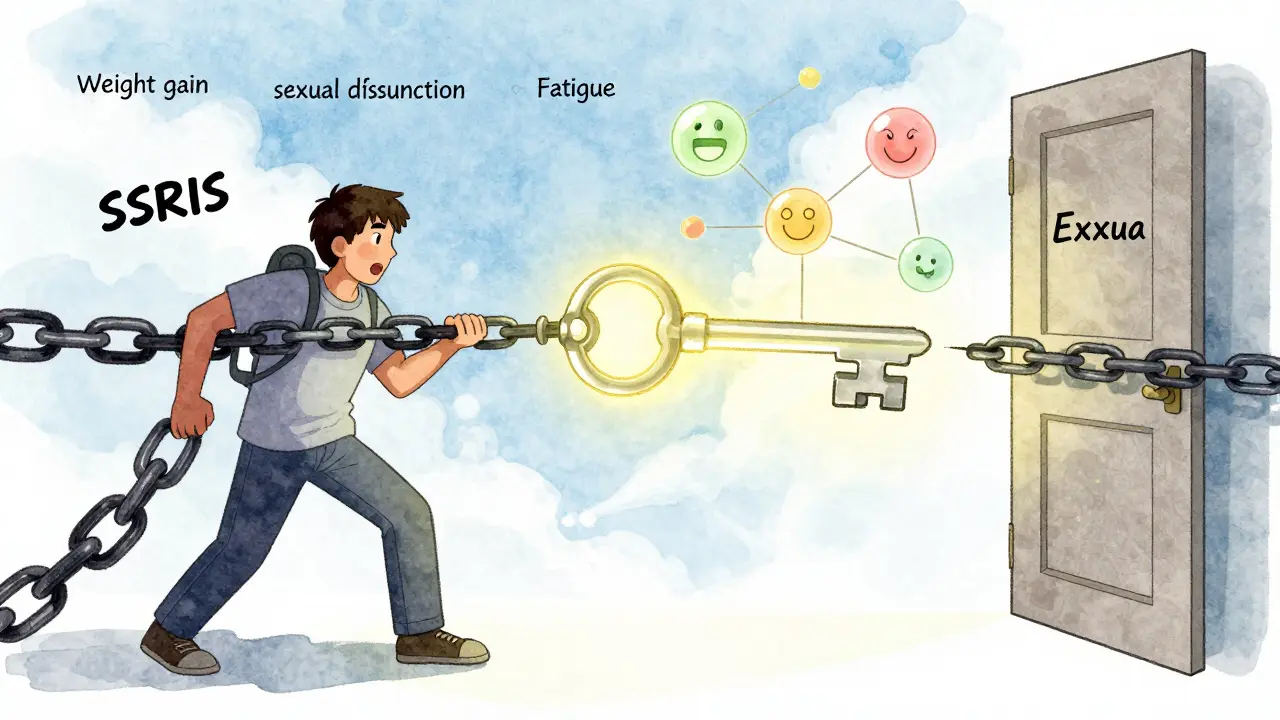
For decades, treating depression meant accepting a trade-off: you might feel better emotionally, but you’d likely deal with weight gain, sexual problems, or constant fatigue. That’s changing. In 2026, a new wave of antidepressants is hitting the market-not just as alternatives, but as smarter options designed to work faster and cause fewer of the side effects that make people quit their meds.
Why the old antidepressants aren’t cutting it anymore
Most people start with SSRIs like sertraline or escitalopram. They’ve been the go-to for years because they’re cheap, widely available, and generally safe. But here’s the problem: between 30% and 70% of users report sexual dysfunction. Nearly half say they gain weight. About one in three gets nauseous or has diarrhea. These aren’t rare side effects-they’re the norm. That’s why so many patients stop taking them. A 2025 study in The Lancet found that nearly 40% of people discontinue their first antidepressant within six months, mostly because of side effects, not lack of effectiveness. If you’re struggling with low energy and a lack of interest in sex, it’s hard to stay motivated to take a pill every day.The breakthroughs: what’s actually new in 2026
The real shift isn’t just about new drugs. It’s about new mechanisms. Instead of just boosting serotonin, newer antidepressants target other brain systems that control mood, stress, and even how fast you recover from emotional pain. Three drugs stand out:- Exxua (gepirone)-approved in September 2023, it’s the first new antidepressant chemical entity in over a decade. It works on serotonin receptors differently than SSRIs, avoiding the overstimulation that causes sexual side effects. Clinical trials show only 2-3% of users report sexual dysfunction, compared to 30-50% on SSRIs.
- Zuranolone (Zurzuvae)-approved for postpartum depression in 2023 and expanded to major depressive disorder in October 2025, it’s a neurosteroid that calms overactive brain circuits. You take it as a pill for just 14 days. Many feel better within 3 days. Side effects? Dizziness in 25%, sleepiness in 20%. No weight gain. No sexual side effects.
- Auvelity (dextromethorphan/bupropion)-approved in 2022, this combo hits two targets at once: NMDA receptors (like ketamine) and dopamine/norepinephrine. It works in 1-2 weeks, with less weight gain than older drugs like duloxetine. It’s also the only one proven to improve cognitive function in depressed patients-something SSRIs don’t do.
How fast do they work? The game-changer
Traditional antidepressants take 4 to 8 weeks to show results. That’s a long time to feel hopeless. The new drugs? They work in days. SPRAVATO (esketamine), a nasal spray approved in 2019, can reduce suicidal thoughts in under 24 hours. In a 2023 JAMA Psychiatry study, patients saw a 40% drop in depression scores within two days. Zuranolone showed 53% of patients responding by day 15, compared to 35% on placebo. Exxua users reported feeling more motivated within 10 days. This speed matters. For people in crisis, waiting six weeks isn’t an option. For new mothers with postpartum depression, waiting even two weeks can mean missing critical bonding time. These drugs aren’t just better tolerated-they’re life-saving in ways older ones couldn’t be.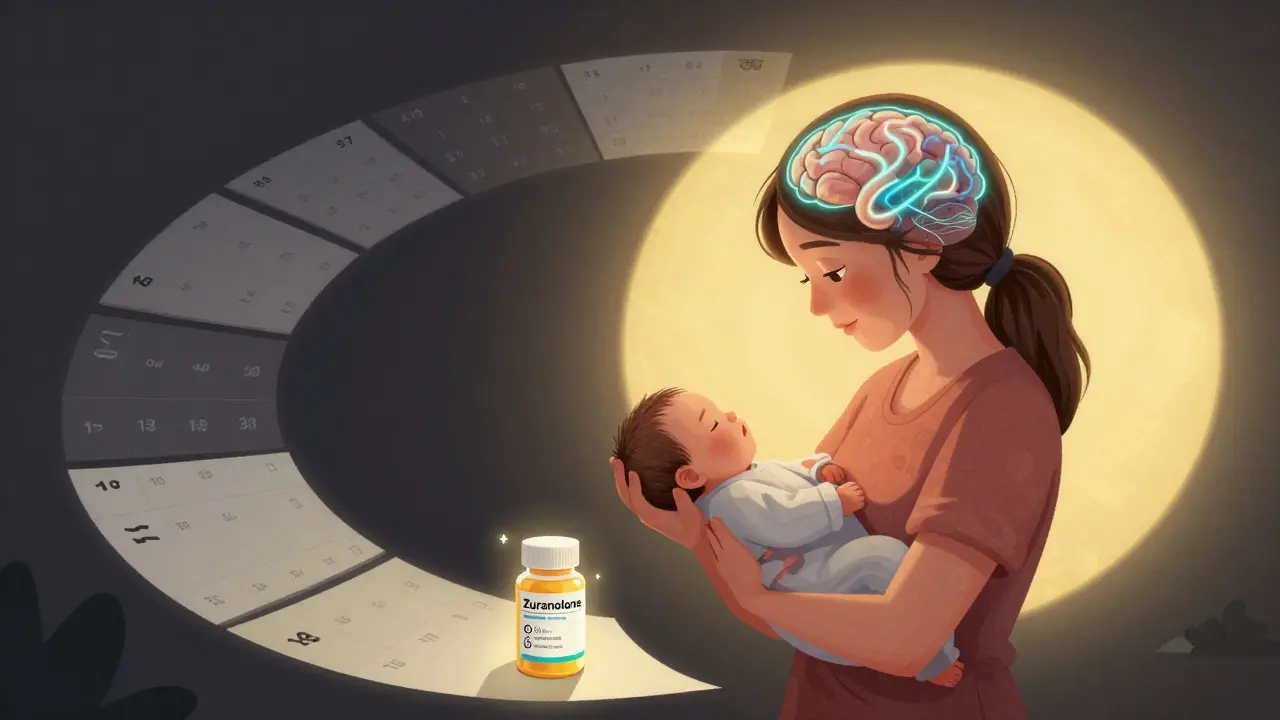
Side effect comparison: what you actually get
Here’s how the new drugs stack up against the old:| Drug | Sexual Dysfunction | Weight Gain | Dizziness/Sleepiness | Onset of Action |
|---|---|---|---|---|
| SSRIs (e.g., sertraline, escitalopram) | 30-70% | 10-15% over 6 months | 15-25% | 4-8 weeks |
| Exxua (gepirone) | 2-3% | Minimal (under 1%) | 10-12% | 7-10 days |
| Zuranolone (Zurzuvae) | 0% | 0% | 25% dizziness, 20% sleepiness | 2-5 days |
| Auvelity (dextromethorphan/bupropion) | 15-20% lower than duloxetine | 15-20% lower than duloxetine | 12-18% | 1-2 weeks |
| SPRAVATO (esketamine) | 15% | Minimal | 45-55% dissociation | 24-48 hours |
Notice something? The new drugs don’t just avoid sexual side effects-they avoid weight gain entirely. That’s huge. For someone who’s already struggling with body image or has diabetes or heart disease, avoiding extra pounds isn’t a bonus-it’s essential.
But they’re not perfect
None of these are magic bullets. SPRAVATO causes dissociation-feeling detached from reality-in over half of users. Some describe it as terrifying. That’s why it’s only given in certified clinics with 2-hour monitoring. You can’t just pick it up at the pharmacy. Zuranolone requires taking it with food. Skip that, and your body absorbs less than half the dose. It’s also expensive: a 14-day course costs around $9,450. Insurance often denies coverage unless you’ve tried at least two other meds first. And here’s the biggest gap: we don’t know what happens after 6 months. Almost all trials last 6-8 weeks. No one’s tracking whether these drugs cause long-term brain changes, dependency, or rebound depression. Dr. Prasad Nishtala from STAT News put it bluntly: “We’re prescribing drugs with no long-term safety data.”Who benefits the most?
These drugs aren’t for everyone. But they’re perfect for specific groups:- People with sexual side effects from SSRIs-Exxua and Zuranolone are game-changers here.
- Postpartum mothers-Zuranolone is the first drug approved specifically for this, with 70% response rates in trials.
- Treatment-resistant depression-If you’ve tried three or more antidepressants and still feel stuck, SPRAVATO, Auvelity, or Zuranolone have 50-65% response rates, compared to 30-40% for SSRIs.
- People with obesity, diabetes, or heart disease-Avoiding weight gain and blood pressure spikes is critical. Exxua and Zuranolone don’t raise either.
On the flip side, people with a history of psychosis or severe cardiovascular issues should avoid SPRAVATO. Those with liver disease need to be cautious with Zuranolone. This isn’t a one-size-fits-all solution-it’s a toolkit.
Cost and access: the hidden barrier
Price is a huge hurdle. Generic fluoxetine costs $4 for 30 pills. Zuranolone? Nearly $10,000. SPRAVATO runs $880 per dose. Even with insurance, prior authorizations are common. In 92% of commercial plans, you need to prove you’ve failed other meds before they’ll cover SPRAVATO. And access? Only 1,243 clinics nationwide are certified to give SPRAVATO. If you live in rural Iowa or Mississippi, you might have to drive 300 miles. Zuranolone can be taken at home, but you need a psychiatrist who knows how to prescribe it. A 2025 AAFP survey found only 38% of primary care doctors feel confident prescribing it.What’s coming next?
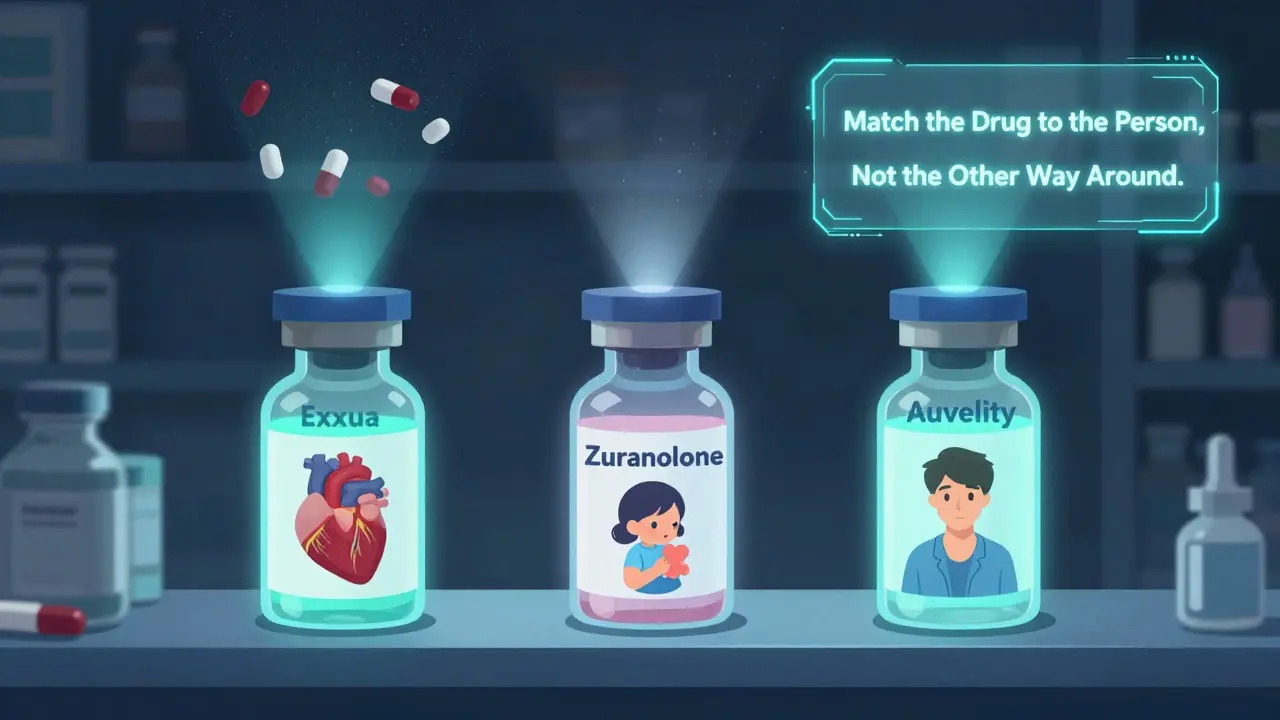
The pipeline is full. Aticaprant, a kappa opioid blocker, is in Phase 3 trials with 60% response rates in treatment-resistant depression and almost no weight gain. Psilocybin (magic mushroom extract) is still investigational but showed 6-month remission after just two doses in a 2024 NEJM study. The NIH is funding a $2.4 million project to create a genetic test that predicts which antidepressant will cause which side effect for you-with 85% accuracy. The future isn’t about finding the “best” antidepressant. It’s about matching the right drug to the right person. If you have heart problems, avoid amitriptyline. If you’re a new mom, Zuranolone might be your best shot. If you can’t stand sexual side effects, Exxua could change your life.What should you do?
If you’ve been on an SSRI for months and still feel off, talk to your doctor. Ask: “Are there newer options with fewer side effects that might work for me?” Bring up Exxua, Zuranolone, or Auvelity by name. Don’t assume your doctor knows about them-they might not. Use the NIMH’s ‘Choosing an Antidepressant’ tool to print out side effect comparisons and take them to your appointment. Don’t give up because the first pill didn’t work. The landscape has changed. There are better options now. You just have to ask for them.Are the new antidepressants safer than SSRIs?
Yes, in key ways. Newer drugs like Exxua and Zuranolone cause far less sexual dysfunction and weight gain-two of the most common reasons people stop taking antidepressants. However, they have different risks. SPRAVATO can cause dissociation, and Zuranolone can cause dizziness. Safety depends on your health history. There’s no single “safest” drug-just the safest one for you.
How soon will I feel better on the new antidepressants?
Much faster than traditional antidepressants. Zuranolone can improve symptoms in 2-5 days. Exxua often works in 7-10 days. SPRAVATO can reduce suicidal thoughts in under 24 hours. SSRIs typically take 4-8 weeks. Speed matters, especially if you’re in crisis or caring for a newborn.
Why are the new antidepressants so expensive?
They’re new, patented drugs with high R&D costs. Zuranolone’s 14-day course costs about $9,450, and SPRAVATO is $880 per dose. Insurance often requires you to try cheaper SSRIs first. Some manufacturers offer patient assistance programs. Check with the drugmaker or use GoodRx for coupons.
Can I switch from an SSRI to a new antidepressant?
Yes, but not without medical supervision. Stopping an SSRI suddenly can cause withdrawal. Your doctor will likely taper you off slowly before starting the new drug. Some combinations (like switching to Auvelity) can be done more directly. Never switch on your own.
Do these new drugs work for anxiety too?
Some do. Exxua and Auvelity are approved for depression but show benefits for anxiety symptoms in trials. Zuranolone is only approved for depression and postpartum depression-not generalized anxiety. SPRAVATO is approved for depression with suicidal thoughts, not anxiety. Always check the FDA label for approved uses.
Are there natural alternatives with similar side effect profiles?
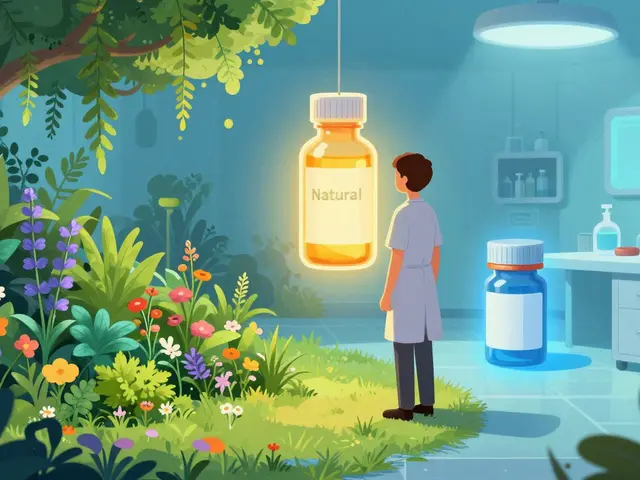
No. Supplements like St. John’s Wort or omega-3s may help mild depression but don’t match the speed or reliability of FDA-approved antidepressants. They also interact with other meds and aren’t regulated. For moderate to severe depression, prescription options are still the most effective and safest path.

13 Comments
Finally something that doesn't make you feel like a zombie with no libido. I switched to Exxua after 3 years on sertraline and it's like I got my life back. No weight gain, no brain fog, and I actually want to go out again.
This is so needed. My sister had postpartum depression and tried everything. Zuranolone was the first thing that helped her in days-not weeks. She held her baby for the first time without crying. That’s worth every penny.
Of course big pharma is pushing this-because they can charge $10,000 for a two-week pill. You think they care about your mental health? They care about your wallet. Try therapy, yoga, sunlight. Real healing doesn’t come in a bottle with a patent.
It’s important to recognize that while these medications represent a significant clinical advancement, access disparities remain a critical barrier. The cost and restricted prescribing protocols disproportionately affect low-income and rural populations. We must advocate for policy reform alongside medical innovation.
SPRAVATO gave me back my life but the dissociation? Wild. Felt like I was watching myself from outside. But after 3 sessions, the suicidal thoughts just… stopped. Worth it. My therapist said I was different after the first week.
It’s funny how we used to think depression was just ‘being sad’ and now we know it’s a whole brain chemistry glitch. These new drugs aren’t magic-they’re science finally catching up to what people have been screaming about for years. We’re not broken, we’re just mismatched with old treatments.
My mom took Zuranolone. Said she felt ‘lighter’ by day three. Like a heavy coat she didn’t know she was wearing got taken off. She cried not because she was sad-but because she finally felt like herself again. After 12 years. Twelve. That’s not a drug. That’s a miracle.
Let’s be real-none of these are FDA-approved for long-term use. The trials are 6-8 weeks. That’s not a treatment protocol, that’s a marketing stunt. You’re trading one set of side effects for another, and we have zero data on neurotoxicity, dependency, or withdrawal after 6 months. Don’t be fooled by the hype.
If you’re considering switching, talk to your doctor about your specific symptoms. Exxua is great for sexual side effects. Zuranolone if you need fast relief and can handle dizziness. Auvelity if you struggle with brain fog. Don’t just pick the ‘newest’-pick the one that matches your body.
Oh wow, you actually read the whole thing? Most people just scroll past the table. I’m impressed. Also, yes, it’s expensive-but so is losing your job, your marriage, or your kid’s memory of you because you were gone for six months. Sometimes you pay for peace.
Has anyone looked into whether these drugs affect creativity? I’m a writer and SSRIs made me feel numb but functional. I worry these new ones might take away the edge that fuels my work. Anyone else notice this?
Wait… are you people aware that SPRAVATO is basically ketamine? And ketamine is a horse tranquilizer? And the government is letting them give it to people in clinics while the DEA cracks down on psychedelics? This is a cover-up. Big Pharma is using depression to normalize dissociative drugs. They’re testing on us.
I’ve been on Auvelity for 3 months. My energy’s back, my memory’s better, and I finally finished a book I started in 2021. The only side effect I got was a mild headache for two days. Worth it. And yes, my doctor didn’t know about it until I brought it up. Ask. Always ask.