
Methotrexate-NSAID Safety Calculator
Assess Your Risk
When you're managing rheumatoid arthritis or another autoimmune condition, methotrexate is often the backbone of treatment. It’s cheap, effective, and has been used for decades. But add a common painkiller like ibuprofen or naproxen, and things can go wrong-fast. The real danger isn’t just stomach upset or a headache. It’s your kidneys, your blood cells, and potentially your life.
Why Methotrexate and NSAIDs Don’t Mix Well
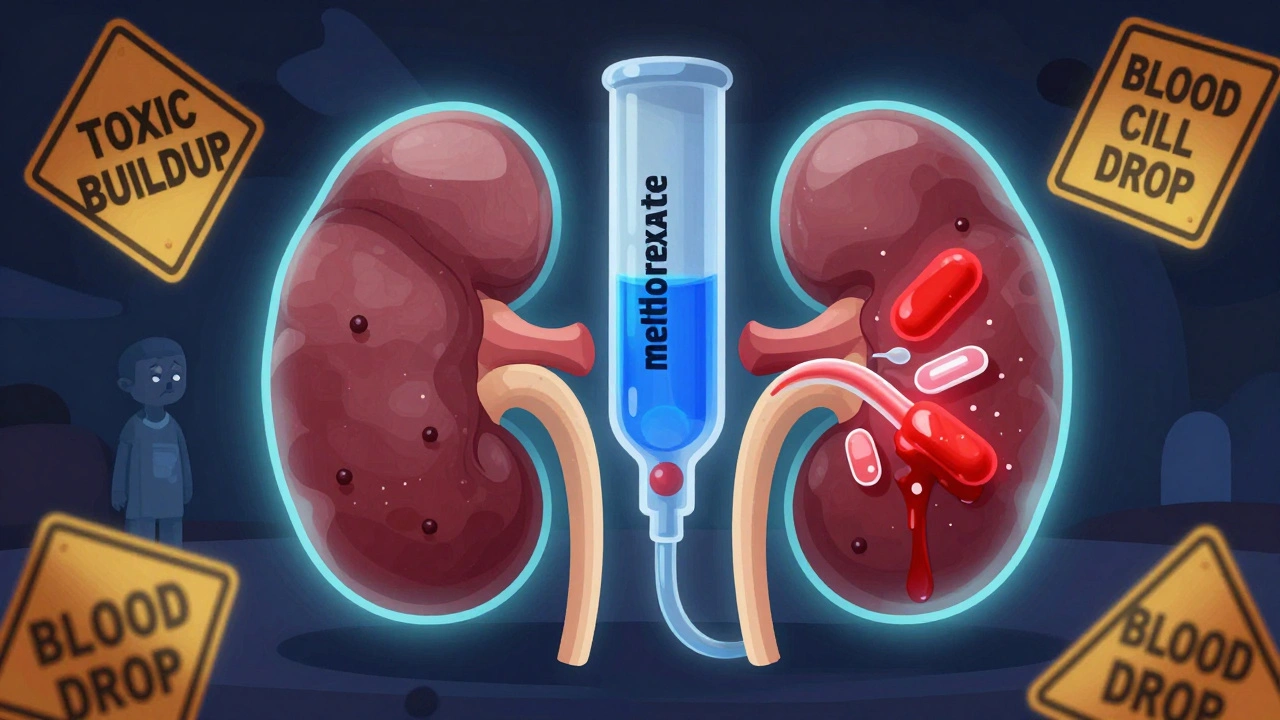
Methotrexate leaves your body through your kidneys. That’s it. No backup plan. NSAIDs, on the other hand, reduce blood flow to the kidneys by blocking prostaglandins-chemicals that help keep kidney arteries open. When you take both together, your kidneys get less blood, and methotrexate doesn’t get cleared. The result? Methotrexate builds up in your blood. Levels can jump 25% to 50%. That’s not a small change. It’s enough to cause serious harm.At low doses (15-25 mg weekly), methotrexate is usually safe for RA. But even then, NSAIDs can push you over the edge if your kidneys aren’t working perfectly. At high doses-used in cancer treatment-this combo is a known killer. Between 2018 and 2022, the FDA recorded three deaths directly linked to this interaction. These weren’t rare accidents. They were preventable.
How Much Risk Is There? It Depends
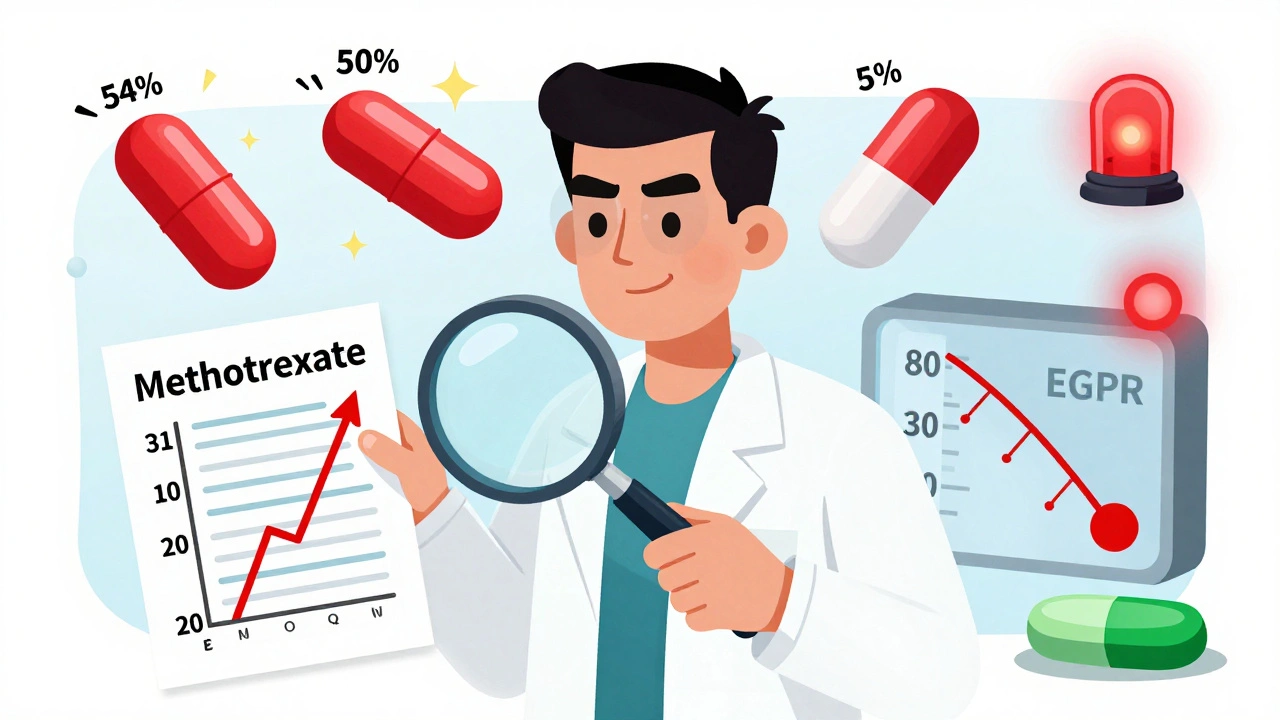
Not all NSAIDs are created equal. Ketorolac is the worst offender. It can spike methotrexate levels by up to 50%. Ibuprofen? Around 25-30%. Celecoxib, a COX-2 inhibitor, is the safest option, raising levels by only 10-15%. But even celecoxib isn’t risk-free if your kidneys are already damaged.Here’s the key: your kidney function changes everything. If your eGFR (a measure of kidney health) is above 60 mL/min/1.73m², the risk is low-so low that some studies show no increase in serious side effects. But if your eGFR is below 60? Risk jumps 3.2 times. And if you’re over 65? The risk of death goes up 2.8 times, according to European registry data.
A 2019 study of over 4,000 RA patients found no increased harm from NSAIDs-until you looked closer. The safe group had normal kidneys and regular blood tests. The dangerous group? They never got checked. That’s the difference between a warning and a tragedy.
What Happens When Toxicity Strikes
Methotrexate toxicity doesn’t always feel like a medical emergency at first. You might just feel more tired than usual. Then come mouth sores, nausea, or unexplained bruising. Your white blood cell count drops. Your liver enzymes rise. You might not realize it’s the drugs until your creatinine skyrockets.One Reddit user, 'RAWarrior2020,' described waking up with severe nausea after starting naproxen. His white blood cell count plunged to 1.8 × 10⁹/L-far below normal. He needed leucovorin, a rescue drug, for two weeks to recover. Another user, 'MTXandMe,' has taken methotrexate with occasional ibuprofen for eight years. Why? Because her doctor checks her blood every four weeks. That’s the difference.
According to the Arthritis Foundation, 41% of patients who took NSAIDs with methotrexate without monitoring had at least one adverse event. Only 9% did when they were monitored. That’s not a coincidence. It’s a pattern.
What Doctors Should Do (And Often Don’t)
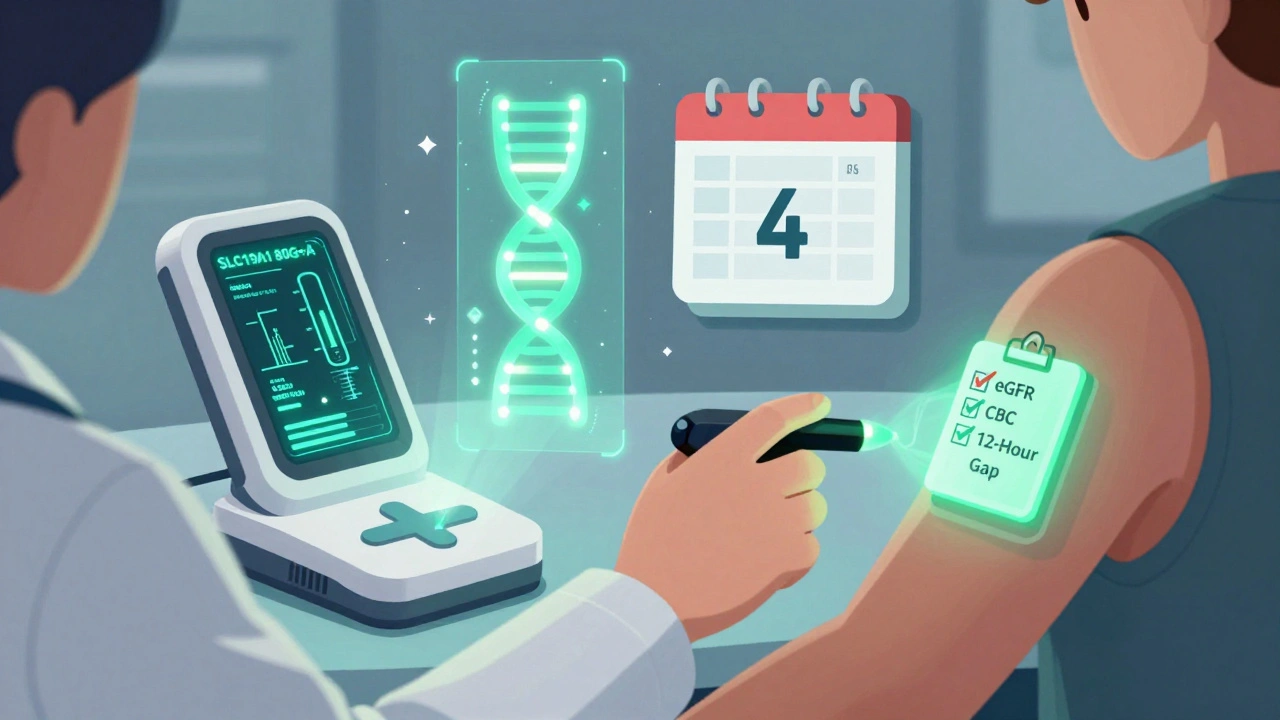
The American College of Rheumatology says this clearly: avoid NSAIDs if your eGFR is below 60. Use the lowest dose for the shortest time. Space out your methotrexate and NSAID doses by at least 12 hours. And check your blood-creatinine and CBC-within 48 to 72 hours after starting an NSAID.But here’s the problem: a 2022 analysis found that 78% of serious cases happened in patients who hadn’t had a kidney test in the last 30 days. That’s not negligence-it’s a system failure. Many patients are prescribed NSAIDs without a single lab order. And many doctors assume, wrongly, that low-dose methotrexate is safe with any painkiller.
Dr. Joan Kremer from Thomas Jefferson University says short-acting NSAIDs like ibuprofen can be used cautiously in healthy patients-if monitored. Dr. Daniel Furst from UCLA disagrees. He says avoid them entirely if you’re over 65 or have any kidney issue. Both are right. The difference is in the details.
What You Can Do Right Now
If you’re on methotrexate:- Don’t start any NSAID without asking your doctor.
- Ask for your latest eGFR number. If you don’t know it, get it tested.
- Ask if your NSAID is necessary. Can you use acetaminophen instead? Up to 3 grams a day is generally safe with methotrexate.
- If you must take an NSAID, ask for a blood test 3 days after starting it.
- Watch for symptoms: extreme fatigue, mouth sores, fever, bruising, dark urine, or swelling in your legs.
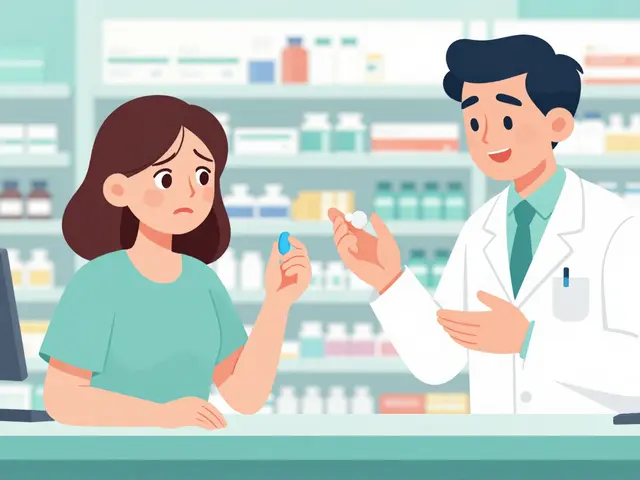
Pharmacists can help too. A 2023 study showed pharmacist-led checks reduced dangerous interactions by 63%. If your pharmacy offers medication reviews, use them.
Alternatives to NSAIDs
You don’t have to suffer pain. There are safer options:- Acetaminophen (Tylenol): Up to 3,000 mg per day is safe for most people on methotrexate.
- Low-dose opioids: For short-term flare-ups only. Not for daily use.
- DMARDs or biologics: If your arthritis is flaring, your doctor might adjust your methotrexate or add another disease-modifying drug to reduce inflammation at the source.
- Physical therapy and heat/cold therapy: Often overlooked, but effective for joint pain without drugs.
The 2023 EULAR guidelines now recommend these alternatives over NSAIDs whenever possible in patients on methotrexate.
The Future: Genetic Risks and Real-Time Monitoring
New research is uncovering why some people are more vulnerable. A genetic variant called SLC19A1 80G>A is found in about 15% of Caucasians. If you have it, your body absorbs methotrexate more easily-and clears it slower. Add an NSAID, and your levels can spike 40% more than someone without the gene.Right now, testing for this gene isn’t routine. But it’s coming. Phase 3 trials are underway for a point-of-care device that can measure methotrexate levels in your blood within minutes. Imagine getting your level checked the same day you start an NSAID. That could change everything.
The Bottom Line
Methotrexate and NSAIDs can coexist-but only with strict rules. No testing? No NSAIDs. Poor kidney function? No NSAIDs. No monitoring? No NSAIDs. It’s not about fear. It’s about control.This isn’t a rare side effect. It’s a predictable, preventable crisis. Thousands of patients are at risk right now. You don’t need to be one of them. Know your numbers. Ask the questions. Push for monitoring. Your kidneys-and your life-depend on it.




8 Comments
Just stopped my naproxen after reading this. Scary stuff.
Another ‘awareness’ post that does nothing but make people paranoid. The real problem is lazy doctors who don’t monitor. Not the drugs. Stop fearmongering with cherry-picked FDA stats and tell me how many people actually die from this vs. dying from uncontrolled RA. Numbers don’t lie. Your anxiety does.
LOL. Of course you’re all acting like this is new info. SLC19A1 polymorphism was published in JAMA 2017. If you’re not genotyping your RA patients before prescribing MTX, you’re practicing 1990s medicine. And acetaminophen? Please. Hepatotoxicity risk doubles if you drink more than 2 beers a week. Who’s monitoring that? 😏
hey i been on mtx for 6 yrs and take ibuprofen 2x a week for knee pain. got my labs every 6 weeks and never had an issue. doc says if eGFR >60 and no other probs its fine. dont panic over every blog post. also typo in ur post: its 3000mg not 3g ty
Thank you for writing this. I was scared to speak up when my doctor prescribed me naproxen without checking my kidneys. I asked for a blood test and they said ‘it’s fine, you’re young.’ I pushed back. Got tested. eGFR was 58. They changed my pain plan immediately. You’re not overreacting. You’re advocating. Keep doing that. You deserve to be heard.
Also-pharmacists are heroes. Mine caught my MTX+NSAID combo before I even realized it was a problem. Ask for a med review. They won’t charge you. They’ll save your life.
So let me get this straight: we’ve got a $20 drug that’s been saving lives since 1953, and the modern solution is to replace it with a $15,000 biologic because someone might accidentally take an Advil? Brilliant. We’ve turned medicine into a risk-avoidance sport. No wonder people can’t afford care.
Meanwhile, in India, patients take MTX with ibuprofen and still live to 80 because they don’t have 12 specialists hovering over every lab result. Maybe the problem isn’t the combo. Maybe it’s the fear of trusting patients to manage their own health.
Just saying.
I appreciate the depth here. Honestly, this is the kind of post that makes me proud to be part of this community. I’ve seen too many patients dismissed because ‘it’s just a painkiller’ or ‘you’re fine.’ But the data doesn’t lie. And the stories? Those are the ones that stick.
To anyone reading this: your body is not a machine to be optimized. It’s a system. Treat it with respect. Ask questions. Even if you feel silly. Even if the doctor seems busy. You’re not being difficult-you’re being smart.
And if you’re a clinician reading this? Thank you. You’re doing harder work than most people realize.
Thank you for the detailed breakdown. I’ve been a rheumatology nurse for 14 years and I can confirm: the biggest risk isn’t the drug interaction-it’s the assumption that ‘low dose’ means ‘safe.’ Patients don’t always report NSAID use. They say ‘I took one Advil for my headache’ and think it’s harmless. We need better patient education tools, not just warnings.
Also-pharmacist-led interventions are underutilized. If your pharmacy doesn’t offer med sync or MTX monitoring, ask them to start. Demand it. It’s not extra-it’s essential.