
MAOI Tyramine Safety Checker
Check if foods are safe to eat while taking MAOIs. Input a food item and see if it contains high levels of tyramine that could cause a hypertensive crisis.
Check Food Safety
Tyramine Safety Guide
How This Works
MAOIs block tyramine breakdown. Foods with high tyramine can cause dangerous blood pressure spikes. We analyze your food choice, storage conditions, and provide clear safety guidance.
Common Safe Foods
High-Risk Foods to Avoid
When you’re on an MAOI antidepressant, your diet isn’t just about what tastes good-it’s about what could save your life. Monoamine oxidase inhibitors (MAOIs) like phenelzine, tranylcypromine, and isocarboxazid are powerful tools for treatment-resistant depression. But they come with a non-negotiable rule: avoid foods high in tyramine. A single bite of the wrong cheese, a glass of old beer, or leftover meat left out too long can trigger a sudden, dangerous spike in blood pressure-sometimes leading to stroke or death. This isn’t scare tactics. It’s science.
Why Tyramine Is Dangerous with MAOIs
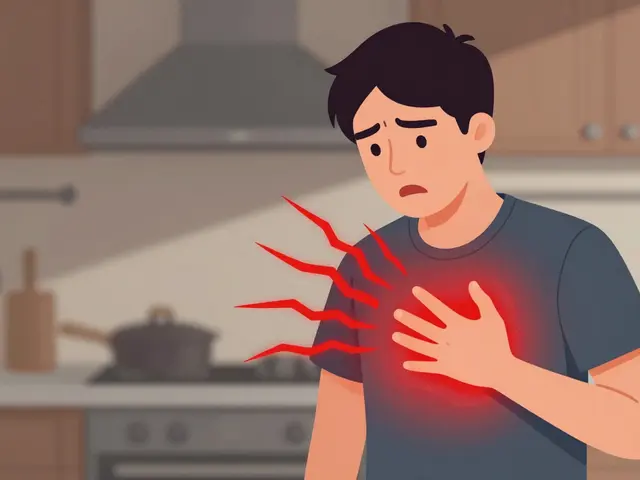
Your body normally breaks down tyramine using an enzyme called monoamine oxidase-A. MAOIs block that enzyme. When tyramine builds up, it forces your body to release massive amounts of norepinephrine, a stress hormone that sends your blood pressure skyrocketing. That’s not a mild headache or a racing heart. That’s a hypertensive crisis: systolic pressure over 180 mmHg, blurred vision, chest pain, nausea, and potentially a stroke or heart attack.
The first documented case happened in 1964. A patient on phenelzine ate cheddar cheese and went into a life-threatening reaction. Since then, over 40 years of clinical data have confirmed this isn’t rare. Even today, with better food storage and modern medicine, cases still happen-mostly because people don’t realize how quickly tyramine builds up in leftovers or how much is in seemingly harmless foods.
Which MAOIs Require Strict Diet Rules?
Not all MAOIs are the same. The big three-phenelzine (Nardil), tranylcypromine (Parnate), and isocarboxazid (Marplan)-are irreversible and non-selective. They shut down nearly all monoamine oxidase-A activity, meaning tyramine has nowhere to go. If you’re on one of these, you need to be extremely careful.
Selegiline (Emsam) is different. At low doses (6 mg/24 hours or less), the patch mostly targets MAO-B, leaving MAO-A in your gut free to break down tyramine. That’s why the FDA doesn’t require dietary restrictions for the 6 mg patch. But if you go above that-say, 9 mg or 12 mg-you’re back to full risk. The same goes for any oral selegiline. Dose matters. Form matters. Don’t assume all MAOIs are equal.
What Foods Actually Contain High Tyramine?
The old MAOI diet lists were brutal: no cheese, no beer, no meat, no soy. But food science has changed. Thanks to better refrigeration and shorter aging, many foods are now much safer than they were 30 years ago.
Here’s what’s still risky:
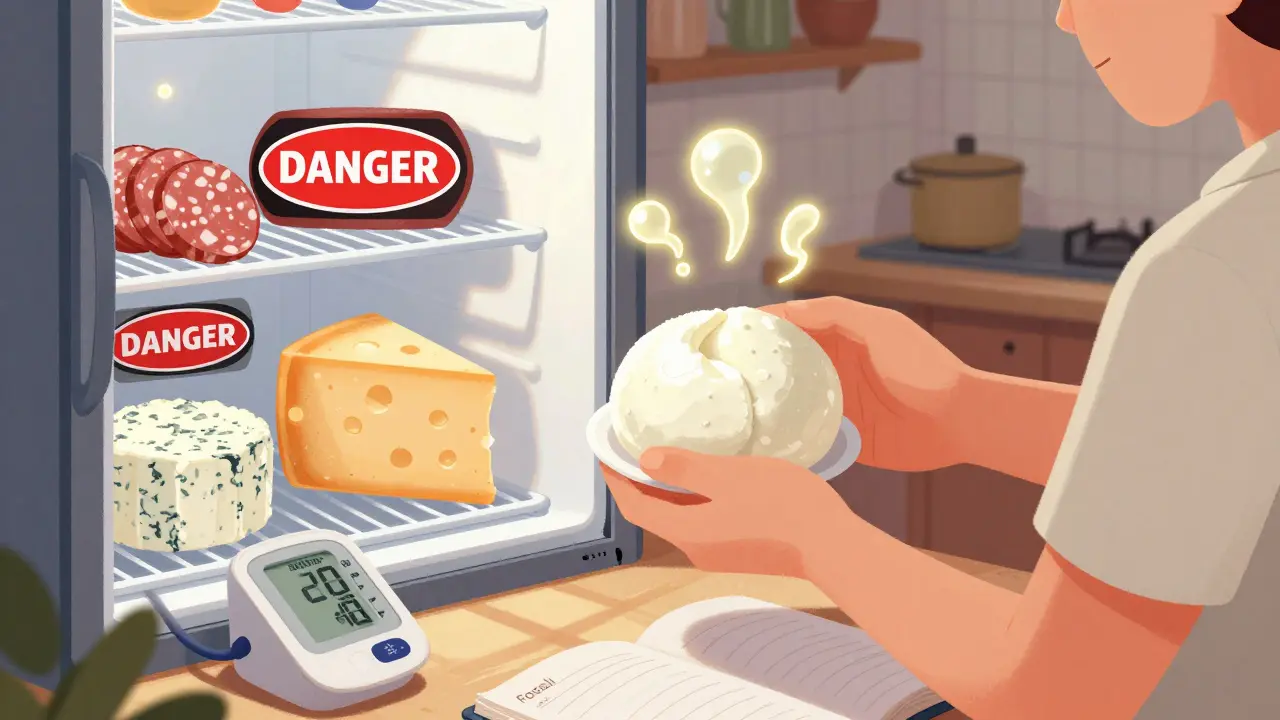
- Aged cheeses: Cheddar, blue, Swiss, parmesan aged over 6 months. Tyramine levels can hit 30-100 mg per 100g in poorly stored versions. Even commercial cheddar now averages under 1 mg per 100g-if it’s fresh. Stick to fresh mozzarella, ricotta, cottage cheese, and cream cheese.
- Tap and unpasteurized beer: Draft beer and homebrew can contain 5-35 mg per 100g. Bottled, pasteurized beer is usually under 2 mg. Stick to one 330ml bottle per week max.
- Dry fermented sausages: Salami, pepperoni, chorizo. These can have 25-150 mg per 100g. Fresh sausages are fine.
- Soy sauce and miso: Soy sauce ranges from 10-118 mg per 100g. Avoid it completely. Tofu is safer if it’s fresh and under 100g per serving, no more than twice a week.
- Improperly stored meats and fish: Leftover chicken, liver, or smoked fish stored over 48 hours can jump from 5 mg to over 100 mg of tyramine. Eat meat the day it’s cooked. Never reheat leftovers.
- Overripe bananas: Only the pulp of ripe bananas is safe. Avoid peels and overripe fruit with brown spots. Raspberries and apples are fine.
Here’s what’s generally safe:
- Fresh chicken, beef, pork, and fish (eaten within 24 hours)
- Most fruits (bananas, apples, berries, oranges)
- Fresh cheeses (cottage, ricotta, mozzarella, cream cheese)
- Chocolate (up to 30g per day)
- Most vegetables, rice, pasta, bread
- Store-bought, pasteurized milk and yogurt
The Real Danger: Storage and Timing
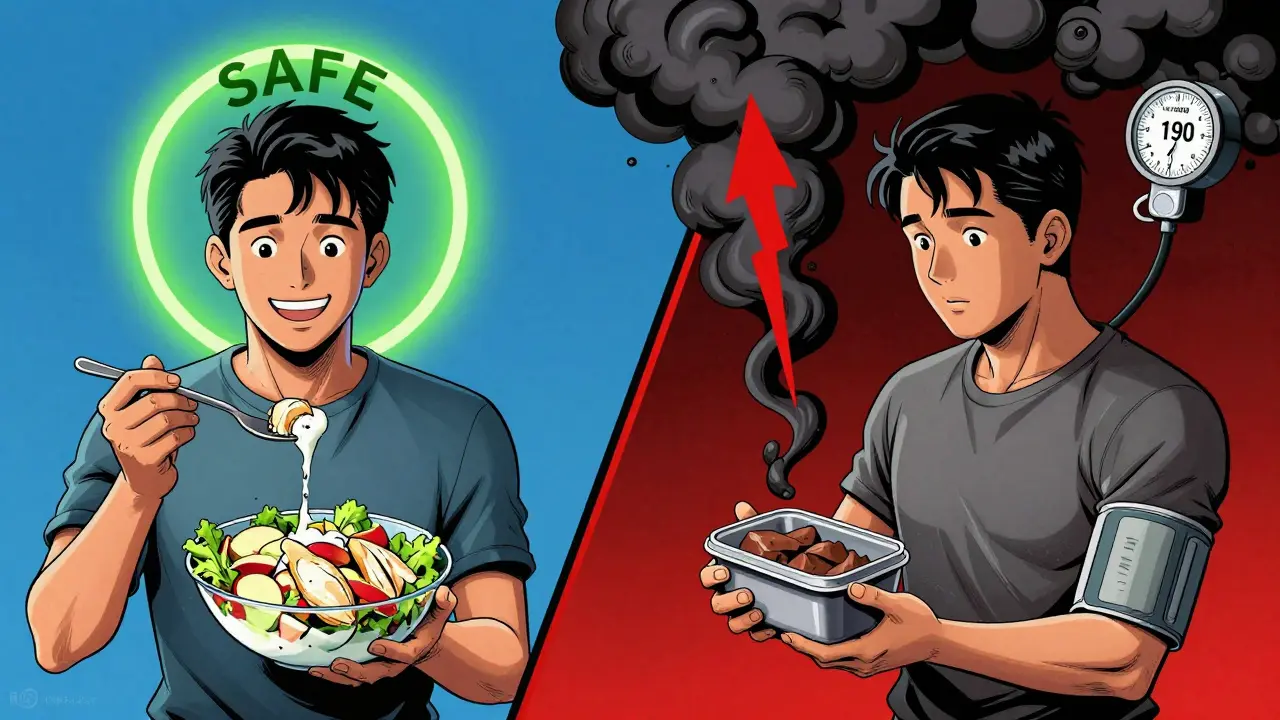
It’s not just what you eat-it’s how long it’s been sitting. A study showed chicken liver stored at 4°C for 48 hours had 15 mg of tyramine. At 10°C for 72 hours? It jumped to 128 mg. That’s a 8.5x increase. Same with ground beef. Fresh: 2 mg. Left in the fridge for 3 days: 45 mg. That’s enough to trigger a crisis in someone on a high-dose MAOI.
Rule of thumb: if it’s been cooked and stored longer than 24 hours, don’t eat it. Freeze leftovers immediately. Don’t rely on the fridge to stop tyramine buildup-it doesn’t. Use a food diary for the first 4 weeks. Write down everything you eat, when you ate it, and your blood pressure before and two hours after. You’ll quickly spot patterns.
Your Personal Safety Plan
Don’t wait for a crisis. Build your safety net now.
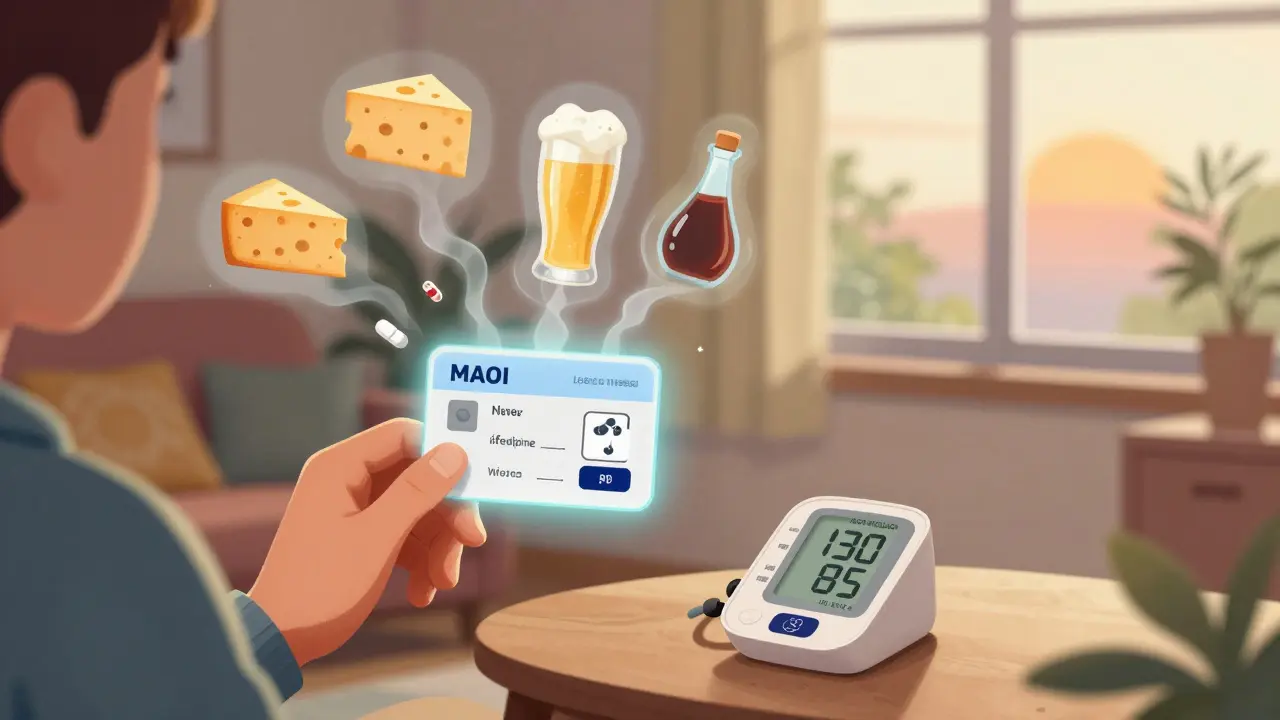
- Get a home blood pressure monitor. Check it daily, and always before and two hours after meals. Normal is under 140/90. Anything over 180 systolic? Act immediately.
- Carry an MAOI ID card. Keep it in your wallet or phone. It should say: “I am taking an MAOI antidepressant. If I have severe headache, chest pain, or high blood pressure, give me 0.2-0.4 mg sublingual nifedipine and call 911.”
- Know your emergency meds. Nifedipine is the go-to for fast-acting blood pressure control. Ask your doctor for a prescription. Keep it with you at all times.
- Avoid all alcohol except small amounts of wine or pasteurized beer. Wine is usually safe in moderation (one 150ml glass), but never mix with tyramine-rich foods.
- Never stop MAOIs cold turkey. Wait 14-21 days after your last dose before eating risky foods. Your body needs time to rebuild monoamine oxidase enzymes.
What About Newer Options?
If the diet feels overwhelming, ask your doctor about alternatives. Moclobemide is a reversible MAO-A inhibitor used in Europe and Australia. It lets tyramine pass through your gut naturally, so you can eat most foods without worry. Clinical trials show even 100 mg of tyramine only raises BP by 12-15 mmHg-far below the 60-80 mmHg spike seen with older MAOIs.
There’s also emerging research on genetic testing. A pilot study at Massachusetts General Hospital found people with the MAOA-L gene variant had 27% higher blood pressure spikes from tyramine than those with MAOA-H. If you’ve had a bad reaction before, or your family has a history of high blood pressure, ask about genetic screening.
When to Call for Help
Most people on MAOIs never have a crisis. But when it happens, it’s fast. Watch for:
- Sudden, severe headache (often at the back of the head)
- Stiff neck or chest pain
- Blurred vision or sweating
- Nausea or vomiting
- Heart palpitations or racing pulse
If your systolic blood pressure hits 180 or higher, take your sublingual nifedipine right away. Then call emergency services. Don’t wait. Don’t drive yourself. This is not a “maybe it’ll pass” situation.
Final Reality Check
MAOIs aren’t for everyone. They’re not first-line anymore because of the diet. But for people who’ve tried SSRIs, SNRIs, and even therapy with no success, they’re often the only thing that works. Studies show 50-60% of treatment-resistant patients respond to MAOIs, compared to 30-40% with other antidepressants.
The key isn’t fear. It’s awareness. You don’t need to live on plain rice and boiled chicken. You just need to know what’s safe, what’s risky, and how to monitor yourself. With the right plan, you can take full advantage of MAOIs without putting your life on the line.
Can I eat cheese on MAOIs?
Yes-but only fresh cheeses like cottage cheese, ricotta, mozzarella, and cream cheese. Avoid aged cheeses (cheddar, blue, Swiss, parmesan) aged more than 6 months. Even then, limit portions to 150g every 3 days. Always check the expiration date and store properly.
Is beer safe with MAOIs?
Only pasteurized, bottled beer in small amounts-no more than one 330ml bottle per week. Avoid tap beer, homebrew, and unpasteurized beer. These can contain 5-35 mg of tyramine per 100g, enough to trigger a reaction. Wine is safer in moderation (one 150ml glass).
How long do I need to follow the MAOI diet?
You must follow the diet for the entire time you’re on the medication-and for 14 to 21 days after stopping. Monoamine oxidase enzymes take up to three weeks to regenerate. Eating high-tyramine foods too soon after stopping can still cause a hypertensive crisis.
Can I eat soy products like tofu?
Limit tofu to 100g portions no more than twice a week. Avoid soy sauce entirely-it contains 10-118 mg of tyramine per 100g. Miso and tempeh are also high-risk. Stick to fresh, unfermented soy products if you must have them.
What should I do if I accidentally eat something high in tyramine?
Monitor your blood pressure immediately. If your systolic pressure rises above 160 mmHg, take your prescribed sublingual nifedipine (0.2-0.4 mg). Call emergency services if you develop headache, chest pain, blurred vision, or nausea. Don’t wait. Even if you feel fine, check your pressure every 30 minutes for the next 4 hours.
Are there MAOIs without dietary restrictions?
Yes-transdermal selegiline (Emsam) at 6 mg/24 hours or less doesn’t require dietary changes. Also, moclobemide (available outside the U.S.) is a reversible MAOI with minimal restrictions. Ask your doctor if switching is an option.
Can I drink coffee while on MAOIs?
Yes, in moderation. Coffee doesn’t contain tyramine, but caffeine can raise blood pressure slightly. If you’re prone to high BP, limit to 1-2 cups per day. Avoid energy drinks and excessive caffeine, especially with other stimulants.
Do I need to avoid all leftovers?
For the first 4 weeks, avoid all leftovers. After that, you can reintroduce properly stored meals if they’ve been refrigerated at or below 4°C and eaten within 24 hours. Never reheat food more than once. If in doubt, throw it out.

15 Comments