
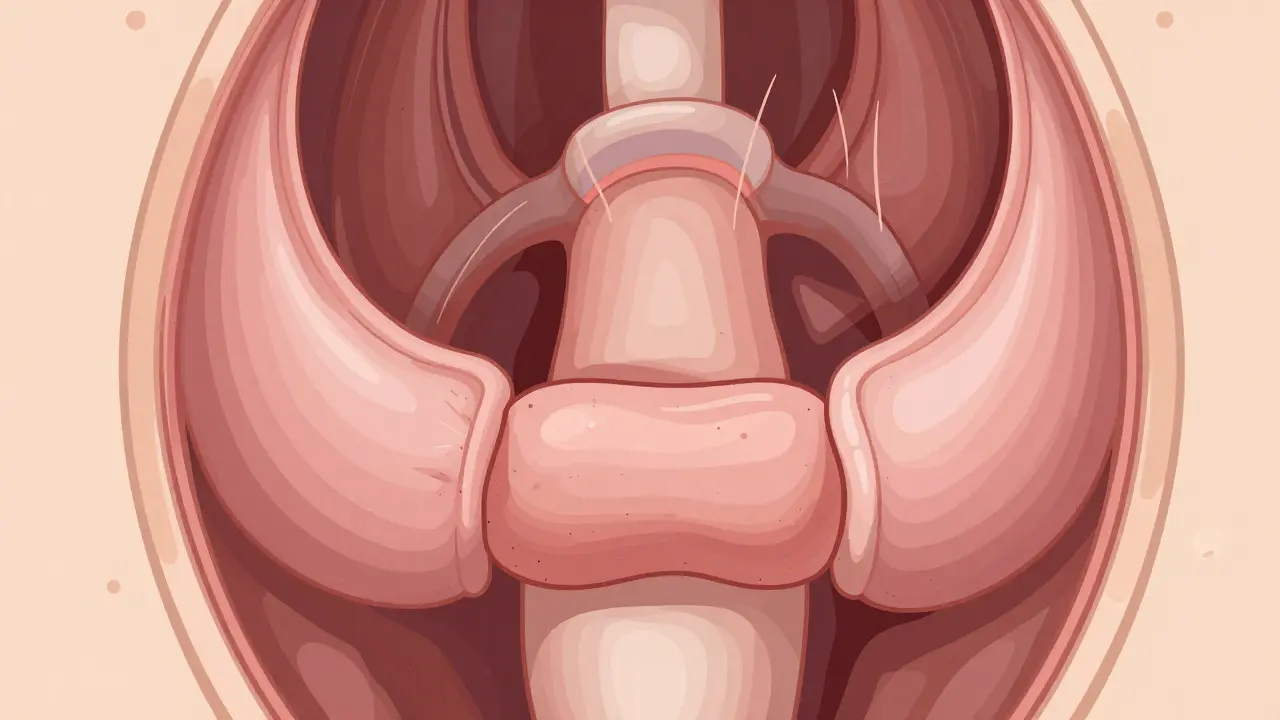
You know that unsettling feeling when a bite of food gets stuck halfway down your throat? It’s more than just eating too fast. For many people, this symptom signals a deeper issue called Esophageal Motility Disorders, which affect how your esophagus moves food into your stomach. These conditions aren’t about blockages like tumors; they are problems with the muscles themselves. When the rhythmic waves of muscle contraction fail, you experience Dysphagia, difficulty swallowing solids and liquids. Understanding what’s happening can mean the difference between years of misdiagnosis and finding relief.
Your esophagus acts like a muscular tunnel, pushing meals from your mouth to your stomach. In a healthy system, this happens smoothly through coordinated squeezes. But when motility fails, those squeezes become weak, uncoordinated, or too strong. This leads to symptoms like chest pain, regurgitation of undigested food, and significant weight loss. Research suggests around 10% of the general population experiences some form of dysphagia, yet accurate diagnoses often take years. The path to clarity usually starts with a specialized test.
The Role of High-Resolution Manometry
If you suspect your esophagus isn’t working right, doctors turn to High-Resolution Manometry, a diagnostic test measuring pressure in the esophagus. Unlike older methods that gave you rough estimates, HRM uses a catheter with 36 sensors spaced at 1 cm intervals. It creates a detailed color-coded map of your muscle pressure. Think of it as the difference between looking at a black-and-white photo versus a high-definition video.
This technology became a game-changer in the early 2000s. Before HRM, doctors struggled to see exactly where the pressure was failing. With HRM, the sensitivity for diagnosing conditions like achalasia jumps to 96%, compared to just 78% for traditional barium swallows. While barium studies show the shape of the esophagus, manometry shows how the muscle behaves under stress. It captures how well the lower esophageal sphincter (LES) relaxes to let food pass. If that valve stays tight, food piles up.
The procedure isn’t painful, though 35% of patients report discomfort. You swallow small sips of water while the machine records the pressure. It’s quick, usually taking less than half an hour. However, availability can be an issue. High-quality centers require expensive equipment costing upwards of $50,000, meaning community hospitals might refer you elsewhere. Despite this, it remains the gold standard because seeing is believing when treating complex motility issues.
Reading the Results: The Chicago Classification
Once the test is done, a specialist decodes the patterns using the Chicago Classification, a standardized system for classifying esophageal motility. This system evolved significantly, with version 4.0 released in 2023. It helps experts agree on what is "normal" and what is "abnormal." Without a shared language, two doctors might read the same chart differently. The Chicago system improved agreement scores from moderate (0.45) to excellent (0.85).
The latest updates distinguish between major and minor disorders. Major ones usually need treatment, while minor ones might just be variations of normal function. This distinction prevents unnecessary surgeries. For example, if you have a spastic squeeze that doesn’t cause symptoms, doctors won’t rush to cut your muscles. They look at the clinical picture alongside the manometric data. This careful approach protects patients from invasive procedures they do not truly need.

Common Motility Disorders You Might Encounter
Not every motility problem looks the same. The most famous is Achalasia, where the LES fails to relax and peristalsis is absent. About 1 in 100,000 people develop this annually. It has three subtypes. Type I is classic achalasia with no pressure wave. Type II involves pan-esophageal pressurization, which is quite common. Type III shows spasms. Then there is Jackhammer esophagus, where contractions are incredibly powerful, exceeding 180 mmHg pressures. Another condition is diffuse esophageal spasm, where waves fire out of order. Systemic diseases like scleroderma can also damage the esophageal nerves, affecting nearly 80% of those patients. Identifying the specific type dictates the treatment path.
| Disorder | Key Feature | Symptom Profile |
|---|---|---|
| Achalasia | Incomplete LES relaxation | Dysphagia, regurgitation, weight loss |
| Jackhammer Esophagus | Hypertensive peristalsis | Chest pain, difficulty swallowing solids |
| EGJ Outflow Obstruction | Blockage at junction | Mimics achalasia but has some peristalsis |
These categories help clinicians target the root cause. A patient with scleroderma has different needs than someone with idiopathic achalasia. Knowing the difference avoids wasted time trying proton pump inhibitors (PPIs) for acid reflux when the real issue is a mechanical muscle failure. Misdiagnosis is rampant; many patients spend years treating presumed GERD before discovering their actual motility problem. That delay averages 2 to 5 years for most individuals, according to recent surveys.
Treatment Options That Actually Work
When a motility disorder is confirmed, lifestyle changes alone rarely fix it. You likely need mechanical intervention. For achalasia, Laparoscopic Heller Myotomy, a surgery cutting the muscle to widen the opening offers long-term relief. Studies show symptom improvement in 85-90% of patients five years later. It usually includes a partial fundoplication to prevent acid backwash. On the other hand, Peroral Endoscopic Myotomy, known as POEM, performed through the mouth has gained popularity. It works through the esophagus rather than making external incisions.
However, POEM comes with trade-offs. While effective, it has higher rates of reflux esophagitis, reaching 44% at two years compared to 29% for Heller myotomy. Pneumatic dilation is another option, stretching the muscle with balloons. It works well initially, but 25-35% of patients need repeat procedures within five years. Magnetic sphincter augmentation is also emerging for select cases, showing promise for those with preserved peristalsis. The goal is always to open the pathway without causing excessive reflux that damages the esophageal lining. Your doctor will weigh these pros and cons based on your specific manometry results.
Navigating the Patient Experience
Living with dysphagia affects more than just your diet. Many patients avoid social dining situations because they fear choking. Weight loss is a serious risk, with achalasia patients reporting losing an average of 15 to 20 pounds. Chest pain can be severe enough to mimic a heart attack, leading to multiple trips to the emergency room before anyone realizes the gut is the culprit. Early education is vital. Patients who understand what manometry involves report higher satisfaction (78%) with testing, whereas those left in the dark report much lower confidence.
If you are starting this journey, ask about the training of the center performing your tests. Interpretation skills matter; reading the color maps takes months of specialized fellowship training. Centers following the Chicago Classification v4.0 standards generally offer the most reliable readings. Don’t hesitate to seek a second opinion if you feel dismissed. With access improving in academic centers, getting the right answer is possible even if the first step was difficult.
What is the main symptom of esophageal motility disorders?
The hallmark symptom is dysphagia, which means difficulty swallowing. It often starts with solid foods and progresses to liquids, frequently accompanied by regurgitation or chest pain.
How accurate is high-resolution manometry?
It demonstrates very high accuracy, with sensitivity rates of 96% for diagnosing achalasia. This is significantly higher than the 78% sensitivity found in traditional barium swallow tests.
Can motility disorders be caused by other diseases?
Yes, secondary disorders exist. Systemic sclerosis (scleroderma) is a common cause, affecting approximately 80% of patients with that condition due to fibrosis and atrophy of esophageal muscles.
Is surgery always necessary for treatment?
Major disorders often require intervention. Procedures like Heller myotomy or POEM are the standard, though pneumatic dilation or medication may be considered depending on the specific subtype of the disorder.
Why is diagnosis often delayed?
Many patients are initially misdiagnosed with GERD (acid reflux). Studies show it can take 2 to 5 years and consultations with three or more physicians before receiving the correct motility diagnosis via manometry.






9 Comments
good read everyone staying healthy helps so much
actually the delay statistics seem inflated for rural areas where equipment does not exist yet
surprised you guys needed an article to know swallowing is hard when muscles fail obviously
cheers mate sounds rough but glad tech exists now
This information is absolutely vital for everyone!! The precision of manometry cannot be overstated!!!
the cost is high but saving lives matters more than money really and we should support centers doing this work well enough
such amazing progress!! We can conquer this!! So many hope filled paths forward
classic medical bureaucracy
The Chicago Classification system has completely transformed how we view esophageal health. Before these standards were put into place doctors often relied on guesswork. Patients suffered for years without knowing why their chest hurt constantly. It is terrifying to think how many people still walk around misdiagnosed today. High resolution manometry offers a clear picture of muscle function under stress. Seeing the color coded maps helps specialists pinpoint exactly where the pressure fails. Technology advances like HRM are essential for modern medical diagnostics everywhere. Without proper testing treatments often target the wrong problem entirely. Surgery options like Heller Myotomy provide lasting relief for many severe cases. However the risks involved mean careful consideration is always required first. Quality centers are necessary to interpret the complex data accurately for patients. Training for reading these charts takes months of specialized fellowship work. Delaying diagnosis leads to unnecessary weight loss and anxiety for patients globally. Social dining becomes a nightmare when swallowing feels like a chore daily. Early intervention could save countless hours of pain for thousands of individuals worldwide.