

When you're trying to find the right antidepressant, the goal isn't just to lift your mood-it's to do it without wrecking your sex life, your weight, or your ability to get through the day. That’s where the difference between bupropion and SSRIs becomes more than just a medical footnote. It’s a life-changing choice.
How Bupropion and SSRIs Work-And Why It Matters
Bupropion, sold under brand names like Wellbutrin and Zyban, doesn’t work like the usual antidepressants. While SSRIs like sertraline (Zoloft), escitalopram (Lexapro), and fluoxetine (Prozac) focus almost entirely on boosting serotonin, bupropion targets norepinephrine and dopamine. That’s not just a technical detail-it’s why your experience on one drug can feel completely different from another.
SSRIs are like a slow drip of serotonin into your brain. They help with mood, anxiety, and obsessive thoughts, but they also come with a long list of common side effects. Bupropion, on the other hand, gives you more energy. It doesn’t flood your system with serotonin, so it avoids many of the typical SSRI side effects. But it brings its own risks.
Sexual Side Effects: The Biggest Dealbreaker
If you’ve ever taken an SSRI and noticed your libido vanished, you’re not alone. Studies show between 30% and 70% of people on SSRIs experience sexual problems-difficulty getting aroused, delayed or absent orgasm, or just losing interest in sex altogether. Paroxetine (Paxil) is the worst offender, with up to 76% of users reporting issues.
Bupropion? The numbers are starkly different. Only about 13% to 15% of people on bupropion report sexual side effects. That’s less than a quarter of what you’d see with most SSRIs. A 2015 study in the Journal of Sexual Medicine found that two out of three people who switched from an SSRI to bupropion got their sex drive back. Some even report improved sexual function compared to before they started any antidepressant.
Real-world feedback backs this up. On Drugs.com, 47% of negative reviews for Lexapro mention sexual dysfunction. Meanwhile, only 8% of negative reviews for bupropion cite the same issue. People on bupropion often say things like, “Finally feel like myself again,” or “I can be intimate with my partner without dreading it.”
Weight Changes: Lose It or Gain It?
Weight gain is one of the most common reasons people stop taking SSRIs. Studies show that after six to twelve months on paroxetine or sertraline, people gain an average of 2.5 to 3.5 kilograms. That’s not just a few pounds-it’s clothes that don’t fit, body image issues, and sometimes, giving up on treatment altogether.
Bupropion does the opposite. In clinical trials, people on bupropion lose an average of 0.8 to 1.2 kilograms over the same period. Higher doses (like 400 mg daily) can lead to even more weight loss-up to 7.2% of body weight in 24 weeks, according to a 2009 study in Obesity. That’s why bupropion is sometimes prescribed off-label for weight management, even in people without depression.
On review sites, users say things like, “I lost 18 pounds on Wellbutrin without trying,” or “I stopped gaining weight after switching from Zoloft.” These aren’t outliers. They’re the norm.
Sleep and Energy: Awake or Asleep?
SSRIs often cause drowsiness, especially in the first few weeks. Fluoxetine can make you feel foggy. Sertraline can leave you dragging by midday. Even escitalopram, often called “the gentle SSRI,” still causes somnolence in about 15% of users.
Bupropion is the opposite. It’s one of the few antidepressants that can actually make you feel more alert. Clinical trials show it causes significantly less daytime sleepiness than SSRIs-relative risk is less than one-third. People on bupropion report feeling “more awake,” “more focused,” and “like I can finally tackle my to-do list.”
But there’s a flip side. That same energy boost can turn into insomnia. About 20% of bupropion users have trouble falling or staying asleep. If you’re already struggling with sleep, this can be a dealbreaker.

Anxiety: Calm or Agitated?
If you have anxiety along with depression, SSRIs are often the go-to. They’re proven to reduce both panic and generalized anxiety. That’s why they’re first-line for people with GAD, OCD, or social anxiety.
Bupropion? It can make anxiety worse. Because it stimulates dopamine and norepinephrine, it can trigger nervousness, restlessness, or even panic attacks in sensitive people. One 2017 study found that 28% of patients with anxiety disorders stopped bupropion because their anxiety got worse. That’s more than double the rate seen with SSRIs.
So if your main problem is anxiety, bupropion might not be the best starting point. But if you’re depressed with low energy and no anxiety, it could be perfect.
Seizure Risk: The Hidden Danger
Bupropion carries a small but real risk of seizures. At 300 mg per day, the risk is about 0.1%. At 400 mg, it jumps to 0.4%. That’s why it’s absolutely not recommended for people with a history of seizures, eating disorders like anorexia or bulimia, or those taking medications that lower the seizure threshold.
SSRIs? Their seizure risk is barely above background levels-around 0.02% to 0.04%. That’s why they’re safer for people with neurological conditions.
Doctors always start bupropion low-150 mg daily-and increase slowly. Never exceed 450 mg per day. And if you’ve ever had a seizure, even as a kid, tell your doctor. It matters.
Blood Pressure and Heart Health
Bupropion can raise systolic blood pressure by 3 to 5 mmHg on average. That’s not huge, but it’s enough to be a concern if you already have high blood pressure or heart disease. Monitoring every few weeks during the first months is recommended.
SSRIs are generally neutral or even slightly lower blood pressure. That makes them a better choice for people with cardiovascular risk factors.
Switching Between Them: What You Need to Know
If you’re switching from an SSRI to bupropion, timing matters. Fluoxetine (Prozac) sticks around in your system for weeks because of its long half-life. You need a full two-week break before starting bupropion. For other SSRIs like sertraline or escitalopram, one week is usually enough.
Combining bupropion with SSRIs is sometimes done to boost effectiveness or reverse sexual side effects. But it increases the risk of serotonin syndrome-a rare but serious condition-and raises seizure risk. One case report in Cureus documented a seizure in a person taking bupropion 300 mg with escitalopram 20 mg, with no prior history. Don’t mix them without close medical supervision.
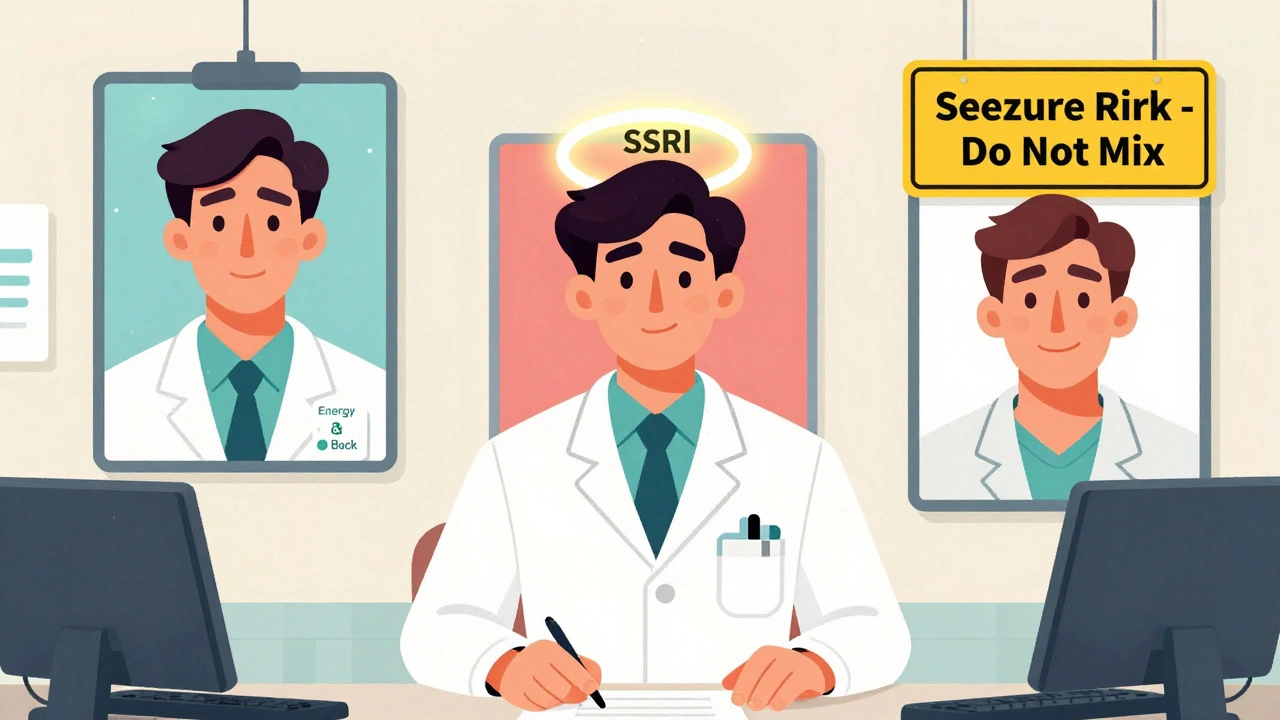
Who Should Take What?
Here’s a quick guide based on real-world needs:
- Choose bupropion if: You’re struggling with sexual side effects from SSRIs, you’re worried about weight gain, you feel sluggish during the day, and you don’t have anxiety or a seizure history.
- Choose SSRIs if: You have significant anxiety, panic attacks, or OCD; you’ve had seizures before; you have uncontrolled high blood pressure; or you need something with a long track record of safety.
Market data shows SSRIs make up about 70% of antidepressant prescriptions in the U.S., with sertraline and escitalopram leading the pack. Bupropion is fourth, at around 10%, but its use for sexual dysfunction has tripled since 2010. More people are switching-not because they’re desperate, but because they finally found a better fit.
What the Experts Say
Dr. Robert MacFadden called bupropion the “gold standard” for avoiding sexual side effects. Dr. Stephen Stahl praised its ability to keep people mentally sharp during the day. But Dr. John Greden warned: “Don’t ignore the seizure risk.”
The American Psychiatric Association lists bupropion as a first-line option for people who can’t tolerate SSRIs due to sexual side effects. But they also say: “Avoid it if anxiety is a major part of your depression.”
Real People, Real Experiences
On Reddit, one user wrote: “Switched from Lexapro to Wellbutrin. My sex drive came back in three weeks. But now I can’t sleep. Worth it.”
Another said: “I gained 25 pounds on Zoloft. I lost 15 on bupropion. I feel like myself again.”
But then there’s this: “I got so anxious on Wellbutrin I couldn’t leave the house. Went back to Prozac. Still have low libido, but at least I can breathe.”
These aren’t anecdotes. They’re the lived reality of millions. And they’re why the choice between bupropion and SSRIs isn’t about which drug is “better.” It’s about which one fits you.
What’s Next?
Newer formulations of bupropion, like Aplenzin, let people take it once a day. Pharmacogenetic testing-checking your genes to predict how you’ll respond to antidepressants-is growing fast. By 2025, it could help doctors pick bupropion for people genetically prone to SSRI side effects.
The future of antidepressants isn’t just about new drugs. It’s about matching the right drug to the right person. And right now, the clearest way to do that is by understanding the side effect profiles.
Does bupropion cause weight gain?
No, bupropion is more likely to cause modest weight loss than weight gain. Most people lose 0.8 to 1.2 kg over six to twelve months. Higher doses (400 mg daily) can lead to greater weight loss, up to 7% of body weight in 24 weeks. This makes it a preferred option for people concerned about weight gain from other antidepressants.
Are SSRIs worse for sex drive than bupropion?
Yes, significantly. Between 30% and 70% of people on SSRIs report sexual side effects like low desire, delayed orgasm, or erectile problems. With bupropion, that number drops to 13%-15%. Studies show that switching from an SSRI to bupropion improves sexual function in about two-thirds of cases. Bupropion is often the go-to option for people who can’t tolerate sexual side effects from SSRIs.
Can I take bupropion if I have anxiety?
It depends. Bupropion can make anxiety worse because it stimulates dopamine and norepinephrine, which can increase nervousness and restlessness. About 28% of people with anxiety disorders discontinue bupropion due to worsening symptoms. If anxiety is your main issue, SSRIs are usually a better first choice. But if your anxiety is mild and your main problem is low energy or low libido, bupropion might still work.
Is bupropion safe for long-term use?
Yes, bupropion is considered safe for long-term use in people without seizure disorders or eating disorders. Studies show it maintains effectiveness over years and has a favorable side effect profile compared to SSRIs. However, blood pressure should be monitored periodically, and doses should never exceed 450 mg per day to minimize seizure risk.
How long does it take for bupropion to start working?
Most people start noticing mood improvements in 2 to 4 weeks, but full effects can take 6 to 8 weeks. Unlike SSRIs, which often cause drowsiness early on, bupropion’s energy-boosting effects may be noticeable within the first week. Sleep and sexual side effects can improve even faster-some report changes in libido within 10 to 14 days.
Can bupropion be combined with SSRIs?
Yes, but only under close medical supervision. Combining bupropion with SSRIs can help improve mood or reverse sexual side effects. However, it increases the risk of serotonin syndrome and seizures. One documented case showed a seizure occurring at standard doses of both drugs in someone with no prior history. Never combine them without regular check-ins with your doctor.





14 Comments