
What Are Anxiety Disorders?
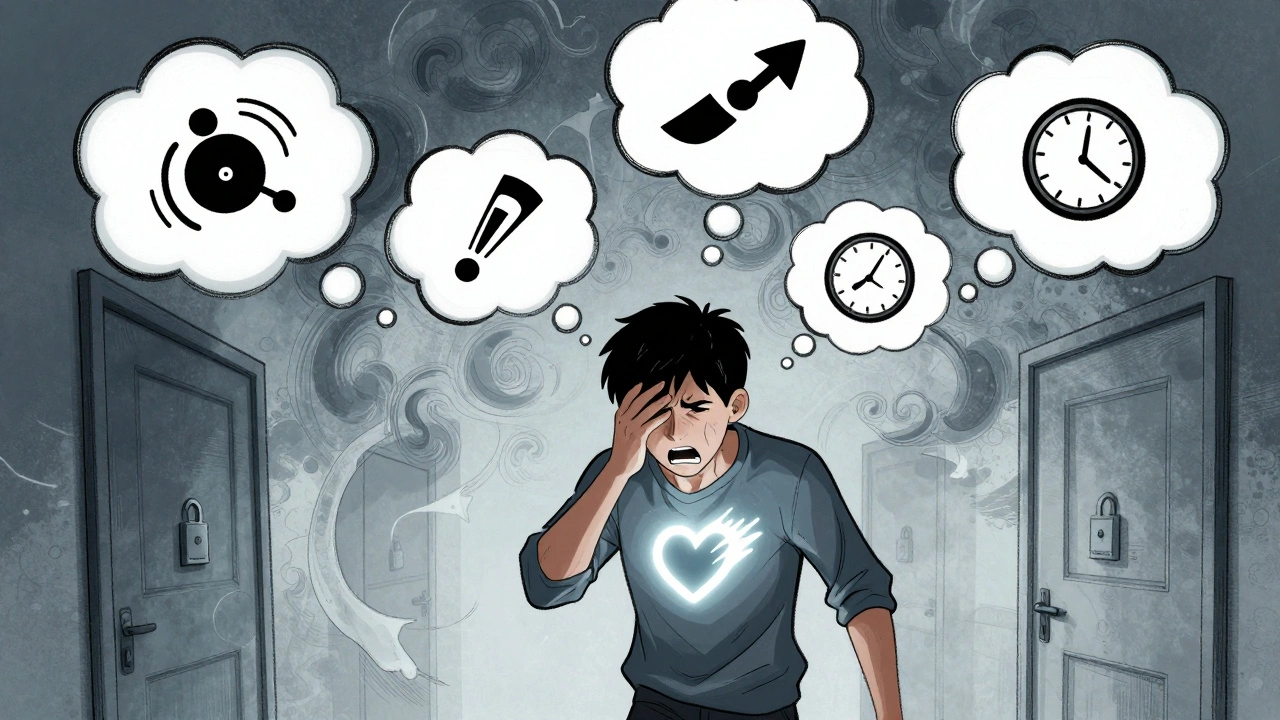
Anxiety disorders aren’t just feeling nervous before a big presentation or worrying about bills. They’re persistent, overwhelming, and often irrational fears that take over your daily life. You might feel your heart racing for no reason, avoid social events because you’re terrified of being judged, or spend hours checking locks and switches because something inside you says it’s not safe. These aren’t quirks-they’re clinical conditions recognized by the Anxiety Disorders are a group of mental health conditions marked by excessive fear, worry, and physical symptoms that interfere with normal functioning, as defined by the DSM-5.
According to the National Institute of Mental Health, nearly 1 in 5 U.S. adults deals with an anxiety disorder each year. Women are more likely to be diagnosed, but that doesn’t mean men don’t suffer-they just often don’t seek help. The real problem? Most people wait years before getting proper treatment. By then, the anxiety has woven itself into their routines, relationships, and even their sense of self.
Types of Anxiety Disorders
Not all anxiety looks the same. There are seven main types, each with its own pattern of thoughts, fears, and behaviors.
- Generalized Anxiety Disorder (GAD) means constant, excessive worry about everyday things-work, health, family, even minor decisions. It’s not just being stressed; it’s feeling tense most days for six months or longer, with no clear trigger.
- Panic Disorder involves sudden, intense episodes of fear that feel like a heart attack. You might sweat, shake, feel like you’re dying, or think you’re losing control. These attacks come out of nowhere and leave you terrified they’ll happen again.
- Social Anxiety Disorder isn’t shyness. It’s the paralyzing fear of being watched, judged, or embarrassed in social situations. Even something as simple as eating in public or speaking up in a meeting can trigger extreme distress.
- Specific Phobias are intense fears of specific things-heights, spiders, flying, needles. The fear is out of proportion to the actual danger. People with phobias will go to great lengths to avoid the trigger, which can limit their lives.
- Obsessive-Compulsive Disorder (OCD) involves unwanted, intrusive thoughts (obsessions) and repetitive behaviors (compulsions) meant to reduce anxiety. It’s not just liking things neat-it’s spending hours washing hands or checking locks because the thought of something bad happening feels unbearable.
- Separation Anxiety Disorder isn’t just for kids. Adults can experience extreme fear when separated from loved ones, worrying constantly they’ll be harmed or lost.
- Selective Mutism affects mostly children who can speak normally at home but remain silent in school or public settings due to overwhelming anxiety.
Common Symptoms Across All Types
While each disorder has unique features, they all share physical and mental signs that signal your nervous system is stuck in overdrive.
- Physical symptoms: Rapid heartbeat (110-140 bpm during panic attacks), trembling, sweating (reported by 92% of panic disorder patients), shortness of breath, dizziness, nausea, muscle tension, and fatigue.
- Cognitive symptoms: Racing thoughts, catastrophic thinking (“If I speak up, everyone will laugh at me”), rumination (replaying the same worry over and over), and trouble concentrating. In GAD, 89% of people report being unable to focus because their mind won’t stop spinning.
- Emotional symptoms: Feeling like something terrible is about to happen, fear of losing control, dread, irritability, and emotional numbness.
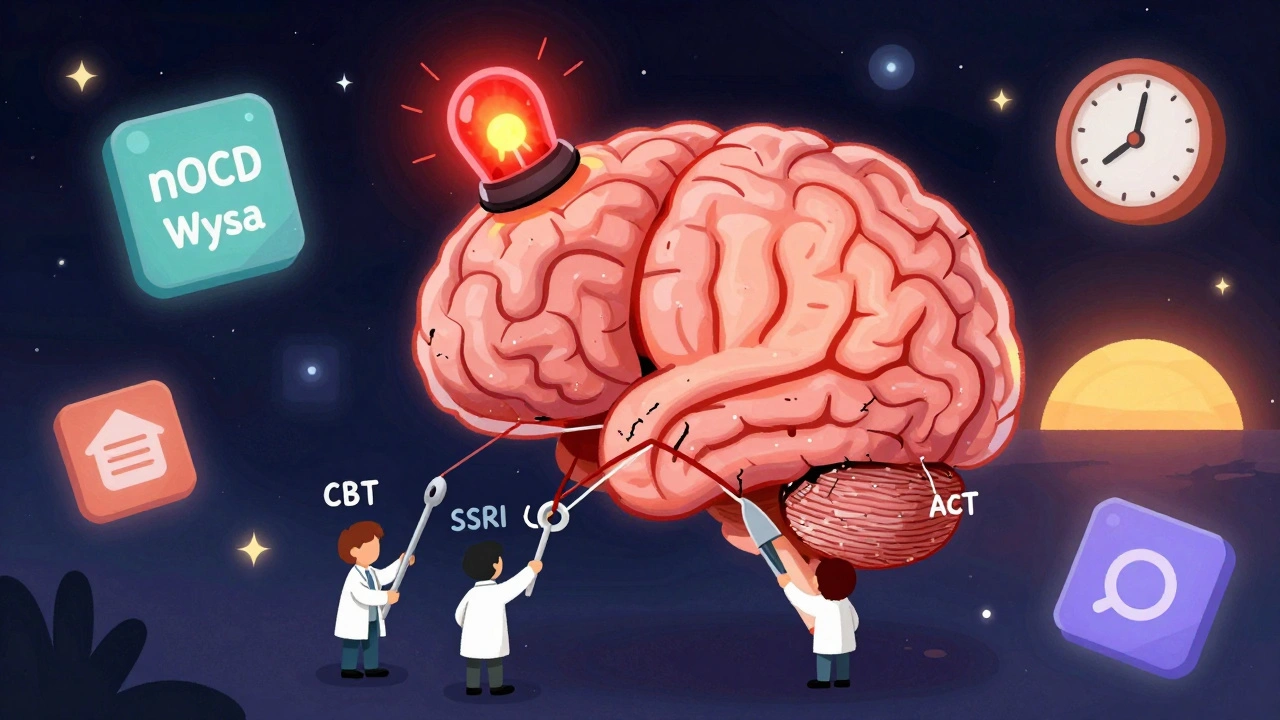
These symptoms aren’t imagined. Brain imaging studies show real differences in how anxiety disorders affect the amygdala-the part of the brain that sounds the alarm-and the prefrontal cortex, which normally calms it down. When anxiety takes over, that balance breaks.
What Treatments Actually Work?
There’s no magic pill, but there are treatments backed by decades of research. The two most effective are Cognitive Behavioral Therapy (CBT) a structured, time-limited therapy that helps people identify and change negative thought patterns and behaviors linked to anxiety and SSRIs selective serotonin reuptake inhibitors, a class of antidepressants proven to reduce anxiety symptoms by increasing serotonin levels in the brain.
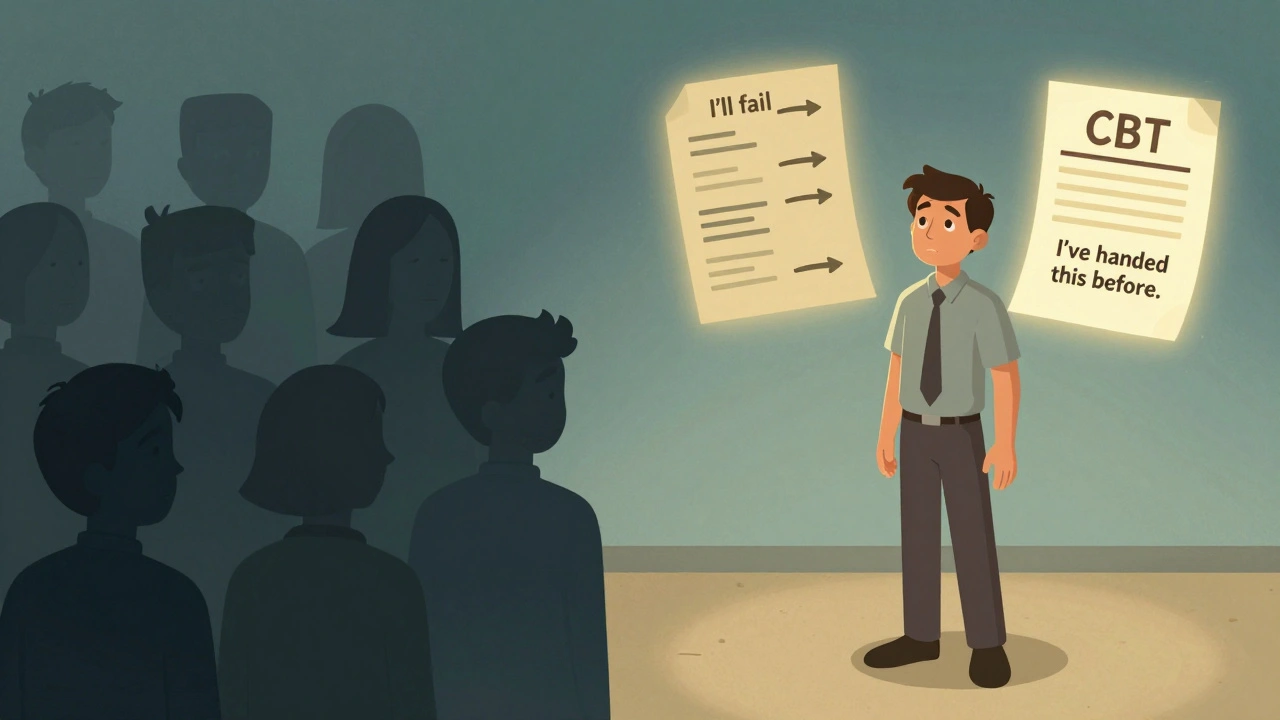
CBT doesn’t just talk about feelings-it teaches skills. You learn to recognize distorted thoughts (“I’ll fail and everyone will think I’m incompetent”) and replace them with more realistic ones (“I might feel nervous, but I’ve handled this before”). Exposure therapy, a key part of CBT, helps you face fears gradually. For someone with a fear of flying, that might mean first looking at pictures of planes, then watching videos, then sitting in an airport, and eventually boarding a short flight. Studies show 60-80% of people with social anxiety or phobias see major improvement with this method.
SSRIs like sertraline (Zoloft) and fluoxetine (Prozac) are the first-line medications. They don’t work overnight-it takes 4 to 8 weeks to feel the full effect. But when they do, people report fewer panic attacks, less muscle tension, and improved sleep. About 40-60% of users respond well. They’re not addictive, unlike benzodiazepines (like Xanax), which can help in the short term but carry high risks of dependence and brain fog with long-term use.
What About Other Options?
CBT and SSRIs aren’t the only tools. Newer approaches are gaining strong support.
Acceptance and Commitment Therapy (ACT) focuses less on changing thoughts and more on accepting them while still moving toward what matters. Instead of fighting the thought “I’m going to fail,” you learn to say, “I’m having the thought that I’m going to fail, and that’s okay-I’m still going to give this presentation.” Studies show ACT works just as well as CBT for many people.
Digital tools like the FDA-cleared apps nOCD and Wysa offer guided CBT exercises, mood tracking, and breathing techniques. In 8 weeks, users report 35-45% symptom reduction with just 20-30 minutes a day. These aren’t replacements for therapy, but they’re lifelines when waitlists are long or therapy is too expensive.
Medication alternatives like buspirone (Buspar) are non-addictive and work for some people who can’t tolerate SSRIs. In 2023, the FDA approved zuranolone (Zurzuvae), the first oral drug specifically for postpartum anxiety, with a 54% remission rate in trials. Research into ketamine-assisted therapy is also promising-some patients report relief within hours, not weeks.
Why Do People Struggle to Get Better?
Even with effective treatments, many don’t recover. Why?
- Access: The average wait for a specialist therapist is 6-8 weeks. In rural areas, it’s longer.
- Side effects: Some people quit SSRIs because they feel emotionally flat, gain weight, or have trouble sleeping.
- Cost: Insurance often limits therapy sessions to 10-12 per year, even though 12-20 are typically needed.
- Exposure discomfort: Facing fears feels unbearable at first. One Reddit user wrote: “My therapist told me to talk to strangers. I cried for three days after the first assignment. I wanted to quit.” But most who stick with it say it’s worth it.
- Stigma: Still, many think anxiety is weakness. But 67% of Americans now see it as a medical condition-not a personality flaw-up from 42% in 2010.
What Helps in the Long Run?
Recovery isn’t about never feeling anxious again. It’s about building resilience.
- Diaphragmatic breathing: Slow, deep breaths at 5-6 per minute can calm your nervous system in minutes. Practice daily-even when you’re not anxious.
- Consistency: CBT skills need practice. Use them even when you feel fine. That’s how you build muscle memory.
- Support: Groups like those from the Anxiety and Depression Association of America or NAMI’s 24/7 helpline connect you with others who get it.
- Self-compassion: Beating yourself up for feeling anxious makes it worse. Treat yourself like you would a friend.
What’s Next for Treatment?
The future is getting more personal. Researchers have identified three biological subtypes of anxiety using brain scans, which could soon predict who responds best to CBT vs. medication. Genetic testing may guide medication choices within five years, cutting out trial and error. AI tools are already predicting panic attacks 24 hours in advance with 87% accuracy by analyzing voice patterns and movement.
One thing’s clear: anxiety disorders are treatable. They’re not your fault. They’re not weakness. And they don’t have to control your life.

10 Comments
Thank you for this comprehensive breakdown. I’ve seen too many people dismiss anxiety as ‘just stress’-this clarifies the clinical reality with precision. The distinction between GAD and normal worry is especially vital. I’ve worked with clients who spent years believing they were ‘weak’ until they learned it was neurobiological. CBT isn’t magic, but it’s the closest thing we have to a reset button for the anxious mind.
Who’s funding this? Big Pharma? CBT is just a Band-Aid. SSRIs? They’re chemical shackles. The real cause? Society’s collapse. We’re all drowning in noise, algorithms, and performative productivity. They don’t want you healed-they want you medicated and compliant. Look at the stats: anxiety rose 300% since smartphones. Coincidence? Or design?
Let’s be real-this article cherry-picks the most optimistic data. 60-80% improvement? That’s not recovery. That’s ‘less panic attacks for six months.’ And ‘FDA-cleared apps’? That’s just marketing jargon. Wysa’s success rate is 12% when measured by clinical remission, not self-reported ‘feeling better.’ Also, zuranolone’s 54% remission? That’s in postpartum women with controlled environments-doesn’t translate to real-world chronic anxiety.
Actually, anxiety isn’t a disorder. It’s an evolutionary survival mechanism. They’re pathologizing normal human responses. You think your heart races because you’re sick? No-you’re alive. The system wants you medicated so you stop questioning why everything feels so broken. I stopped taking SSRIs. My anxiety dropped. Coincidence? Maybe. Or maybe I just stopped listening to people who profit from my fear.
CBT? Please. In America we got real solutions: guns, gym, and grit. You think talking about your feelings fixes anxiety? Nah. You need discipline. Work out. Get a job. Stop whining. And stop letting the left turn everything into a medical condition. Anxiety? Just be a man. Or woman. Whatever. Just stop being so soft.
OMG I’ve been there 😭 I tried CBT and it made me feel MORE alone… like my pain was just ‘cognitive distortions’?? I cried for a week after my therapist said ‘what’s the evidence you’re going to fail?’ I just wanted someone to say ‘I get it.’ Then I found ACT… and for the first time, someone said ‘your thoughts are not your enemy.’ I’m not fixed. But I’m not broken either. 🙏
They’re lying about the success rates. 40-60% response to SSRIs? That’s not a cure-it’s a placebo effect with side effects. And exposure therapy? I had to talk to strangers. I lost my job. My cat left me. My mom said I was ‘too much.’ No one tells you the cost. They just hand you a pamphlet and say ‘you got this.’
This is basic. In Nigeria, we don’t have SSRIs or apps. We have community. We have elders. We have prayer. We have silence. You think your brain is broken? Maybe your soul is just lonely. No algorithm can replace a human who sits with you in the dark. The West over-medicalizes everything. Anxiety? It’s a cry for connection-not a diagnosis.
The entire framework is ontologically flawed. Anxiety is not a disorder-it is the epistemic condition of modernity. The amygdala doesn’t malfunction; it accurately perceives the collapse of meaning in late capitalism. CBT is a neoliberal tool to normalize alienation. SSRIs are chemical pacification. The real treatment? Revolution. Or at least, radical stillness. Stop trying to fix the symptom. Burn the system down.
I appreciate the nuance here. I’ve been on sertraline for 18 months. It didn’t ‘cure’ me-but it gave me the space to breathe long enough to start CBT. I did exposure work for my fear of public speaking. I still get nervous. But now I say, ‘Okay, heart, you’re racing. That’s fine. I’m still going to speak.’ It’s not about eliminating anxiety. It’s about learning to carry it. And that’s enough.