
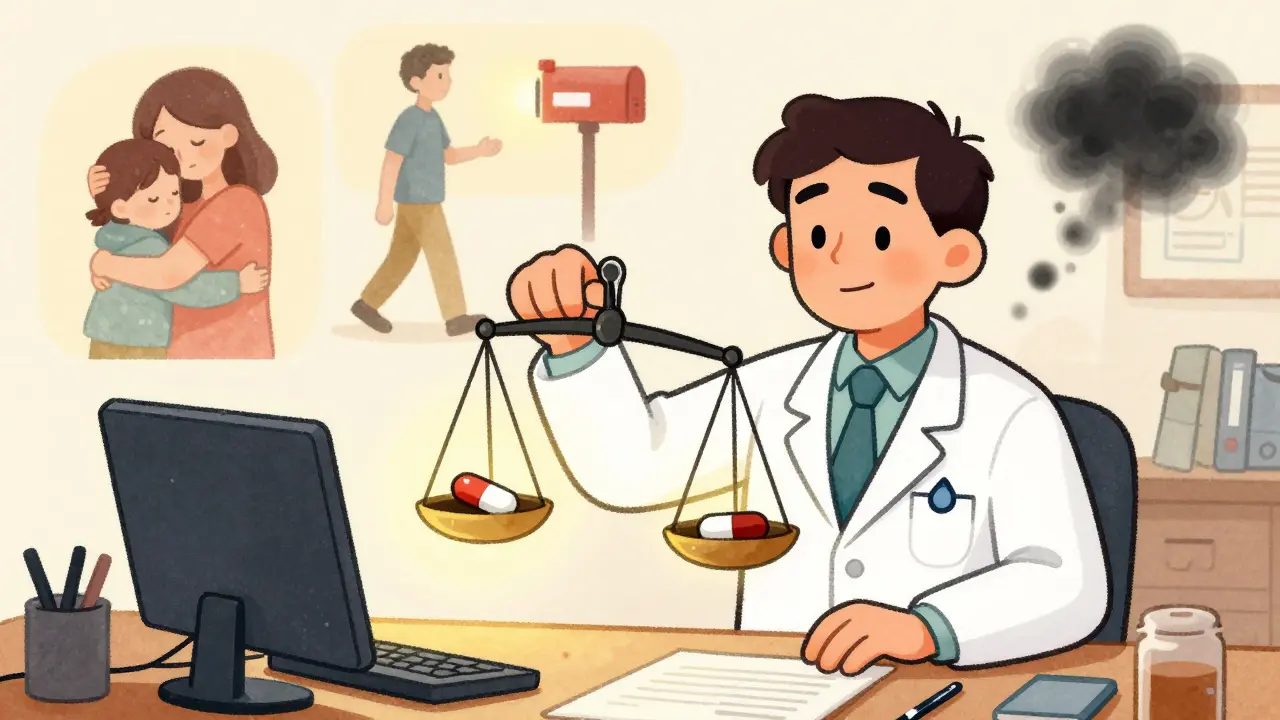
Medication Benefit-Risk Calculator
How This Works
This calculator helps you understand why doctors choose certain medications by comparing the benefits versus risks. Based on your condition severity and treatment options, it shows you:
- Absolute risk reduction
- Number needed to treat (NNT)
- Benefit-risk ratio
Results
- Absolute risk reduction: 10%
- NNT: 10 patients treated
- Benefit-Risk Ratio: 3.5:1
Every time a doctor writes a prescription, they’re not just picking a drug-they’re making a decision based on a quiet calculation: does the benefit outweigh the risk? It’s not about whether a medication works. It’s about whether it works enough to justify what it might do to you. This isn’t guesswork. It’s a structured, evidence-based process used by doctors, regulators, and pharmacists every single day. And if you’ve ever wondered why your doctor hesitates before prescribing something-even when it seems like the obvious choice-this is why.
It’s Not Just About Side Effects
Most people think of side effects as the main concern. Nausea, dizziness, headaches. But those are just the tip of the iceberg. Healthcare providers look at the full picture: how bad is your condition? What happens if you don’t treat it? Are there other options? A drug that causes fatigue might be fine for someone with chronic migraines but dangerous for a truck driver. A medication that raises the risk of liver damage might be acceptable for someone with terminal cancer, but completely off the table for a healthy 25-year-old trying to prevent a heart attack five years from now.The U.S. Food and Drug Administration (FDA) has a formal framework for this called the Benefit-Risk Assessment. It’s not a magic formula. It’s a way of organizing what doctors already do intuitively. The framework breaks it down into four parts: the condition you have, what treatments already exist, how well the drug works, and what risks it carries. Each of these has to be weighed against uncertainty-because no drug is fully understood the day it’s approved.
How Much Better Does It Really Work?
When a drug company says a medication reduces heart attacks by 30%, that sounds impressive. But 30% of what? If the baseline risk is 2%, a 30% reduction means going from 2% to 1.4%. That’s a real benefit-but it’s not life-changing for most people. Compare that to a cancer drug that boosts five-year survival from 10% to 35%. That’s not just a number. That’s someone who gets to see their kid graduate. That’s why oncology drugs often get approved with serious side effects. The trade-off is clear: you’re trading short-term suffering for a chance at long-term life.Take Keytruda, used for metastatic melanoma. About 40% of patients experience immune-related side effects-some severe, like inflammation of the lungs or colon. But without it, only 1 in 10 patients live five years. With it, 3.5 in 10 do. That’s why most patients accept those risks. The benefit isn’t just statistical. It’s personal.
What Are the Real Risks?
Risks aren’t just about how common they are-they’re about how bad they are, and whether they can be managed. A 15% chance of a mild rash? That’s usually fine. A 2% chance of sudden liver failure? That’s a red flag. Some side effects are temporary. Others, like nerve damage or infertility, are permanent. Some can be monitored with blood tests. Others strike without warning.The FDA requires drug makers to report every adverse event from clinical trials. But trials are done in controlled environments with healthy volunteers and strict monitoring. Real life is messier. People take other meds. They have other health problems. They don’t show up for follow-ups. That’s why post-market surveillance is critical. In fact, about 60% of drugs approved under fast-track programs still have major safety uncertainties five years after launch.
Why Do Patients and Doctors Disagree?
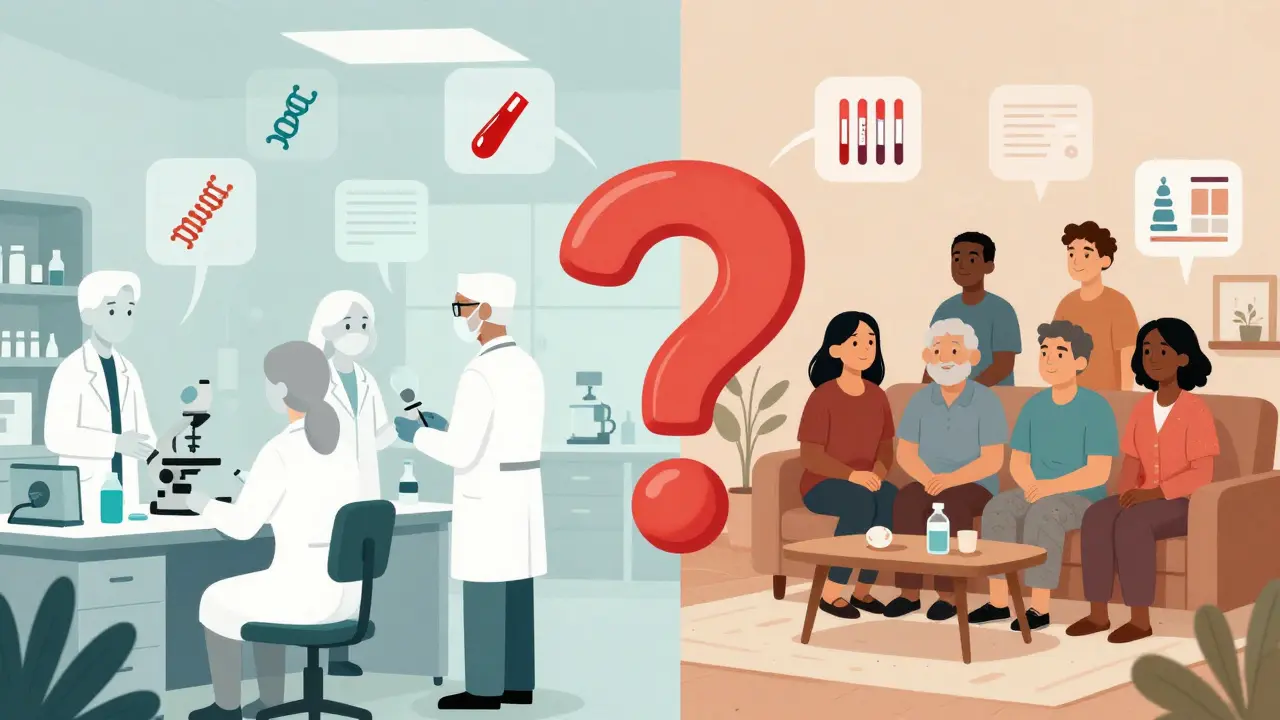
Here’s where things get complicated. Doctors base their decisions on population data. Patients base theirs on their own fears, experiences, and hopes.A 2023 study found that 65% of Parkinson’s patients would accept a 20% risk of uncontrolled movements (dyskinesia) if it meant a 30% improvement in mobility. Doctors estimated they’d only accept a 12% risk. Why? Because patients aren’t just thinking about longevity-they’re thinking about quality of life. Can they hug their grandkids? Can they walk to the mailbox? Can they sleep through the night?
On the flip side, a patient with high blood pressure might refuse an ACE inhibitor because they heard about a 0.1% chance of throat swelling (angioedema). But that same drug cuts stroke risk by 25%. The patient focused on the scary word. The doctor focused on the numbers. Neither is wrong. That’s why communication matters more than ever.
Who Gets Left Out?
The data we use to make these decisions doesn’t always reflect real life. Clinical trials are still overwhelmingly made up of white patients-75% in 2023-despite minorities making up 40% of the U.S. population. That means we don’t fully understand how side effects or benefits might differ for Black, Hispanic, or Indigenous patients. A drug that works great for one group might cause more liver damage in another. A dose that’s safe for one body type might be too high for another.That’s why the FDA is pushing for more diverse trials. And why some doctors now use tools like patient preference surveys to better understand what trade-offs their patients are actually willing to make. The Michael J. Fox Foundation, for example, now collects direct input from Parkinson’s patients before new drugs even reach the market.
What’s Changing Now?
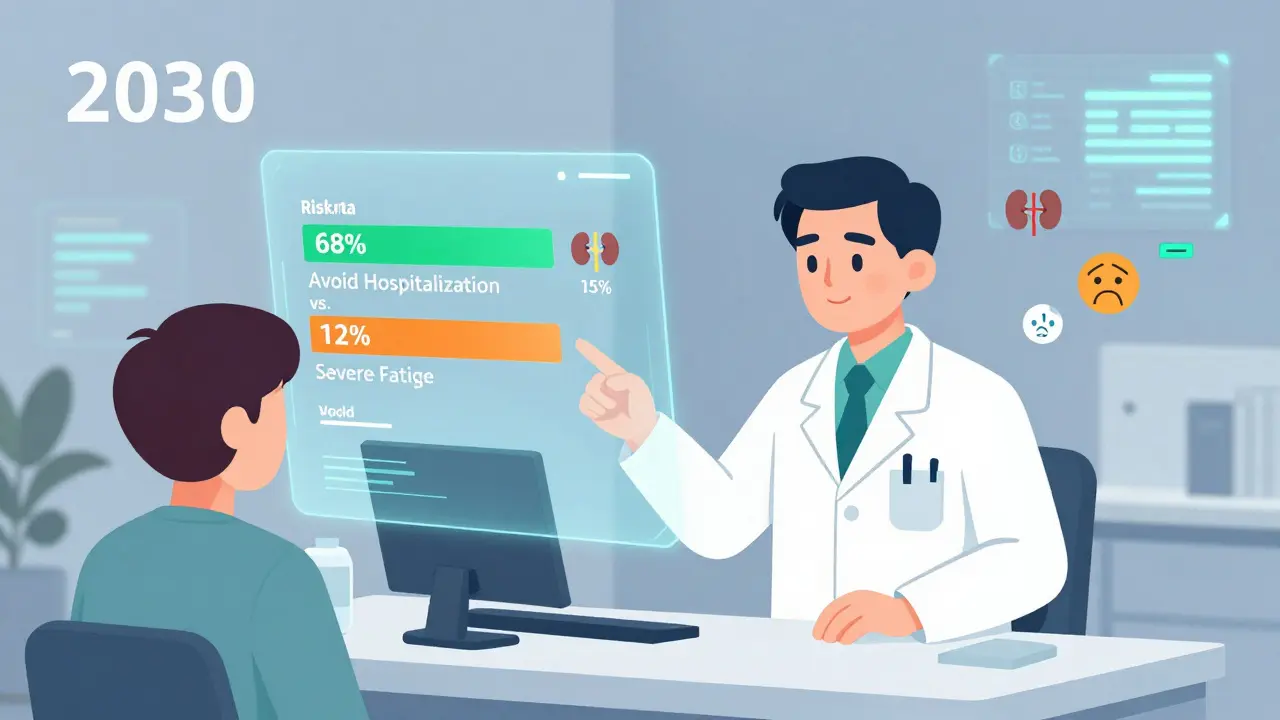
The field is moving fast. In 2023, the FDA started using real-world data from electronic health records to help make decisions. Instead of waiting five years to see how a drug performs outside the lab, they can now look at what’s happening in clinics across the country. AI tools are helping predict which patients are most likely to have bad reactions based on their genetics, lifestyle, and medical history.By 2030, experts predict that 70% of benefit-risk assessments will be personalized. Imagine a future where your doctor doesn’t just say, “This drug works for most people.” Instead, they say: “Based on your genes, your kidney function, and your history of anxiety, you have a 12% chance of severe fatigue but a 68% chance of avoiding hospitalization. Here’s what that looks like.”
Why This Matters to You
You don’t need to understand the FDA’s framework. But you should understand this: every medication is a gamble. No drug is risk-free. No drug is perfect. The goal isn’t to eliminate risk-it’s to make sure the risk you take is the right one for you.If your doctor says, “This has side effects, but it’s the best option,” ask: What happens if I don’t take it? What are the alternatives? How do we monitor for problems? You’re not being difficult. You’re being smart.
And if you’ve ever been scared to start a new medication because of a scary label? You’re not alone. But remember: the risk of not treating a serious condition often outweighs the risk of the drug itself. That’s not just medical jargon. It’s survival.
Why do doctors prescribe drugs with serious side effects?
Doctors prescribe drugs with serious side effects when the condition being treated is severe, life-threatening, or significantly reduces quality of life-and when there are few or no better alternatives. For example, chemotherapy for cancer or immunosuppressants for autoimmune diseases carry high risks, but the alternative is often death or permanent disability. The decision is based on whether the expected benefit outweighs the potential harm for that specific patient.
Are all side effects listed on the label equally likely?
No. Drug labels list all side effects observed during clinical trials, even those that happened in less than 1% of patients. The most common side effects are usually listed first, but the label doesn’t always make it clear how often each one occurs. A side effect listed as "rare" might affect 1 in 1,000 people, while "common" might mean 1 in 10. Always ask your doctor or pharmacist for context-what does "1 in 10" really mean for you?
Why do some people have bad reactions while others don’t?
Everyone’s body responds differently. Genetics, age, liver and kidney function, other medications, diet, and even gut bacteria can change how a drug is processed. A side effect that’s rare for most people might be common for someone with a specific genetic variation. That’s why personalized medicine is growing-doctors are starting to use genetic tests and health data to predict who’s at higher risk before prescribing.
Can I refuse a medication because of the risks?
Yes. You have the right to refuse any medication, even if your doctor recommends it. But it’s important to understand the consequences. For example, refusing blood pressure medication might increase your risk of stroke by 25%. Your doctor should explain those risks clearly. If you’re unsure, ask for alternatives, or ask for time to think. No decision should be rushed.
How do regulators decide if a drug is safe enough to approve?
The FDA and other agencies use a structured benefit-risk framework that looks at four things: the severity of the disease, how well the drug works, how serious and common the side effects are, and whether those side effects can be managed. For life-threatening conditions with no other treatments, they accept higher risks. For mild conditions like seasonal allergies, they demand near-perfect safety. They also consider patient input-especially for rare diseases-because those who live with the condition often have different risk tolerance than doctors.
What You Can Do
You don’t need to be an expert. But you can be informed. Keep a list of your medications. Ask: What’s this for? What happens if I skip it? What are the real odds of side effects? Don’t be afraid to ask for a simple explanation-like, “Is this side effect something that affects 1 in 10 people, or 1 in 100?”And if you’re being prescribed something new, ask if there’s a patient decision aid available. The FDA has created 47 of them for conditions like diabetes, depression, and arthritis. These tools use real data to help you see the trade-offs in plain language-and they’ve been shown to reduce medication mistakes by over 20%.
Medication isn’t magic. It’s math. And you deserve to understand the numbers behind the prescription.




11 Comments