Lithium: What It Is, How It Works, and What You Need to Know
When doctors prescribe lithium, a naturally occurring mineral used as a mood-stabilizing medication. Also known as lithium carbonate, it's one of the oldest and most studied treatments for bipolar disorder, a mental health condition marked by extreme mood swings between mania and depression. Unlike newer drugs, lithium doesn’t just mask symptoms—it helps rewire how the brain handles emotional spikes and crashes over time.
Lithium works by balancing neurotransmitters like serotonin and dopamine, but its real power lies in how it affects brain cell communication. It reduces the frequency and severity of manic episodes and can also prevent depressive lows. People who take it long-term often report fewer hospital visits and more stable relationships. But it’s not a simple pill—lithium side effects, common issues like tremors, weight gain, and frequent urination are part of the picture. And because lithium has a narrow safety window, even small changes in your body—like dehydration, salt intake, or kidney function—can push levels into dangerous territory. That’s why regular blood tests aren’t optional; they’re life-saving.
Many people worry about lithium toxicity, a serious condition that happens when too much builds up in the blood. Symptoms include confusion, vomiting, muscle weakness, and seizures. It’s rare if you’re monitored properly, but it’s why you can’t just take an extra dose if you feel worse. Lithium doesn’t work overnight. It takes weeks to reach full effect, and many give up too soon. The best results come from sticking with it, tracking how you feel, and working with your doctor to fine-tune the dose.
You’ll find posts here that break down how lithium compares to other mood stabilizers, what to do if you miss a dose, how it interacts with common meds like NSAIDs and diuretics, and why some people respond better than others. There’s also info on managing weight gain, dealing with brain fog, and what to expect when you first start. This isn’t a one-size-fits-all drug, and the stories below reflect that reality—some people find freedom with lithium, others switch after trying for months. What matters is knowing the facts, asking the right questions, and never stopping the conversation with your care team.
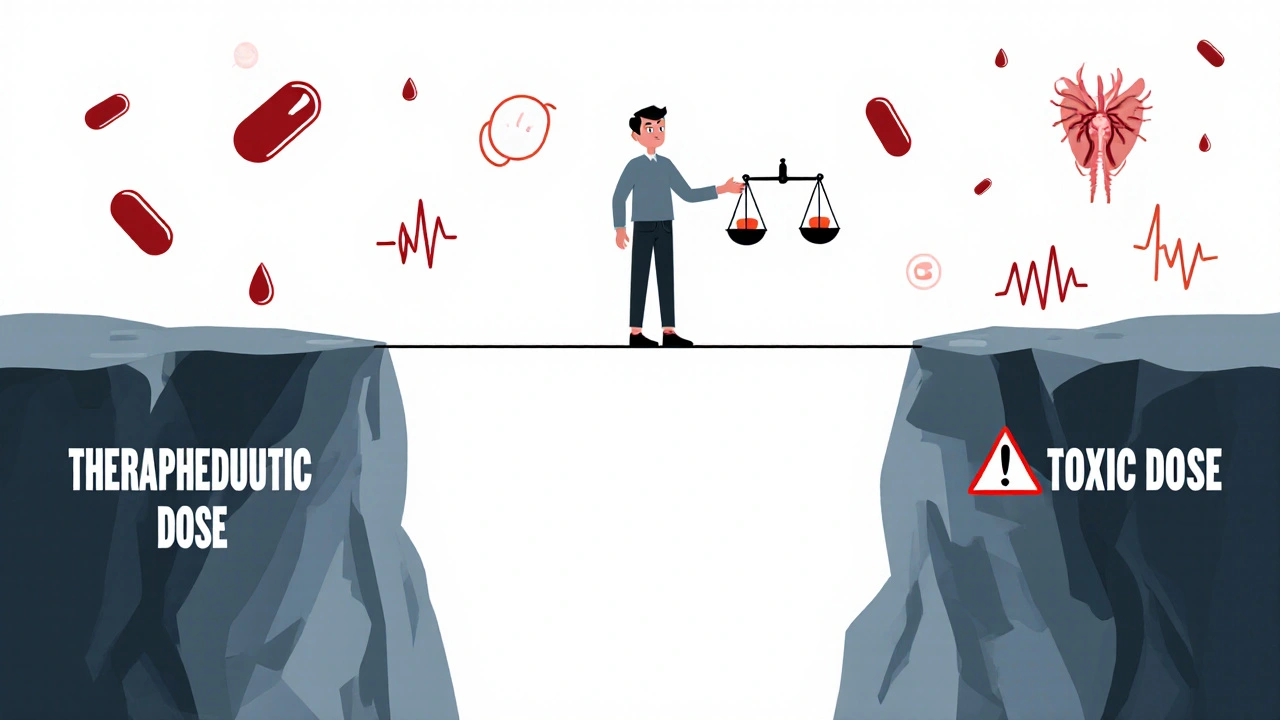
Narrow Therapeutic Index Drugs: What Patients Need to Know
Narrow therapeutic index drugs require precise dosing and regular monitoring. Learn how warfarin, lithium, levothyroxine, and others work, why generic switches can be risky, and what you must do to stay safe.
read more