
Medication Side Effect Tracker
Track Symptoms and Medications
This tool helps you determine if your symptoms are likely from your condition or a medication side effect. Track your medications and symptoms to find patterns.
Add Your Medications
Add Your Symptoms
Your Symptom Timeline
Analysis Results
It’s one of the most confusing and frightening experiences in chronic illness: you start a new medication, and soon after, you feel worse. Is this your disease getting worse? Or is it the medicine causing the problem? Many people assume the worst - that their condition is progressing - when in fact, it’s just a side effect. And that misunderstanding can lead to unnecessary tests, extra pills, or even stopping a treatment that’s actually helping.
Let’s cut through the noise. You’re not imagining things. Your symptoms are real. But knowing whether they come from your illness or your medicine? That’s the key to staying safe and getting better.
What’s the Difference, Really?
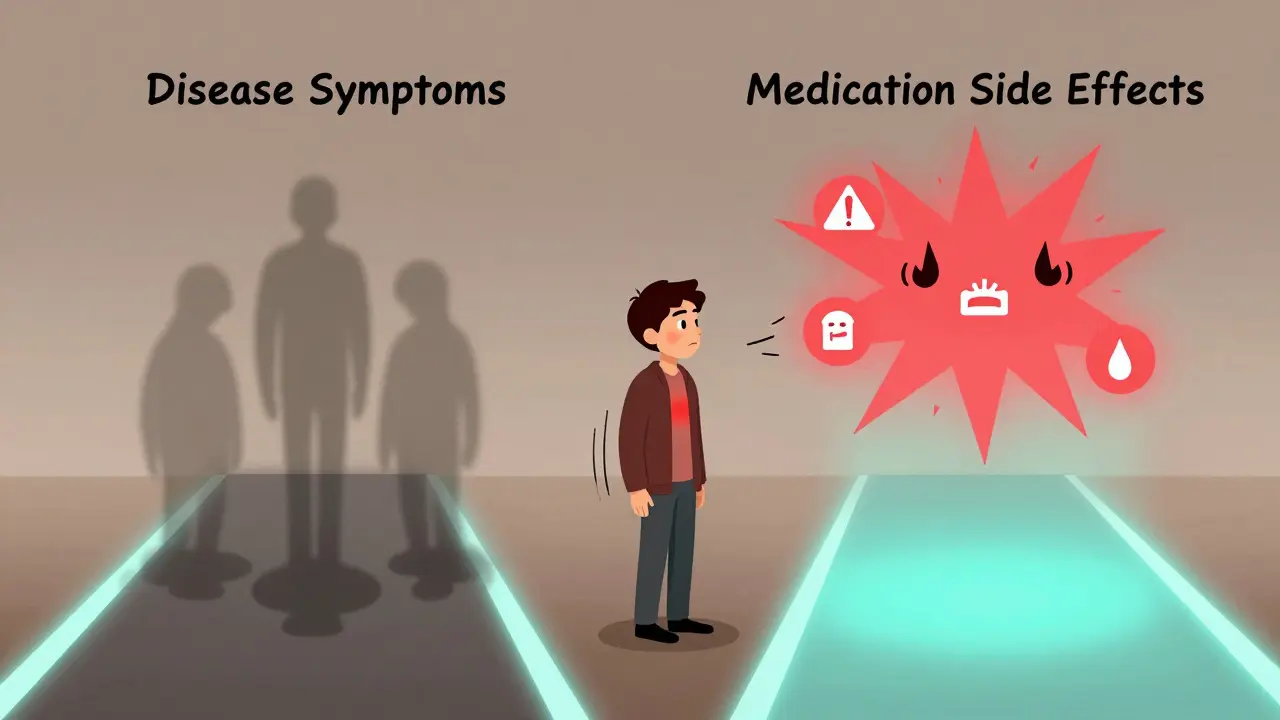
Disease symptoms are what your body shows because something’s wrong inside - like fatigue from depression, joint pain from arthritis, or high blood pressure from kidney disease. These are the signs your body gives you to tell you something needs attention.
Medication side effects? Those are your body’s reaction to the drug itself. They’re not the disease. They’re the drug’s unintended side show. The World Health Organization defines a side effect as an unintended response to a medication taken at a normal dose. That means even when you take it exactly right, your body might still react in ways you didn’t expect.
Here’s the big difference: side effects usually show up after you start the drug. Disease symptoms? They’ve been there for a while - or they follow their own pattern, no matter what pills you take.
Timing Is Everything
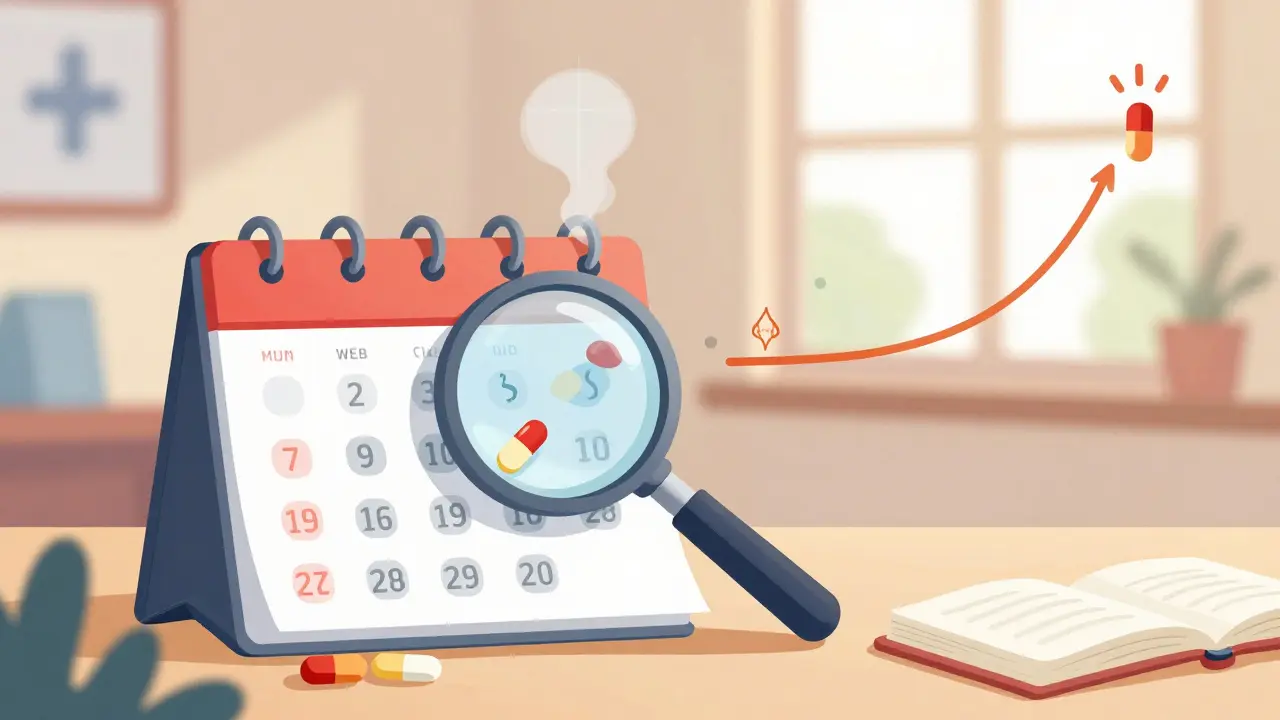
If you started a new medication last week and suddenly feel dizzy, nauseous, or sleepless - that’s a red flag. Most side effects appear within days to four weeks. Think of it like this: if your headache started the day after you began a new blood pressure pill, it’s probably not your arteries acting up. It’s the pill.
On the flip side, if your depression has been getting worse over months - even while on antidepressants - that’s more likely the disease. Side effects don’t usually get worse slowly over time. They hit fast, then often fade.
According to the FDA, 60-70% of common side effects like nausea, drowsiness, or dry mouth get better on their own after a few weeks. Your body adjusts. But if your disease symptoms are getting worse? That’s not your body adjusting. That’s your condition changing.
Dose Matters
Here’s a simple test: did your symptoms get worse when your doctor raised your dose? Did they get better when you dropped it?
Seventy percent of side effects are dose-dependent. That means the higher the dose, the stronger the reaction. If you doubled your SSRI and suddenly couldn’t sleep, that’s a classic sign. Your depression didn’t suddenly spike - your brain reacted to the extra serotonin.
Disease symptoms don’t care about dosage. If you have rheumatoid arthritis, your joint pain won’t magically get better just because you take less methotrexate. It might get worse if you stop it, but it won’t fluctuate with small dose changes the way a side effect does.
Common Side Effects vs. Common Disease Symptoms
Some symptoms overlap so much it’s easy to mix them up. Here’s what you’re likely dealing with:
- Side effects you’ll often see: Nausea (25-30% of new med users), constipation (15-20%), dry mouth (12-18%), drowsiness (10-15%), headache (7-10%), rash (8-12%).
- Disease symptoms you’ll often see: Fatigue (85% in depression), insomnia (78% in depression), poor concentration (72% in depression), anxiety (65% in depression), joint stiffness (in arthritis), shortness of breath (in heart failure).
Notice the difference? Side effects are usually general - your whole body feels off. Disease symptoms are specific to the condition. A cough from an ACE inhibitor like lisinopril? That’s a classic side effect. A cough from asthma? That’s the disease.
When It’s Not a Side Effect - It’s an Allergy
Not every bad reaction is a side effect. Some are allergies - and those are dangerous.
Allergic reactions happen fast: within minutes or hours. They’re not dose-dependent. Even a tiny amount can trigger them. Signs include hives, swelling of the face or throat, trouble breathing, or a sudden drop in blood pressure.
If you’ve ever had a rash after a new antibiotic, or felt your tongue swell after a new painkiller - that’s not a side effect. That’s an allergic reaction. Stop the drug and get help immediately.
Side effects are annoying. Allergies are emergencies.
What About Polypharmacy?
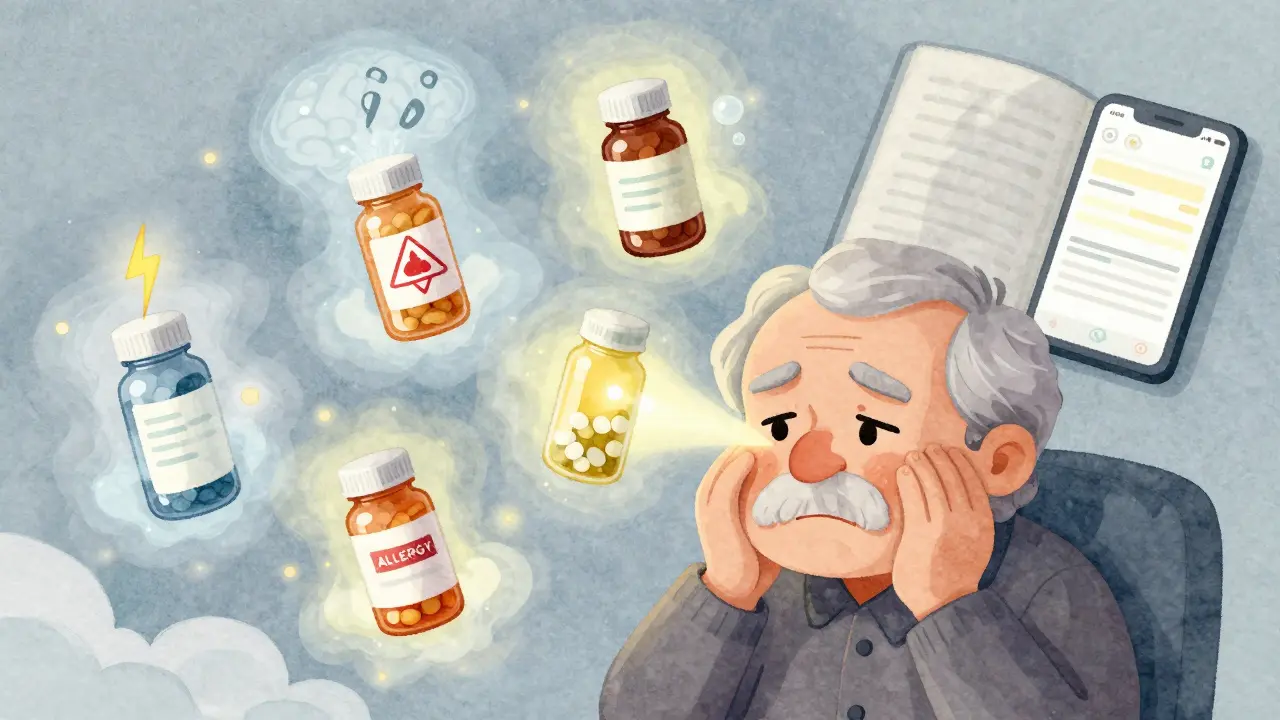
If you’re on five or more medications - which 35% of adults with chronic conditions are - things get messy. Drugs interact. One pill causes dizziness. Another causes confusion. Together, they make you feel like you’re losing your mind.
That’s why so many older adults get misdiagnosed with dementia. In reality, it’s anticholinergic drugs - common in blood pressure, bladder, and sleep meds - causing brain fog. The American Geriatrics Society says 15-20% of new dementia cases in seniors are actually drug-induced.
It’s not aging. It’s the pill bottle.
How to Figure It Out - A Simple 4-Step Plan
You don’t need a PhD to tell the difference. Here’s what to do:
- Track your timing. Write down when you started each medication and when symptoms began. If they match up within a week or two, it’s likely a side effect.
- Check your dosage. Did symptoms get worse after a dose increase? Did they improve after a decrease? That’s a strong clue.
- Try a drug holiday. Under your doctor’s supervision, pause the suspect medication for 3-7 days. If symptoms fade, it’s probably the drug. If they stay the same? It’s your disease.
- Look at drug interactions. Use the FDA’s Drug Interaction Checker or ask your pharmacist. Sometimes it’s not one drug - it’s two or three working together to cause trouble.
Patients who keep a daily symptom journal - noting time of dose, symptom severity (1-10), and what they were doing - improve diagnostic accuracy by 41%, according to a 2022 study in Patient Education and Counseling.
What You Should Never Do
Don’t stop your meds cold turkey. That can be dangerous - especially for blood pressure, antidepressants, or seizure meds. Withdrawal can mimic disease symptoms and make things worse.
Don’t assume it’s “just in your head.” If you feel off, it’s real - even if your doctor says it’s a side effect.
Don’t wait months to speak up. The Harvard Pilgrim Health Care Institute found that 47% of people delay reporting side effects because they’re unsure. On average, they suffer for 5.2 weeks longer than they need to.
Tools That Help
You’re not alone in this. Technology is catching up:
- Medisafe and other pill-tracking apps let you log symptoms alongside your meds. One 2022 study found users identified side effects 34% faster.
- Electronic health records at major hospitals now flag potential side effects based on your age, other meds, and history. Epic’s system works with 82% accuracy.
- AI tools like MedAware’s SafetyRx analyze your records and predict which symptoms are likely drug-related - with 91% accuracy in trials.
- Pharmacogenomic testing (now covered by 65% of insurers) checks your genes to see how you’ll react to certain drugs before you even start them.
And if you’re on antidepressants, anxiety meds, or sleep aids? The “active side effect” approach helps. Some doctors now say: “Nausea at first? That’s your brain adjusting. It’s a sign the medicine is working.” That simple shift reduces early quitting by nearly 30%.
When to Call Your Doctor
Call right away if you have:
- Swelling in your face, lips, or tongue
- Difficulty breathing or swallowing
- Severe rash or blisters
- Thoughts of self-harm or suicide
- Heart palpitations or chest pain
For everything else - the fatigue, the dry mouth, the brain fog - write it down. Track it. Talk to your doctor at your next visit. You’re not overreacting. You’re being smart.
Medication safety isn’t just about what’s in the bottle. It’s about knowing your body well enough to tell the difference between the disease and the cure. And that knowledge? That’s power.
Can side effects last longer than a few weeks?
Yes, some side effects can last beyond the first few weeks, especially with long-term medications like corticosteroids or antipsychotics. Weight gain from olanzapine, for example, often continues for months. But if a symptom appears after starting a drug and doesn’t improve after 6-8 weeks, it’s worth reviewing with your doctor - it could be a chronic side effect, or it could mean the medication isn’t right for you.
I’ve been on my medication for months. Can I still develop side effects now?
Absolutely. Your body changes over time - your liver processes drugs differently, you gain or lose weight, or you start another medication. These shifts can trigger side effects even after months of no issues. That’s why regular medication reviews with your doctor are critical, especially if you’re on multiple drugs.
How do I know if my fatigue is from my disease or my pill?
Fatigue from depression tends to be constant, deep, and unrelenting - even after sleep. Medication-induced fatigue often comes with drowsiness, sluggishness, or trouble waking up - and it usually improves after a few weeks. If your fatigue started right after a new drug and gets worse when you increase the dose, it’s likely the medication. Keep a journal for 10 days: note when you take your pill and when you feel tired. Patterns will emerge.
Is it safe to stop a medication to see if symptoms go away?
Only under medical supervision. Stopping antidepressants, blood pressure meds, or seizure drugs suddenly can cause serious withdrawal symptoms or rebound effects. Your doctor can help you safely taper off or run a controlled “drug holiday” to test whether the side effect disappears. Never quit cold turkey without guidance.
Why do some doctors dismiss side effects as “just in my head”?
Some doctors are overwhelmed or trained to focus on disease control, not drug reactions. Others don’t realize how common misattribution is - studies show 32% of patients blame their symptoms on the disease when it’s actually the drug. Bring your symptom journal, mention specific timing and dose changes, and ask: “Could this be a side effect?” That shifts the conversation from dismissal to investigation.
What to Do Next
Start today. Open your phone’s notes app or grab a notebook. Write down:
- Every medication you take - including dose and time
- Every symptom you feel - even if it seems small
- When each symptom started and how it changes
Do this for 10 days. You’ll start seeing patterns. You might notice your headache hits every time you take your morning blood pressure pill. Or your sleeplessness only happens after your evening antidepressant.
Bring that to your next appointment. Don’t say, “I feel bad.” Say, “My dizziness started two days after I began lisinopril, and it got worse when my dose went up from 10mg to 20mg.” That’s the language that gets results.
You’re not just a patient. You’re the expert on your own body. And when you learn to tell the difference between disease and drug, you take back control - one pill at a time.




9 Comments
I’ve been on sertraline for two years and only realized last month that my chronic headaches were from the med, not my depression. I kept thinking I was ‘failing’ at recovery until I tracked my doses and noticed the spikes after every refill. Now I’m on a lower dose and my brain feels like my own again.
Journaling isn’t just for therapists-it’s survival.
Wow. A whole 2,000-word essay on how to not be an idiot. Did you get paid by Big Pharma to write this or is this just your personal fanfic? I’m sure the 80-year-old with 12 meds and dementia just needed someone to say ‘maybe it’s the pills’ instead of assuming they’re losing it. Groundbreaking.
Y’all don’t get it. This isn’t about meds or symptoms. It’s about the soul screaming under the weight of a system that treats bodies like machines.
I was on 7 drugs for 5 years. I thought my anxiety was ‘just me.’ Turns out, it was the beta-blockers + the antihistamines + the proton pump inhibitor all dancing in my liver like a cursed tango.
When I stopped? I didn’t just feel better-I remembered who I was before the pharmacy became my identity.
Medicine doesn’t heal. It masks. And we’re all just ghosts in a pill bottle.
My doctor told me my brain fog was ‘just aging.’ I started tracking my meds and realized it only happened after I took my nighttime antihistamine. Cut it out. Brain fog gone. Took me two years to figure it out. So glad someone wrote this.
Let me get this straight-you want us to keep a journal, track doses, and wait weeks to see if symptoms improve… but the system is designed to make you feel crazy if you do?
Meanwhile, my doctor still thinks ‘stress’ is the cause of everything.
So yeah, I’ll keep my spreadsheet. And when I die of withdrawal because I was too scared to stop my antidepressant? At least I’ll have a color-coded chart to bury with me.
👏👏👏 this is the kind of post that makes me cry happy tears. 🤍 I’ve been on gabapentin for nerve pain and thought my dizziness was ‘just part of the condition.’ Turns out? It’s the med. Took me 8 months. Now I’m down to 1/3 the dose and I can actually walk without feeling like I’m on a boat.
Thank you for saying this. 🙏
You Americans think your pills are magic. In India, we know the body heals itself. You take 12 drugs for a headache? We take turmeric, yoga, and silence.
This article is a symptom of your broken healthcare system-where profit beats truth and patients are treated like lab rats.
Stop blaming the medicine. Blame the greed that made you need it in the first place.
Thank you for writing this with such clarity and compassion. As someone who works in public health, I’ve seen too many patients dismissed because their symptoms didn’t fit neatly into a diagnostic box.
The emphasis on patient-led tracking-especially with timestamped logs-is not just practical, it’s revolutionary.
I’ve shared this with my entire clinic. This is the kind of education that reduces polypharmacy and restores trust.
Did you know the FDA doesn’t test drug interactions for people on 5+ meds? They only test one drug at a time.
And the AI tools you mentioned? They’re trained on data from white, middle-class patients. My Black grandmother on 8 meds? Her symptoms were labeled ‘depression’ for 3 years. Turns out? It was the diuretic + the statin + the anticholinergic combo.
They didn’t even test her for it.
This isn’t about ‘tracking’-it’s about systemic erasure. And you’re selling it as a self-help hack.