
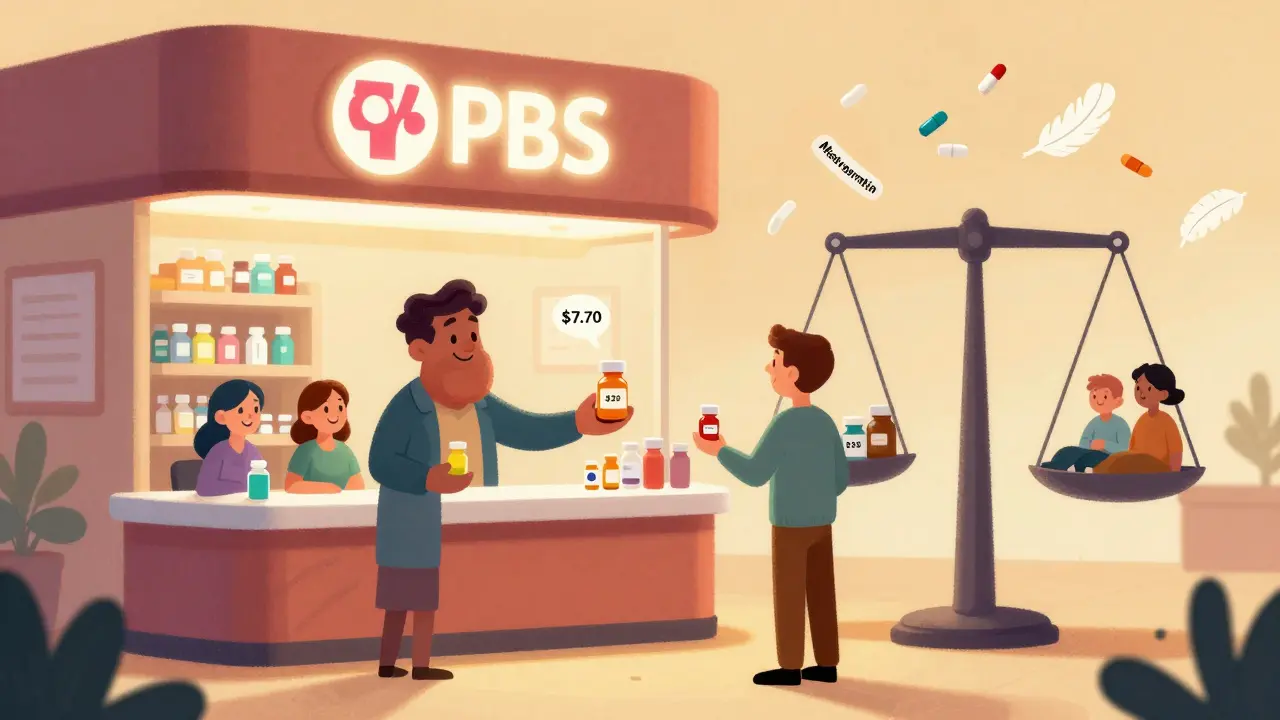
Every year, over 400 million prescriptions are filled in Australia. And for most of them, you’re not paying the full price. That’s because of the Pharmaceutical Benefits Scheme - or PBS - the government program that keeps medicines affordable for millions. If you’ve ever picked up a script at the pharmacy and paid just $7.70 or $31.60, you’ve used the PBS. But what’s really going on behind the scenes? And why do some people still struggle to afford their meds even with it?
What the PBS Actually Does
The PBS isn’t just a discount card. It’s a massive, government-run system that pays for most of your prescription drugs. If you’re an Australian citizen, permanent resident, or from one of the 11 countries with a reciprocal health agreement, you’re covered. The government picks up about 90% of the cost. You pay the rest - a co-payment. As of 2026, the co-payment is $25 for general patients and $7.70 for concession card holders. That’s a big change from just a year ago, when general patients paid $31.60. The government lowered it to help people cope with rising living costs. But here’s the catch: the PBS doesn’t cover everything. Only medicines that have been reviewed and approved by the Pharmaceutical Benefits Advisory Committee (PBAC) get listed. That means if a new drug hits the market in the U.S. or Europe, it can take nearly two years to show up on the PBS.How Generic Medicines Fit In
Generic drugs are the backbone of the PBS. They’re chemically identical to brand-name drugs but cost far less. In Australia, 84% of all prescriptions for off-patent medicines are generics - higher than the OECD average. That’s because the PBS forces competition. Once a brand-name drug’s patent expires, the government sets a reference price based on the cheapest version available. All other versions in that group - whether brand or generic - get subsidized at that same low price. That means if you’re taking a generic statin, your co-payment is the same as if you took the original, expensive version. This system pushes manufacturers to slash prices. In cardiovascular drugs, for example, the price of a generic medicine drops by 74% within a year after multiple generics enter the market. That’s why medicines like atorvastatin or metformin cost pennies on the dollar compared to what they did five years ago. The top five generic makers - Symbion, Sigma, Mylan, Aspen, and Hospira - control nearly 70% of this market. And they’re not just competing on price. They’re also racing to get listed on the PBS first, because being the cheapest means being the one the government pays for.Why Some People Still Can’t Afford Their Meds
Even with the PBS, 12.3% of general patients - that’s over 1.8 million Australians - say they skip doses or don’t fill prescriptions because of cost. Why? Because $25 per script adds up fast. If you’re on five medications, that’s $125 a month. For retirees without a concession card, that’s a real burden. One Reddit user in Adelaide shared: “I choose between insulin and heating my home. The PBS helps, but it doesn’t fix everything.” The safety net exists to help. Once you hit $1,571.70 in out-of-pocket costs for PBS medicines in a year, your co-payment drops to $7.70 - even if you’re not a concession holder. But many people don’t know they’re close to the safety net. Others hit it too late. A 2024 survey found that 28% of low-income households with chronic illnesses cut back on food to pay for meds. That’s not just a health issue. It’s a poverty issue.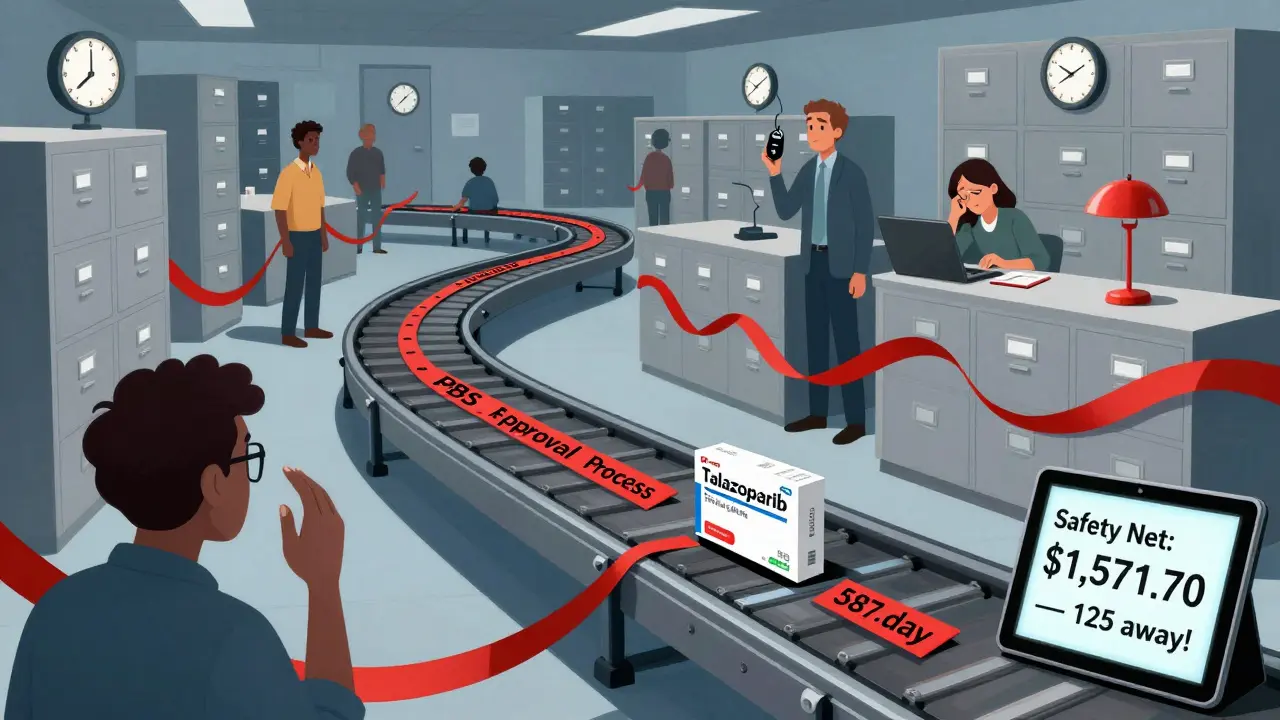
The Hidden Delays and Bureaucracy
Getting a medicine onto the PBS isn’t easy. The PBAC evaluates every drug based on clinical benefit and cost-effectiveness. Their benchmark? Around $50,000 per quality-adjusted life year (QALY). That sounds technical, but it’s just a way of saying: “Is this drug worth the price?” The problem? The process is slow. On average, it takes 587 days from when a drug is launched globally to when it’s listed on the PBS. In Germany, it’s 320 days. In Canada, 410. That gap means patients pay full price - often $1,850 or more - for months or even years. One man in Perth waited 14 months for a new prostate cancer drug. He sold his car to afford it. Then there’s the “authority required” system. Nearly 30% of PBS medicines need pre-approval. That means your doctor has to fill out forms, prove your diagnosis, and wait for Medicare to respond. Electronic approvals take about two days. Paper ones? Over a week. Pharmacists report spending nearly 20% of their day just handling PBS paperwork. And GPs say it’s one of the biggest frustrations in their job.What’s Changing in 2026
The government isn’t standing still. In January 2026, the general co-payment dropped to $25. That’s a $6.60 cut - and a $785 million saving for patients over four years. But it’s not free. The government will spend an extra $689 million to make it happen. New drugs are also being added. Talazoparib for prostate cancer and Relugolix for endometriosis were listed in 2025, giving 150,000 more Australians access. The Highly Specialised Drugs Program (HSDP), which handles ultra-rare diseases, is also being relaxed. Two of its eight strict criteria have been dropped after public pressure. That means more people with rare conditions might finally get help. The PBS is also going digital. The Services Australia app lets you check your co-payment status, see if a drug is listed, and track your safety net progress. Over 1.2 million people have downloaded it. And in the next two years, AI tools will start flagging inappropriate prescriptions - like prescribing antibiotics for viral infections - to cut down on $1.2 billion in wasteful spending each year.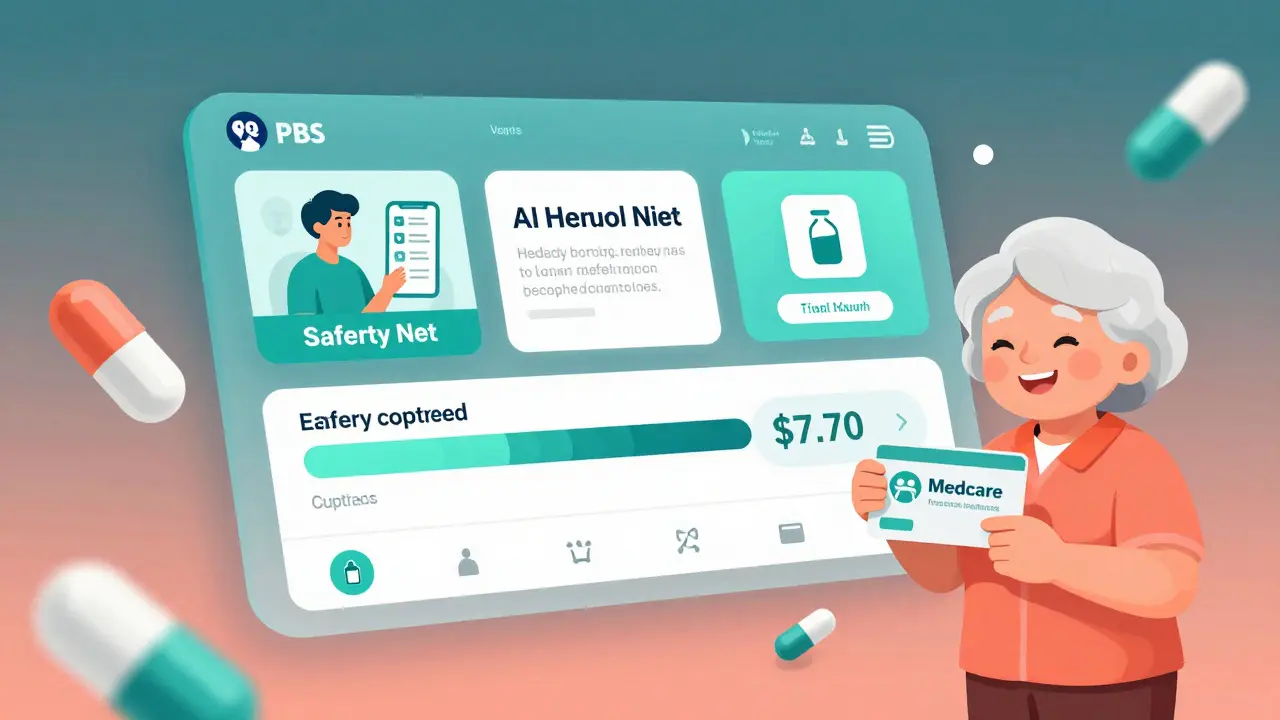
How Australia Compares
Compared to the U.S., Australia’s system is a bargain. A year’s supply of lisinopril costs $1,200 in the U.S. but under $40 on the PBS. Even compared to the UK, where the NHS negotiates prices, Australian generics are still 15-20% more expensive. But Australia’s reference pricing system - forcing all similar drugs to compete on price - is one of the most effective in the world. The U.K.’s NICE system uses a much stricter $30,000 per QALY threshold. If a drug costs more, it’s often denied - no exceptions. Australia’s PBAC is more flexible. It’s approved drugs costing over $150,000 per QALY for rare diseases, because the system understands that some lives are harder to put a price on.What You Can Do
If you’re on multiple prescriptions, check your PBS safety net status. It’s easy: log into your MyGov account or use the PBS app. If you’re close to hitting the $1,571.70 limit, ask your pharmacist to track it for you. You might be one script away from dropping your co-payment to $7.70. Ask your doctor if your medicine has a generic version. Many don’t even know. And if you’re struggling to pay, ask about the Concessional Benefit. You might qualify for a concession card based on income, age, or disability. Don’t skip doses because of cost. Talk to your pharmacist or GP. There are often alternatives - cheaper generics, different brands, or even patient assistance programs run by drug companies.Is the PBS Working?
Yes - but not perfectly. The PBS saves Australians $13 billion a year in out-of-pocket costs. It keeps people alive, out of hospitals, and working. It’s why Australia has some of the lowest rates of medication-related hospitalizations in the developed world. But it’s under strain. An aging population, expensive new drugs, and delays in access are pushing costs up. By 2045, PBS spending could hit 2.6% of GDP - up from 0.7% in 2005. That’s unsustainable. The real question isn’t whether the PBS works. It’s whether we’re willing to fix the gaps. The co-payment cut in 2026 is a step. Better digital tools are another. But until we tackle the delays, the bureaucracy, and the hidden costs for low-income families, the system will keep working for most - but not all.How do I know if my medicine is on the PBS?
You can check the PBS website (www.pbs.gov.au) or use the free PBS app from Services Australia. Just type in your medicine’s name - brand or generic - and it will show if it’s listed, your co-payment amount, and whether it’s restricted or needs authority. Your pharmacist can also check it instantly when you hand over your script.
Why is my generic medicine more expensive than last time?
If your medicine is brand-new to the PBS, the price may still be high because only one or two generics are available. Prices drop sharply once more manufacturers enter the market. Also, if your doctor prescribed a brand-name version even though a generic exists, you’ll pay more. Ask your pharmacist to switch you to the cheapest equivalent - they’re required to offer it unless you say no.
Can I get a 60-day supply to save money?
Yes - if you’re a concession card holder, you can get a 60-day supply for the price of one co-payment ($7.70). That’s a 50% saving. General patients can’t do this for all medicines, but some chronic condition scripts (like for diabetes or high blood pressure) can be extended. Ask your doctor. Many don’t know this option exists.
What’s the difference between PBS and Medicare?
Medicare covers hospital care, doctor visits, and some tests. The PBS covers prescription medicines. You need both. Your Medicare card is your key to accessing PBS-subsidised drugs. If you don’t have a Medicare card, you can’t use the PBS - unless you’re from one of the 11 countries with a reciprocal health agreement.
Why do some medicines take so long to be listed on the PBS?
The PBAC needs time to review clinical data, cost-effectiveness, and budget impact. Manufacturers must submit detailed applications, and the committee meets only every few months. Plus, if the drug is expensive or for a rare condition, it gets extra scrutiny. The process isn’t broken - it’s just slow. A 2024 study found the average delay is 587 days. That’s why many patients pay full price for over a year.


9 Comments
so i read this whole thing and like??? why is my insulin still $500?? i live in texas and i just sold my dog to pay for my meds lmao the australian government is literally angels compared to ours
It’s fascinating how Australia’s reference pricing model forces competition without killing innovation. The fact that generics drop 74% in price within a year shows market dynamics working as intended. But I wonder-does this discourage smaller pharma from entering the market? There’s a balance between affordability and sustaining R&D.
Let me guess-the government is secretly controlling drug prices to push people toward ‘approved’ medications. This whole PBS system is just a front for Big Pharma collusion. Why else would they take 587 days to approve a drug? That’s not bureaucracy-it’s intentional delay to keep you paying full price while they profit from the ‘safety net’ loophole.
wait so in australia u pay 7.70 for meds?? i am from india and here even generics cost 10x more and we dont have any govt help :( i wish we had this system. also why do they need authority req? cant they just automate it? like why is everything so slow??
Oh wow, a government that actually helps people? How quaint. You know what happens when you socialize healthcare? You get rationing, long waits, and doctors who don’t care anymore. This PBS sounds like a nice fairy tale for people who think ‘affordable’ means ‘free.’ Meanwhile, in the real world, innovation dies when profits are capped.
Reference pricing works because it removes branding as a price driver. The real win is that patients aren’t paying for marketing.
As someone who’s lived in both the U.S. and Australia, I can say without hesitation: the PBS is one of the most humane systems I’ve ever encountered. The fact that people are still struggling doesn’t mean the system failed-it means we need to expand it, not dismantle it. Shame on us when we treat medicine like a luxury.
Just checked my PBS app-turns out I’m $43 away from the safety net. I’m gonna fill all my scripts this week. Thank you for the heads-up, OP. This is the kind of info that saves lives.
For anyone reading this and thinking ‘I can’t afford meds’-you’re not alone. Ask your pharmacist about generic switches, 60-day scripts if eligible, and the concession card. That $7.70 co-pay is a game-changer. And yes, your doctor might not know about the options either. Be your own advocate.