

What Cardiac Rehabilitation Really Means After a Heart Attack or Surgery
You’ve survived a heart attack or open-heart surgery. That’s huge. But now what? Many people think recovery means resting, avoiding activity, and waiting for things to get better on their own. That’s not true. The most powerful tool you have right now isn’t a pill - it’s cardiac rehabilitation. It’s not optional. It’s not just a nice extra. It’s a medically proven path back to life - and it works.
Cardiac rehab isn’t a single visit or a quick checkup. It’s a structured, supervised program that starts in the hospital and continues for weeks or months after you go home. It’s built on decades of research showing that moving your body safely after a heart event cuts your risk of another heart attack by up to 30%, lowers your chance of dying from heart disease by 26%, and helps you feel like yourself again - faster.
Three Phases of Recovery: From Hospital to Home
Cardiac rehab happens in three clear stages. Each one has a purpose, and each one builds on the last.
Phase I: Right in the Hospital
Within 24 to 48 hours after your heart event, you’ll start moving. Not walking laps around the ward - just sitting up, standing, and taking a few steps. Your heart rate will be watched closely. You’ll do 3 to 5 minutes of activity, then rest for 1 to 2 minutes. Repeat that 3 or 4 times a day. Total time? About 20 minutes. That’s it. But this small step is critical. It keeps your blood flowing, prevents blood clots, and tells your heart it’s safe to start healing. Doctors don’t make you lie still anymore. Movement is medicine.
Phase II: Outpatient Supervised Sessions
This is where the real work begins. You’ll start this phase 1 to 3 weeks after leaving the hospital. Most programs offer 36 one-hour sessions, spread over 12 weeks. You’ll go in 3 to 5 days a week. Each session includes:
- A 5-minute warm-up
- 30 to 40 minutes of supervised exercise - walking on a treadmill, cycling, or using an arm ergometer
- 10 to 15 minutes of light strength training with bands or small weights
- A 5-minute cool-down
Your heart rate won’t go above 120 bpm or your resting heart rate plus 20 beats. You’ll be told to aim for a 12 to 13 on the Borg scale - meaning you’re working hard enough to feel a little out of breath, but not so hard you can’t talk. Strength training starts light: 10 reps of weights you can lift without straining. You’ll build up to 20 reps over time. You’ll learn how to breathe properly - no holding your breath. That’s a big one. Holding your breath can spike your blood pressure dangerously.
Phase III: Lifelong Maintenance
Phase II ends. But your rehab doesn’t. Phase III is about making exercise a habit. You’ll aim for 150 minutes of moderate activity every week. That’s 30 minutes, 5 days a week. You’ll monitor your own heart rate, track your progress, and keep moving. This phase is where most people finally feel like they’ve got their life back. You’re not just surviving - you’re thriving.
What Else Happens in Cardiac Rehab? It’s Not Just Exercise
Cardiac rehab isn’t a gym session with a nurse watching your heart rate. It’s a full support system.
Nutrition Guidance
You’ll meet with a dietitian who knows heart health. No vague advice like “eat healthy.” You’ll get clear, practical tips: swap white bread for whole grain, choose lean proteins like chicken or fish over processed meats, limit salt to under 2,300 mg a day, and avoid sugary drinks. If you’re overweight, losing even 5% of your body weight can cut your heart strain significantly.
Managing Risk Factors
If you smoke, you’ll get help quitting - and it’s not just a pamphlet. You’ll get counseling, nicotine replacement, and follow-up. If you have high blood pressure, high cholesterol, or diabetes, your team will work with your doctor to get those numbers under control. You’ll learn how to read your own lab results and know what to aim for.
Mental Health Support
One in three people feel depressed or anxious after a heart event. That’s normal. But it’s not something you have to live with. Cardiac rehab includes screening for depression and access to counselors. You’ll talk to others who’ve been through it. You’ll realize you’re not alone. And that makes a huge difference.

Who Can Join? It’s Not Just for Heart Attacks
You don’t need to have had a heart attack to qualify. Cardiac rehab is recommended if you’ve had:
- Coronary artery bypass surgery
- Angioplasty or stent placement
- Heart valve repair or replacement
- Heart or lung transplant
- Stable angina (chest pain with activity)
- Chronic heart failure
Even if you have blockages in your arteries that cause pain when you walk or climb stairs, rehab can help. The key is stability. If your heart is unstable - if you have uncontrolled arrhythmias, severe aortic stenosis, or active heart inflammation - you’ll wait until you’re ready. But for most people, rehab is safe and life-changing.
Why So Few People Do It - And Why You Should
Here’s the hard truth: only about 37% of eligible Medicare patients in the U.S. actually enroll in cardiac rehab. That’s not because it doesn’t work. It’s because of gaps in the system.
Many doctors don’t refer patients. Others don’t have time to explain it. Some people think it’s too expensive, but Medicare covers 36 sessions with just a 20% coinsurance. Others can’t get transportation, especially in rural areas. Some believe they’re too old, too weak, or that exercise might hurt them again.
Here’s the reality: cardiac rehab is safer than walking your dog or climbing stairs at home. Studies show only 1 serious complication per 100,000 hours of exercise. That’s less risky than driving to the store. And the benefits? They’re massive. You’ll live longer. You’ll feel stronger. You’ll sleep better. You’ll have more energy to play with your grandkids or take a walk in the park.
Telehealth Rehab: What If You Can’t Go to the Center?
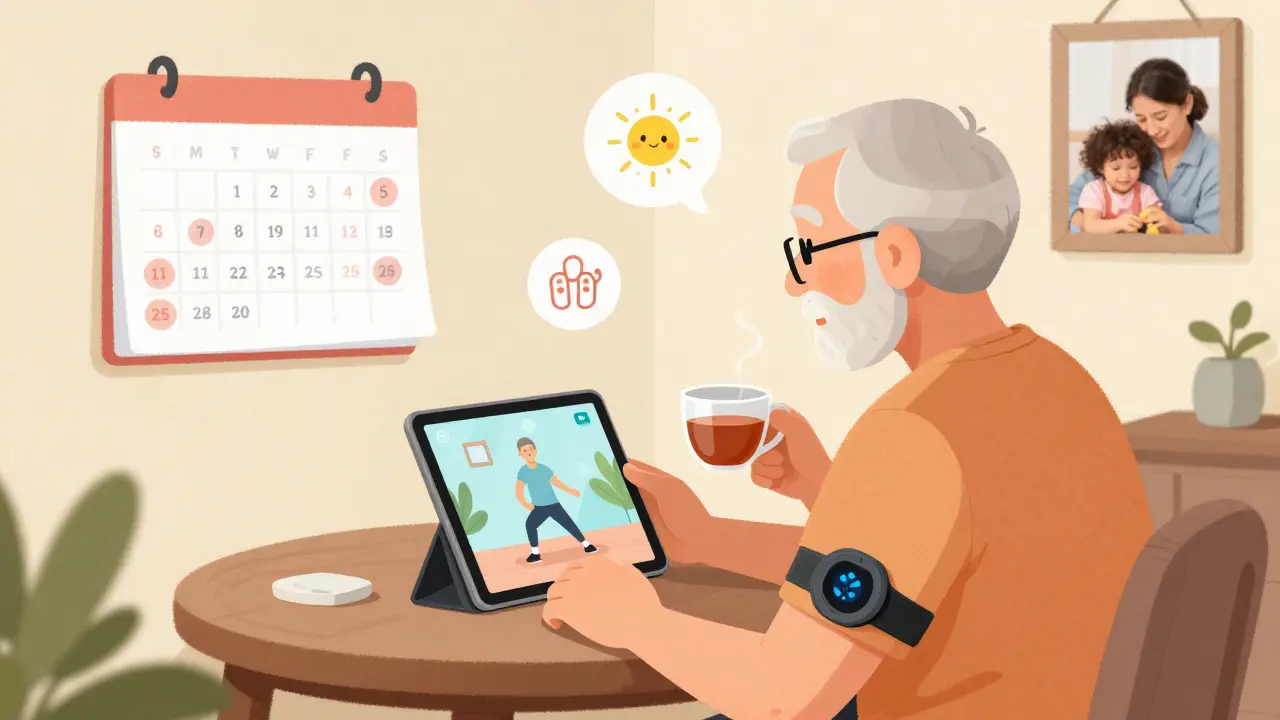
Not everyone lives near a rehab center. That’s why telehealth programs are growing fast. You’ll get a wearable heart monitor, a tablet with exercise videos, and weekly check-ins with your rehab team. A 2022 study in JAMA Network Open found that people using remote rehab improved their fitness just as much as those going to the center. Your peak oxygen uptake went up by 2.1 mL/kg/min - almost the same as the 2.3 mL/kg/min seen in center-based programs.
Medicare started covering remote monitoring in 2021. If you’re homebound, have trouble driving, or live far from a clinic, ask your doctor about this option. It’s not second-best. It’s real rehab - just delivered differently.
Your First Week at Home: Simple Steps to Start
You’re home. You’re tired. You’re scared. Here’s what to do:
- Start with 5 to 10 minutes of walking around your house or yard. Do it twice a day.
- Don’t push yourself to the point of pain or dizziness. A little puffing is okay. Sharp pain? Stop.
- Use the Borg scale: aim for a 10 to 12. That’s “light to somewhat hard.”
- Walk to the mailbox. Walk to the corner store. That’s your goal this week.
- Call your rehab program. Ask when you can start Phase II.
Don’t wait for permission. Your body is ready. You just need to move - slowly, safely, and steadily.
What Success Looks Like
After 12 weeks of rehab, most people see:
- A 15% increase in how much oxygen their body can use during exercise
- A 40% jump in how hard they can work before getting tired
- A 10% improvement in how far they can walk in 6 minutes
But the real wins? You’ll sleep through the night. You’ll carry groceries without stopping. You’ll laugh again. You’ll stop thinking every ache is another heart attack. You’ll know you’re in control - not your heart.
Is cardiac rehab safe after a heart attack?
Yes, it’s one of the safest things you can do. Studies show only 1 serious complication per 100,000 hours of exercise during cardiac rehab. That’s safer than driving or even walking up stairs at home. Your heart rate, blood pressure, and symptoms are monitored constantly. If something changes, the team stops you immediately.
How long does cardiac rehab last?
Phase II - the supervised part - lasts about 12 weeks with 36 sessions. But rehab doesn’t end there. Phase III is lifelong. You’ll keep exercising, eating well, and managing your health for the rest of your life. The first 12 weeks give you the tools. After that, you’re the one driving your recovery.
Can I do cardiac rehab at home?
Yes. Telehealth cardiac rehab is now widely covered by Medicare and private insurers. You’ll get a heart monitor, video sessions with your rehab team, and a personalized exercise plan. Studies show it works just as well as in-person programs. It’s ideal if you live far from a center, have mobility issues, or can’t drive.
What if I’m too old for cardiac rehab?
Age isn’t a barrier. People in their 80s and 90s benefit just as much as younger patients. In fact, older adults often see the biggest improvements in strength, balance, and independence. The program is tailored to your fitness level - whether you can walk 10 steps or 10 blocks. Your safety and progress are the only things that matter.
Will my insurance cover cardiac rehab?
Yes, Medicare covers 36 sessions for qualifying conditions like heart attack, bypass surgery, or stent placement. Most private insurers follow the same rules. You’ll pay a 20% coinsurance after meeting your deductible. Some programs also offer financial help if cost is a barrier. Ask your doctor or the rehab center - they’ll help you navigate it.
What if my doctor didn’t refer me?
Don’t wait. Ask for a referral. Only about 70% of eligible patients get one. You have the right to request cardiac rehab after a qualifying heart event. Call your doctor’s office and say, “I had a heart attack and would like to be referred to cardiac rehabilitation.” If they say no, ask why - and if needed, get a second opinion. Your recovery depends on it.





13 Comments
Also, the part about breathing? Huge. I didn't realize I was holding my breath until my rehab nurse called me out on it. Changed everything.