Opioid Nausea: What Causes It and How to Manage It
When you take opioid, a class of pain-relieving drugs that includes morphine, oxycodone, and hydrocodone. Also known as narcotics, they work by binding to receptors in your brain and spinal cord to block pain signals. But for many people, the relief comes with an unwanted guest: opioid nausea, a persistent feeling of sickness triggered by how these drugs interact with the brain’s vomiting center. It’s not just a minor annoyance—it can make people stop taking needed pain medication, leading to worse pain and more suffering.
Opioid nausea isn’t the same as stomach upset from food or a virus. It’s driven by the drug’s effect on the chemoreceptor trigger zone, a small area in the brainstem that detects toxins and kicks off vomiting. Opioids stimulate this zone directly, even when there’s nothing wrong in your gut. This is why anti-nausea meds that target the stomach, like antacids, often don’t help. You need something that works on the brain. Common fixes include ondansetron, a drug that blocks serotonin receptors linked to nausea, or metoclopramide, which speeds up stomach emptying and also affects brain pathways. But even these don’t work for everyone.
Some people develop tolerance to the nausea over time—meaning it fades after a few days or weeks. Others never adjust. What’s key is knowing this isn’t a sign you’re doing something wrong. It’s a biological response, not a personal failure. You’re not weak for feeling sick. And you’re not overreacting if you need help. Many patients don’t tell their doctors about it because they think it’s normal. But it’s not. Doctors can adjust your dose, switch you to a different opioid, or add a preventive anti-nausea pill. It’s not about avoiding opioids—it’s about making them work better for you.
There’s also a link between opioid nausea and opioid tolerance, the body’s reduced response to a drug over time, requiring higher doses for the same effect. People who’ve been on opioids longer may notice nausea less, not because it’s gone, but because their brain has adapted. New users, especially, are more likely to struggle with it. That’s why starting low and going slow matters—not just for pain control, but for minimizing side effects too.
What you’ll find in the posts below are real, practical strategies from people who’ve lived through this. You’ll see how simple changes—like taking meds with food, avoiding sudden movements, or timing your anti-nausea pills—can make a difference. You’ll also find discussions on how certain opioids are more likely to cause nausea than others, and why some patients respond better to one antiemetic over another. No fluff. No theory. Just what works, what doesn’t, and what your doctor might not tell you.
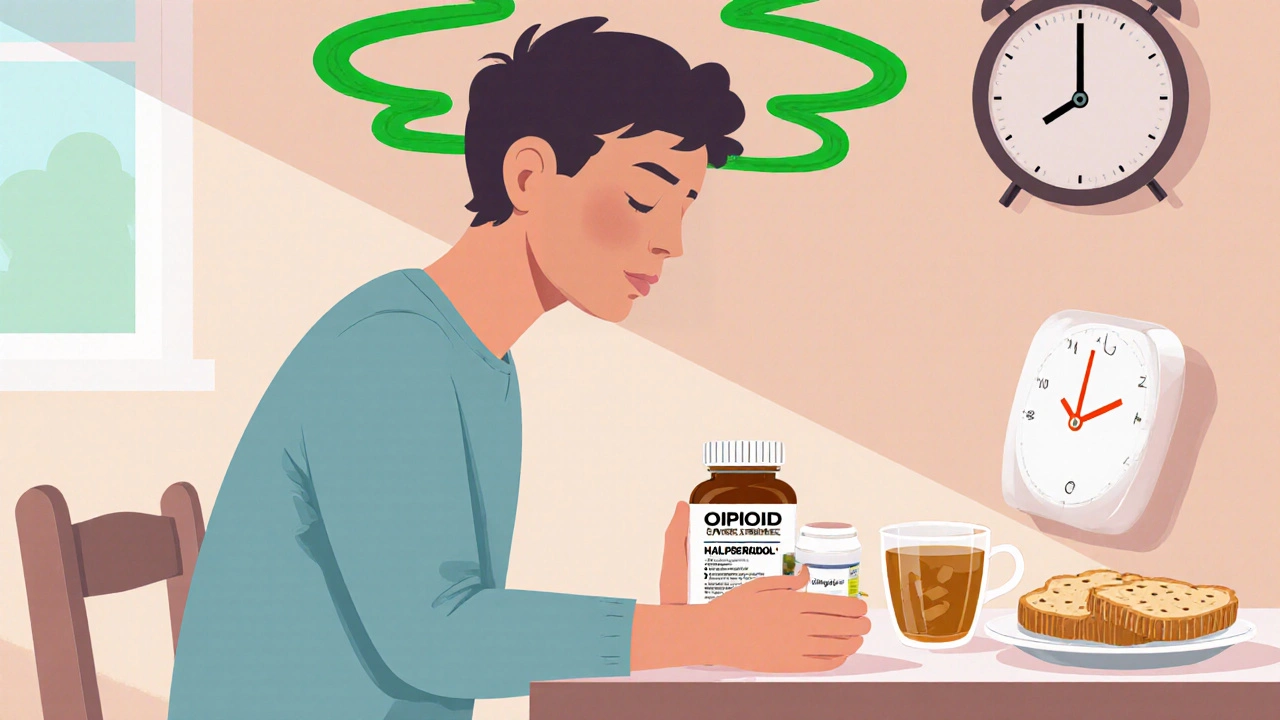
Nausea from Opioids: How to Manage It with Antiemetics, Timing, and Diet
Opioid-induced nausea affects 30-40% of new users, but it's manageable with the right antiemetics, timing, and diet changes. Learn what works, what doesn't, and how to stay on your pain medication without feeling sick.
read more