
Why Home Chemotherapy Requires Extra Care
More than half of cancer patients now receive part of their treatment at home. That’s not just convenient-it’s a major shift in how care is delivered. But chemotherapy drugs aren’t like regular pills. They’re designed to kill fast-growing cells, and that includes healthy ones. If you or someone you care for is taking chemo at home, you need to know how to handle it safely-because even small mistakes can put you, your family, or pets at risk.
The danger isn’t just from swallowing or injecting the drug. You can be exposed by touching a pill, cleaning up vomit, changing a diaper, or even hugging someone too soon after treatment. The chemicals don’t vanish after one dose. They stay in urine, sweat, saliva, and other bodily fluids for up to 72 hours. And if you’re not careful, those traces can get on your skin, in your nose, or on surfaces you touch every day.
What Counts as Chemotherapy at Home?
Not all home chemo is the same. There are three main types you might encounter:
- Oral chemotherapy - Pills or liquids you swallow. These make up about 30% of all outpatient chemo. Common ones include capecitabine, temozolomide, and lenalidomide.
- IV chemo at home - Delivered through a pump or bag connected to a port or catheter. This is often used for drugs like paclitaxel or doxorubicin.
- Targeted therapies and immunotherapies - Newer drugs like sotorasib or dostarlimab. They’re not always traditional chemo, but they’re still hazardous and need the same safety steps.
Even if a drug is labeled as "targeted" or "milder," it still carries risk. The CDC updated its list of hazardous drugs in 2023 to include 297 medications-up from 270 just two years earlier. That means you can’t assume a drug is safe just because it sounds new or less harsh.
How to Store Chemotherapy Safely
Storage isn’t just about keeping meds out of reach-it’s about keeping them stable and contained.
- Refrigerated meds - Most need to be kept between 36°F and 46°F (2°C-8°C). That’s your fridge’s main shelf, not the door. Never freeze them unless the label says so.
- Room temperature meds - Store between 59°F and 86°F (15°C-30°C). Avoid bathrooms, garages, or windowsills where heat or moisture can build up.
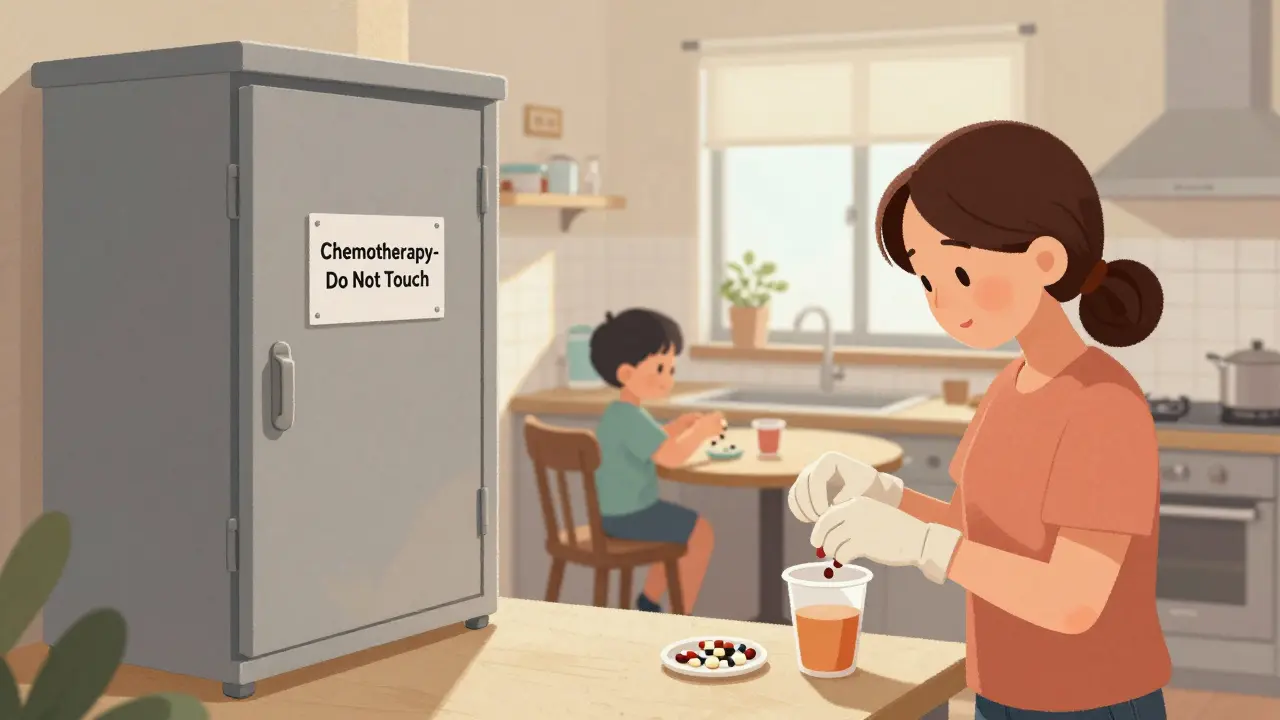
- Locked storage - Use a locked cabinet or box, away from children, pets, and other medications. Label it clearly: "Chemotherapy-Do Not Touch."
- Keep original packaging - The bottle or box has important info: expiration date, storage temp, and warnings. Don’t transfer pills to pill organizers unless your nurse says it’s safe.
Pharmacies now include home safety instructions on every oral chemo package, thanks to an FDA rule from 2022. If yours doesn’t have it, call your pharmacy. They’re required to give you the info.
Handling Oral Chemo: The Do’s and Don’ts
Swallowing a pill seems simple. But with chemo, even that step needs rules.
- Wear gloves - Always use nitrile gloves (not latex). They’re thicker and resist chemical breakdown. Put on two pairs if you’re handling multiple pills or cleaning up.
- Never crush, cut, or chew pills - This turns solid medication into dust. Inhaling even a tiny amount can irritate your lungs or skin. If swallowing is hard, ask your doctor about liquid versions.
- Use a dedicated cup - Don’t pour pills directly from the bottle into your hand. Use a small cup or spoon made only for chemo. Wash it after each use with hot water and soap.
- Avoid grapefruit and Seville oranges - These interfere with how your body breaks down many chemo drugs. Even one glass of juice can raise drug levels dangerously high. Check your drug’s warning list.
- Wash hands before and after - At least 20 seconds. Use soap and warm water. Dry with a clean towel. Don’t skip this, even if you wore gloves.
One patient in a Mayo Clinic survey admitted to crushing her pill because she thought it would work faster. She ended up with a rash and nausea. That’s not an isolated case.
Handling IV Chemo at Home
If you’re using a pump or IV bag, your nurse should have trained you. But here’s what you need to remember:
- Always wear gloves - Even if you’re just touching the tubing or pump. The fluid can leak or drip.
- Keep a spill kit nearby - Every home chemo patient should have one. It includes absorbent pads, disposable gowns, face masks, forceps, and sealed disposal bags. These are often provided free by your cancer center.
- Never touch the IV port - Even if it looks clean. Use alcohol wipes to clean it before connecting or disconnecting.
- Dispose of bags and tubing properly - Put them in the special chemo bag in your spill kit. Don’t throw them in the regular trash unless your nurse says it’s okay.
Some pumps have alarms. If one goes off, don’t ignore it. Call your nurse or the Chemotherapy Safety Hotline (1-866-877-7851) right away. A small leak can become a big exposure.
The 48-Hour Rule: Protecting Everyone in the House
This is the most important rule. After you take chemo, your body gets rid of it through urine, sweat, vomit, and even tears. For at least 48 hours, those fluids are hazardous. Some drugs, like cyclophosphamide, stay active for up to 72 hours.
Here’s how to protect your household:
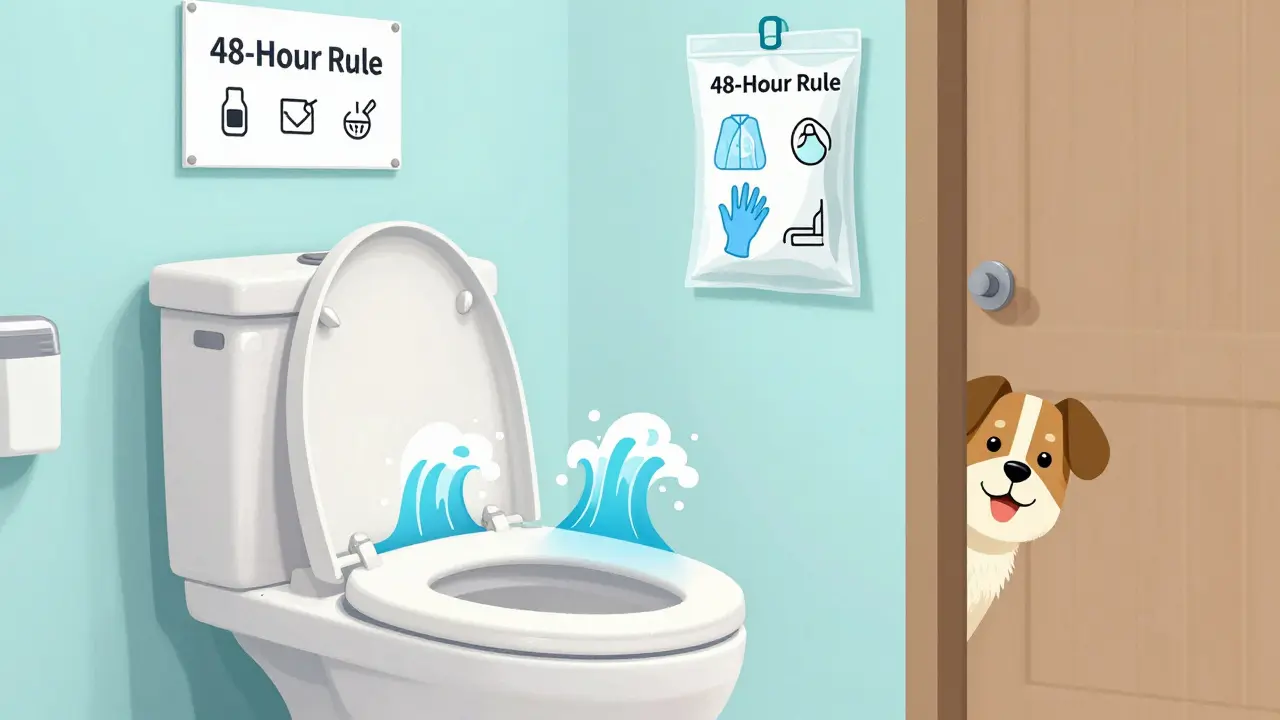
- Flush the toilet twice - Always with the lid down. This keeps aerosols from spreading.
- Wash your hands after using the bathroom - Even if you think you’re clean.
- Use separate towels, sheets, and dishes - Wash them separately in hot water (140°F or higher) with regular detergent. Don’t mix them with family laundry.
- Avoid close contact - No kissing, sharing utensils, or sleeping in the same bed for the first 24-48 hours.
- Keep pets away - Animals can absorb chemo through licking contaminated surfaces. Keep them out of the bathroom and bedroom during the exposure window.
And here’s the hard truth: pregnant women and those breastfeeding must avoid all contact. Studies show chemo drugs can pass into breast milk for up to 72 hours. If you’re pregnant or nursing, don’t handle pills, clean up spills, or change soiled clothes. Ask someone else to do it.
What to Do If You Have a Spill
Spills happen. A dropped pill, a leaking bag, a spill on the floor. Don’t panic. Just act fast.
- Put on two pairs of nitrile gloves and a disposable gown if you have one.
- Use absorbent pads from your spill kit to soak up the liquid. Don’t wipe.
- Use forceps to pick up any pills or broken glass. Don’t use your fingers.
- Place everything-pads, gloves, pills-into the sealed chemo disposal bag.
- Wipe the area with paper towels and warm soapy water. Rinse and dry.
- Wash your hands thoroughly.
- Call your oncology nurse to report the spill. They’ll tell you if you need extra steps.
Never use a vacuum or mop. That spreads particles into the air. And never use bleach unless your nurse says so-it can react badly with some chemo drugs.
Disposal: What Goes Where?
Most home chemo waste doesn’t need special medical disposal. That’s a common myth.
- Dispose in regular trash - Gloves, used pads, empty pill bottles (if empty and rinsed), and disposable gowns can go in your regular trash. Seal them in a plastic bag first.
- Never flush pills down the toilet - Unless your drug’s instructions say to. Most shouldn’t be flushed.
- Return unused pills - If you don’t finish a prescription, take them back to your pharmacy. Don’t keep them. Don’t give them away.
- Don’t recycle - Even if it’s plastic. Chemo contamination makes recycling unsafe.
Over a third of patients in one survey were confused about this. They thought they needed a medical waste container. They didn’t. But they also didn’t know they could throw gloves in the trash. That’s why the CDC’s free Home Chemo Safety Checklist is so useful. Download it. Print it. Tape it to the fridge.
Tools That Help: Smart Devices and Support
Technology is catching up to the need for safety.
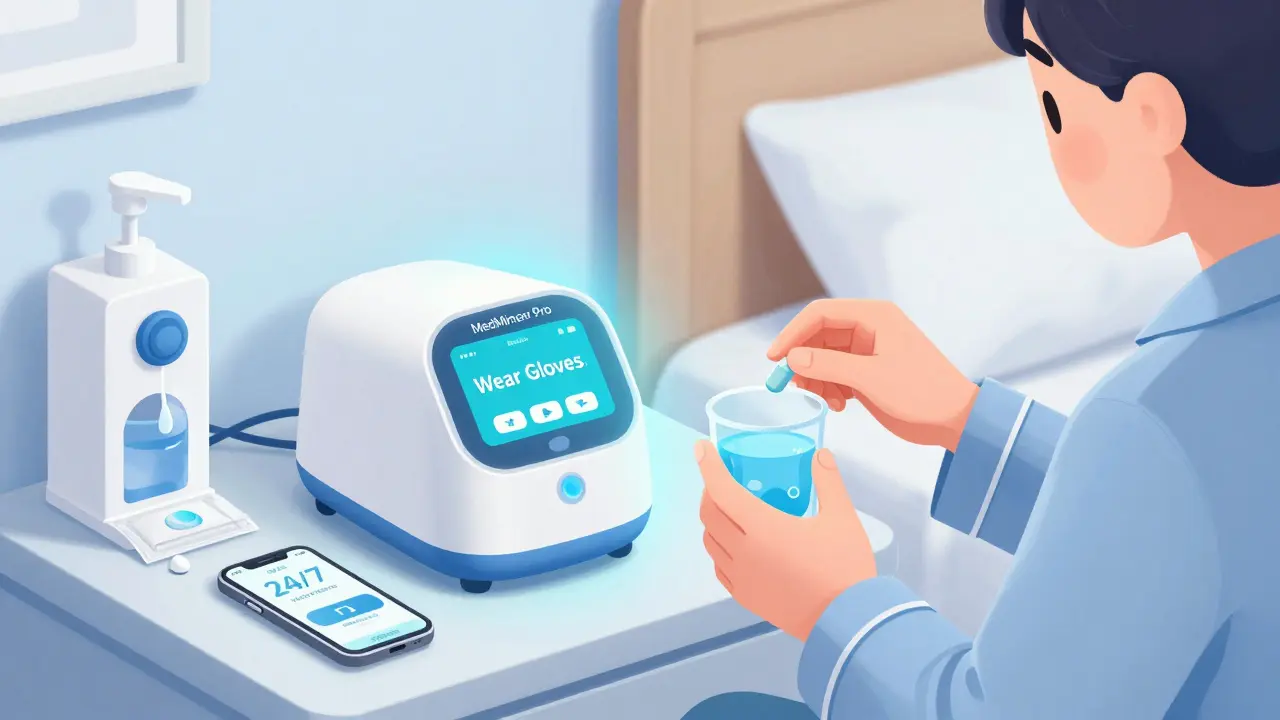
The FDA approved the MedMinder Pro Chemo dispenser in 2022. It’s a smart pill box that:
- Speaks aloud when it’s time to take your dose
- Reminds you to wear gloves
- Logs every time you open it
- Alerts your care team if you miss a dose
Over 12,000 patients are using it now. If you struggle with memory or confusion, ask your oncologist if it’s right for you.
And don’t forget the Chemotherapy Safety Hotline (1-866-877-7851). Run by the Oncology Nursing Society, it’s staffed 24/7. In 2022, they answered over 12,000 calls. The average wait? Less than a minute.
What If You’re Not Sure?
You don’t have to guess. If something feels off-whether it’s a new side effect, a spill you didn’t handle right, or just confusion about storage-call your nurse. Don’t wait. Don’t assume it’s fine.
And if you live in a rural area, you’re not alone. Studies show only 58% of rural patients know about the 48-hour rule. That’s 24% lower than urban patients. The National Cancer Institute is now funding outreach programs to fix that gap. Ask your clinic if they offer home safety training. It’s usually free, and it takes just a couple of hours.
Final Reminder: You’re Not Alone
Handling chemo at home is hard. It’s scary. It changes your routine. But it’s doable. Thousands of families do it every day. The key isn’t perfection-it’s consistency. Wear gloves. Flush twice. Wash hands. Store safely. Call when you’re unsure.
Every rule exists because someone got hurt. And every time you follow them, you’re not just protecting yourself. You’re protecting your family, your pets, and the people who care for you.


10 Comments