
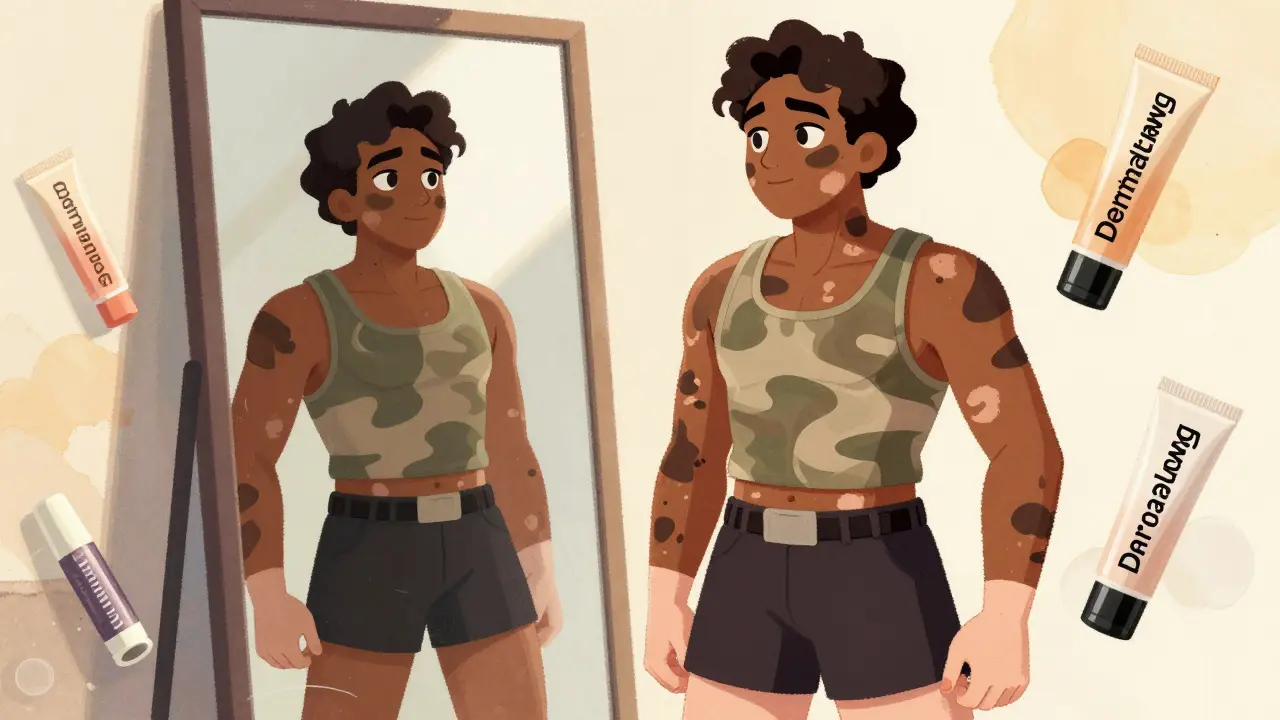
Living with vitiligo means more than just dealing with patches of lost pigment. For many, it’s the daily worry of being stared at, the fear of judgment, the way clothing choices shrink to cover up what’s visible. The good news? You don’t have to live like that. Vitiligo camouflage isn’t about hiding who you are-it’s about giving you back control over how you show up in the world. And today, the tools are better, smarter, and more accessible than ever.
What Vitiligo Camouflage Actually Does
Vitiligo camouflage isn’t makeup in the traditional sense. It’s medical-grade pigment designed to blend with your natural skin tone, even when that tone has changed dramatically. Unlike regular foundation, which often looks chalky or cakey on depigmented skin, camouflage products contain up to 25% more pigment. That means they don’t just sit on top-they lock in, stay put, and match better under sunlight, fluorescent lights, and even in photos.
The goal? To make the patches disappear. Not by covering them with something obvious, but by recreating the look of healthy, evenly pigmented skin. This isn’t vanity-it’s mental health support. Studies show that people who use camouflage regularly report up to a 35% improvement in their quality of life. That’s not just feeling better-it’s going back to the gym, wearing shorts, taking photos without editing, and not flinching when someone asks, “What’s on your skin?”
Two Main Types: Temporary vs. Permanent
There are two clear paths: temporary camouflage that you apply every day, and permanent camouflage that lasts months or years. Both work-but they serve different needs.
Temporary camouflage is for people who want flexibility. You wake up, apply, go about your day, and wash it off at night. It’s ideal if your vitiligo is still spreading, if you’re trying medical treatments like phototherapy, or if you just want to test the waters before committing to something longer-term. Brands like Dermablend and Dermacolour dominate this space. They’re water-resistant, sweat-proof, and designed to last 6 to 14 hours. Many include SPF 2-3, which is a bonus since depigmented skin burns faster.
Permanent camouflage, also called micropigmentation, is a medical procedure. Tiny needles implant inert iron oxide pigments into the dermis-just below the surface. The pigments are matched to your skin tone using over 15 standardized shades. It’s done in 2-3 sessions, spaced 6-8 weeks apart. Each session takes 45 to 90 minutes. The results last 1-3 years, depending on your skin type and how much sun exposure you get.
But here’s the catch: permanent camouflage only works if your vitiligo has been stable for at least 12 months. If your patches are still changing, the pigment can look weird-like a halo around new white areas. That’s why dermatologists insist on waiting. And it’s not great for hands, feet, or elbows. These areas move a lot, sweat more, and shed skin faster. Pigment fades up to 40% quicker there.
Choosing the Right Product: Water-Based, Oil-Free, or Waterproof
Not all camouflage products are made the same. Your skin type determines what works best.
- Water-based formulas are best for normal to dry skin. They’re lightweight, breathable, and easy to blend. Think of them like a tinted moisturizer with serious staying power. Dermablend’s Foundation is a top pick here.
- Oil-free formulas use silicone-based ingredients like dimethicone. They’re perfect for oily or acne-prone skin. They don’t clog pores and won’t slide off during the day.
- Water-free (anhydrous) formulas are the heavy lifters. Made with waxes and oils, they’re waterproof and long-lasting. Ideal for lips, eyebrows, and areas that sweat a lot. But they’re harder to remove and need a special cleanser.
One thing to avoid: self-tanners. They look great on normal skin, but on vitiligo patches? They often turn orange, streaky, or patchy. The pigment doesn’t absorb evenly. You end up with a mismatch that draws more attention than the original patches.

How to Apply It Right (Step by Step)
Applying camouflage isn’t like putting on foundation. There’s a technique. Skip the steps, and you’ll get uneven color or visible lines.
- Start clean. Wash your skin with a gentle, pH-balanced cleanser. Pat dry. No moisturizer yet.
- Match under natural light. Don’t do this in your bathroom under yellow bulbs. Go to a window. Test 2-3 shades on the edge of a patch. The right one disappears into your skin. If it looks too dark, too light, or grayish, keep trying.
- Apply in thin layers. Use a damp sponge or a small brush. Dab, don’t swipe. Build color slowly. One layer isn’t enough. Two or three thin layers blend better than one thick one.
- Let it set. Water-based products take 90 seconds. Anhydrous ones need 3-5 minutes. Don’t touch it. Don’t rub it. Let it bond.
- Set with powder. Use a translucent, fragrance-free powder. This locks it in and reduces shine. Avoid colored powders-they’ll throw off the match.
- Remove carefully. Use an oil-based cleanser or micellar water. Don’t scrub. Gently wipe. Harsh scrubbing can irritate skin and make patches worse.
Most people need 2-4 weeks of daily practice to get it right. That’s normal. Don’t give up after the first try. Certified camouflage consultants-often trained through dermatology clinics or brands like Dermablend-can give you a 30-minute personalized session. That’s worth every dollar.
Micropigmentation: Who It’s For and What to Expect
If you’re tired of applying makeup every morning, micropigmentation might be your answer. But it’s not for everyone.
Best candidates: people with stable vitiligo for over a year, patches on the face, lips, wrists, or around the eyes. It works wonders on the lips-where even a slight color difference is noticeable. One Reddit user, u/VitiligoWarrior, said it changed his life after 15 years of hiding his lip vitiligo. He didn’t have to wear lipstick anymore. He could kiss without fear.
Worst candidates: people with active vitiligo, or those with patches on hands, feet, or knuckles. The pigment fades faster there. One patient reported needing touch-ups every 4 months on her fingers. That’s expensive and tiring.
Costs range from $300 to $800 per session. Most need 2-3 sessions. That’s $900-$2,400 total. Insurance rarely covers it-it’s considered cosmetic. But some clinics offer payment plans. And yes, it’s painful. Most use numbing cream, but you’ll still feel pressure and a slight burning.
Cost, Accessibility, and Real Talk
Let’s be honest: the best products aren’t cheap. Dermablend costs $25-$45 per tube. A single tube lasts 2-4 months with daily use. That’s $300-$600 a year. For some, that’s doable. For others, it’s a barrier.
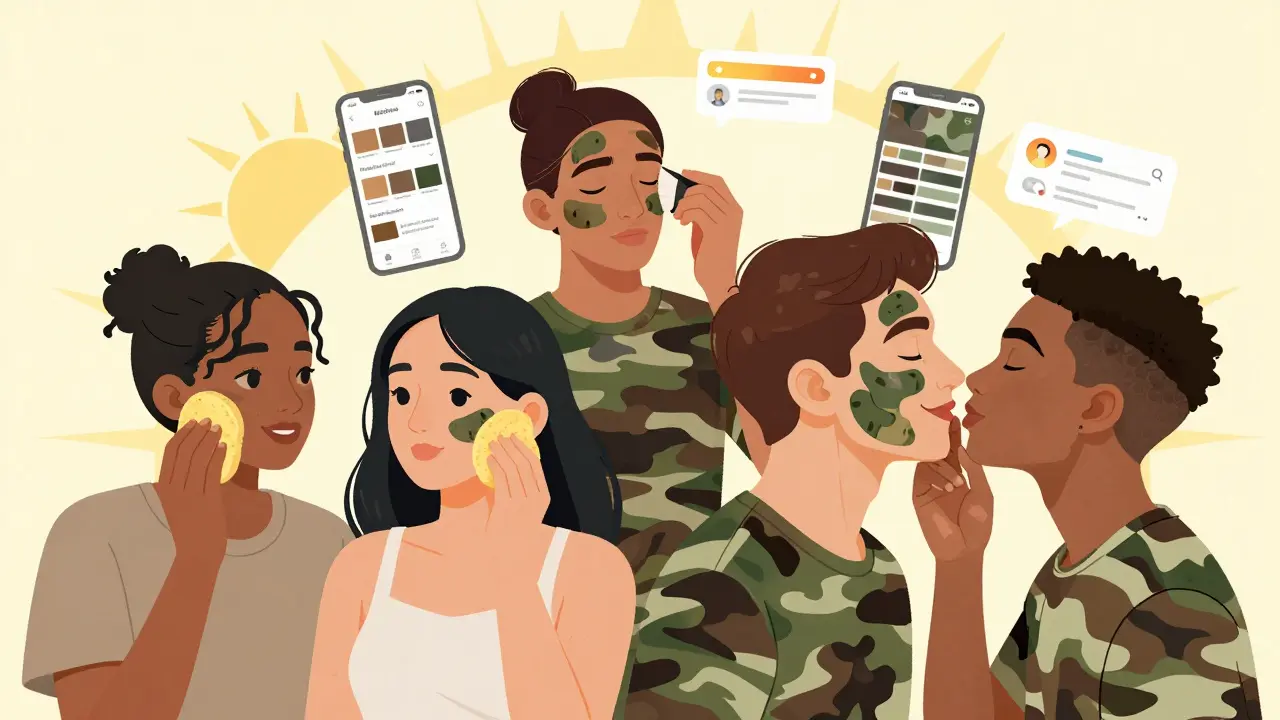
That’s why virtual color matching is a game-changer. Brands like Dermablend now offer apps where you upload a photo under natural light. AI matches your tone and recommends shades. It’s not perfect-but it’s better than guessing in a drugstore aisle.
Also, don’t ignore community. Reddit’s r/vitiligo has hundreds of real reviews. People post swatches, removal tips, and where they bought products at a discount. The Vitiligo Society’s forum has a list of certified consultants in the U.S., Canada, and Europe. You don’t have to figure this out alone.
What Experts Say: Camouflage Is Part of Care
Dr. Madhulika Upadhyay, a dermatologist specializing in pigment disorders, says: “Camouflage isn’t a distraction from treatment-it’s part of it.”
She’s right. Medical treatments like phototherapy or topical creams take months to show results. Camouflage gives you relief now. It reduces anxiety. It helps you stick with treatment because you’re not constantly feeling self-conscious.
Dr. Davin Lim, who’s treated hundreds of vitiligo patients in Australia, says 68% of his patients who use camouflage report less fear of social situations. That’s huge. It’s not just about skin. It’s about confidence.
The bottom line? Camouflage doesn’t cure vitiligo. But it gives you back your day. Your smile. Your freedom.
What to Avoid
- Don’t use regular foundation. It won’t match. It won’t last. It’ll look worse.
- Don’t try henna or indigo paste. They wash off in an hour and stain clothes.
- Don’t do micropigmentation if your vitiligo is still spreading. You’ll regret it.
- Don’t skip patch testing. Some pigments cause reactions. Test on a small area first.
- Don’t assume one product works for all skin tones. There are 28 shades now-find yours.
And please-don’t believe the myth that “you should just accept it.” Acceptance doesn’t mean suffering silently. You can accept your skin and still want to feel comfortable in your own body. That’s not weakness. That’s human.
Can I use regular makeup to camouflage vitiligo?
Regular makeup doesn’t have enough pigment to cover vitiligo patches effectively. It often looks patchy, chalky, or uneven under natural light. Specialized camouflage products like Dermablend or Dermacolour contain up to 25% more pigment and are designed specifically for depigmented skin. They stay on longer, blend better, and match skin tone more accurately.
How long does vitiligo camouflage last?
Temporary camouflage lasts 6-14 hours and needs daily reapplication. Waterproof formulas can survive sweat and water but still wash off with oil-based cleansers. Permanent micropigmentation lasts 1-3 years, depending on skin type and sun exposure. Areas like hands and feet fade faster-up to 40% quicker than the face or neck.
Is micropigmentation safe for vitiligo?
Yes, but only if your vitiligo has been stable for at least 12 months. If your patches are still changing, micropigmentation can cause uneven results or halo effects around new white areas. It’s also not recommended for high-friction areas like hands and feet, where pigment fades faster. Always see a certified specialist who understands vitiligo-not a regular tattoo artist.
What’s the best product for dark skin with vitiligo?
The best products for darker skin tones are those with deeper, richer pigments and a wide shade range. Dermablend’s ExoGlow Pigment Set includes 28 shades specifically designed for diverse skin tones, including deep brown and ebony undertones. Look for products labeled “for deep skin tones” and always test under natural light. Avoid products that look gray or ashy on your skin-they’re not the right match.
Can I use camouflage with medical treatments like phototherapy?
Yes, and it’s often recommended. Camouflage doesn’t interfere with phototherapy or topical creams. In fact, many dermatologists encourage patients to use camouflage while waiting for treatments to work. It helps reduce stress and improves adherence to long-term therapy. Just make sure to remove it thoroughly before treatment sessions to avoid blocking light absorption.
How do I find a certified camouflage consultant?
The Vitiligo Society maintains a directory of certified consultants trained in vitiligo-specific camouflage techniques. Many dermatology clinics also offer in-house services. Look for professionals who have completed training through brands like Dermablend or who are affiliated with the American Academy of Dermatology. Avoid unlicensed tattoo artists-vitiligo camouflage requires medical-grade knowledge, not just artistic skill.





14 Comments
so i tried dermablend after reading this and holy hell it actually worked? like, i cried. not because i was sad, but because i finally looked in the mirror and didn’t see a patchwork quilt of shame. also, the app color match? genius. no more guessing in the drugstore like i’m playing dermatology bingo.
why are we spending money on makeup when we should be fixing the root cause? this is just band-aid culture. we’re not supposed to cover up our differences-we’re supposed to embrace them. america’s obsession with ‘looking normal’ is disgusting.
While I appreciate the thoroughness of this guide, I must emphasize the importance of consulting with a board-certified dermatologist before pursuing any form of permanent pigmentation. The risks associated with improper technique, pigment migration, and allergic reactions are non-trivial. Professional oversight is not optional-it is imperative.
I used to think camouflage was surrender. Then I realized it was strategy. I wear it like armor-not to hide, but to choose when and where I reveal my skin. Some days, I don’t need it. Some days, I need it to breathe. Neither makes me weak. Both make me human.
Ugh. Another ‘self-care’ capitalist scam. You’re not ‘empowered’ by spending $200 on makeup-you’re being manipulated by beauty industrialists. If you really accepted yourself, you wouldn’t need to pay to look ‘normal.’ Also, micropigmentation? That’s just tattooing your trauma. Pathetic.
OMG YES. I just got my first micropigmentation session last week 😭😭😭 My lip vitiligo? GONE. No more lipstick, no more hiding my smile. I kissed my girlfriend for the first time in 8 years without panicking. This post saved my life. 🙏❤️
It’s not about rejecting camouflage-it’s about rejecting the idea that you must pay to be seen as worthy. The fact that insurance won’t cover this, while Botox is a breeze, speaks volumes. We’re not just buying pigment-we’re buying permission to exist without apology. And that’s a system that needs dismantling.
Look. I’ve been doing this for 12 years. I’ve tried everything. The only thing that actually works? Dermablend. Everything else? Looks like a toddler painted their face with crayons. Also-DON’T USE SELF-TANNER. I did it once. I looked like a burnt orange ghost. My cat ran away.
It is deeply concerning that the medical community has not yet classified vitiligo camouflage as a medically necessary intervention. The psychological distress it alleviates is clinically significant. To label it ‘cosmetic’ is a failure of systemic empathy. Insurance coverage must be expanded. This is not vanity. This is mental health infrastructure.
For anyone new to this: start with the Dermablend Insta-Fix Stick. It’s like magic in a tube. And if you’re doing micropigmentation, find a specialist who’s done at least 50 vitiligo cases-not some tattoo parlor guy who ‘does faces sometimes.’ Trust me. I learned this the hard way. Also, always patch test. I had a reaction once. Took 3 months to heal. Don’t be me.
My sister has vitiligo. She uses the camouflage. She doesn’t talk about it. But she smiles more. That’s all I need to know.
I’m Nigerian-American. We don’t have many options for deep skin tones. But I found a shade in Dermablend’s ExoGlow set that actually matches my skin. Not ‘close enough.’ Not ‘it’ll do.’ It disappears. That’s the first time in my life.
Just wanted to say thank you for this. I’ve been too scared to try anything. Now I’m going to get a consultation next week. Fingers crossed 😊
Look. I get it. You want to feel normal. But this is just another way the beauty industry makes you hate yourself so you’ll spend money. The real solution? Stop caring what people think. But hey, if you wanna buy pigment, go ahead. I’ll be over here, not wearing pants and not apologizing.