
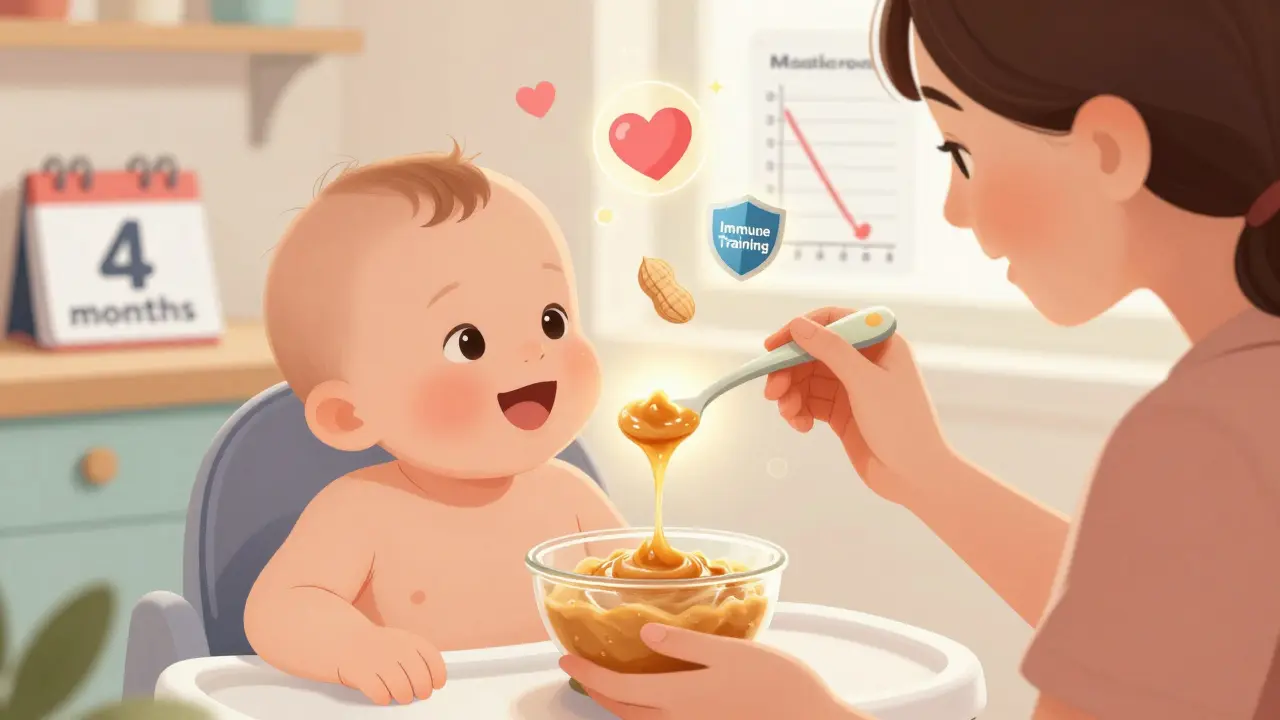
For years, parents were told to wait until their child was two or three before giving them peanut butter. It seemed like the safest move-until it wasn’t. By 2010, peanut allergies in U.S. children had jumped from 0.4% in 1997 to over 2%. Hospitals saw more emergency visits from kids having life-threatening reactions. And no one knew why. Then came the LEAP study, a game-changer that flipped everything we thought we knew about peanut allergies on its head.
Why Early Introduction Works
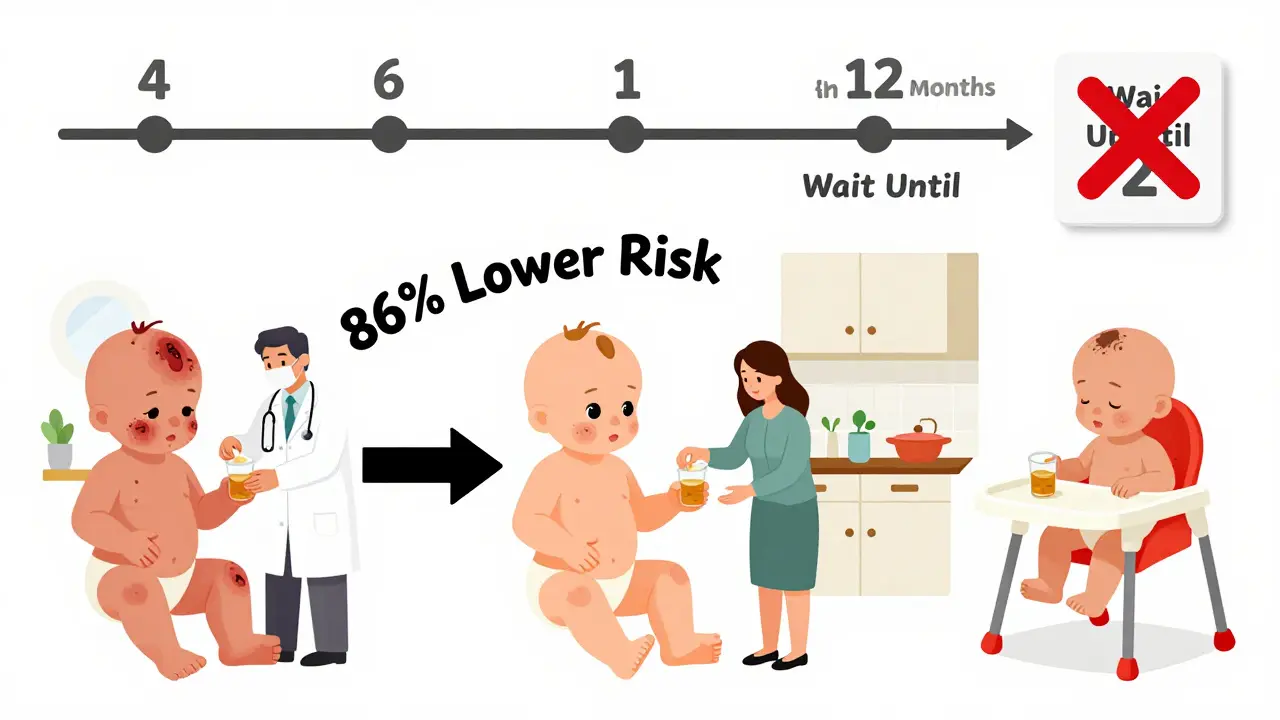
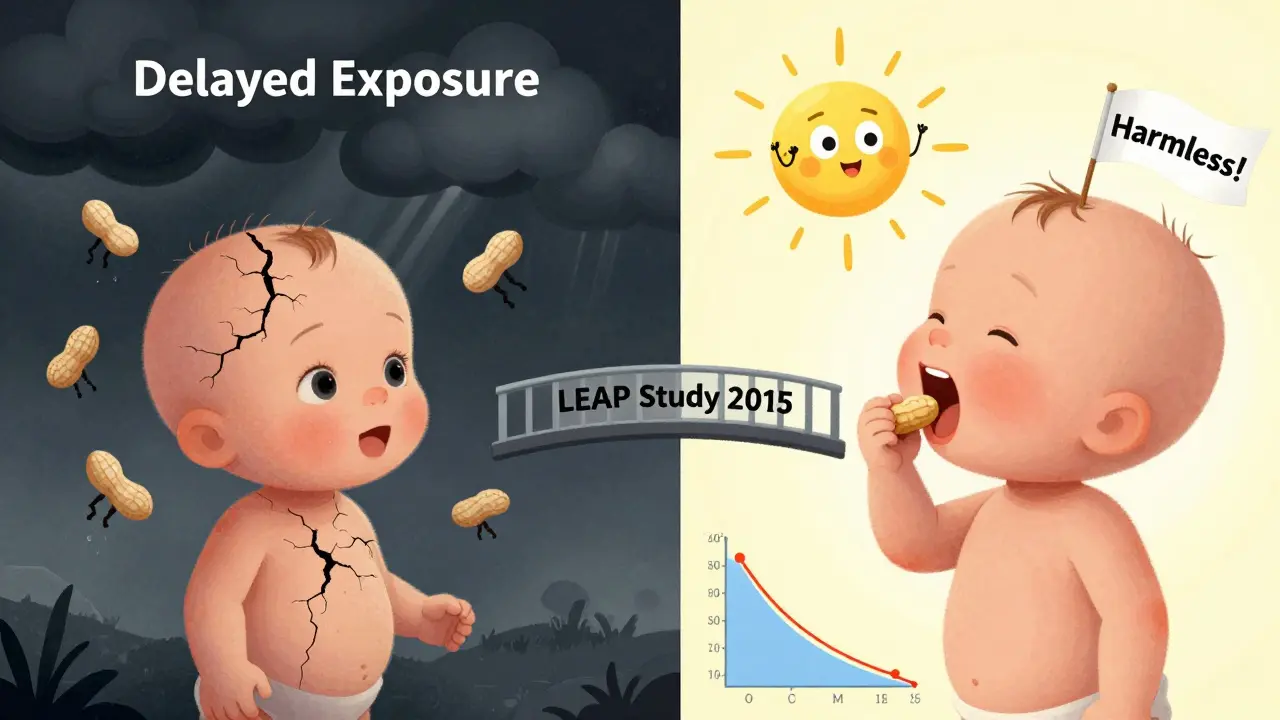
The Learning Early About Peanut Allergy (LEAP) study, published in 2015, didn’t just add a new tip-it rewrote the rules. Researchers followed over 600 babies at high risk for peanut allergy-those with severe eczema or egg allergy. Half were told to avoid peanuts completely. The other half started eating peanut protein as early as 4 months, three times a week. By age 5, the group that ate peanuts had an 86% lower chance of developing an allergy. That’s not a small drop. That’s almost none.
What’s happening here? It’s not magic. It’s immune training. When a baby’s immune system first meets peanut protein through the gut-while the skin barrier is still intact-it learns to recognize it as harmless. But if exposure is delayed, the skin, especially if it’s cracked from eczema, becomes the entry point. That’s when the body starts treating peanut as an invader, triggering allergies. Early oral exposure stops that process before it starts.
Who Should Start Early-and How
Not all babies need the same approach. The NIAID guidelines, updated in 2017 and still current in 2026, split infants into three risk groups:
- High risk: Severe eczema, egg allergy, or both. These babies should be evaluated by a doctor or allergist between 4 and 6 months. If skin or blood tests show no allergy, peanut protein (2 grams, about 2 teaspoons of smooth peanut butter) is introduced three times a week. The first dose is often given in the clinic to watch for reactions.
- Moderate risk: Mild to moderate eczema. No testing needed. Start peanut around 6 months at home. Mix smooth peanut butter with warm water, breast milk, or formula to make it easy to swallow. Or stir it into baby cereal or pureed fruit.
- Low risk: No eczema or food allergies. Introduce peanut anytime after starting solids-usually around 6 months. No special steps needed.
The key? Don’t wait. The window for prevention closes fast. A 2023 meta-analysis of LEAP and EAT studies found that babies introduced to peanut before 6 months had up to a 98% lower risk of developing allergy-compared to those who waited. And the protection? It lasts. Follow-up data from the LEAP study showed kids were still protected even after a full year without eating peanuts.
What About Oral Immunotherapy (OIT)?
OIT is not prevention. It’s treatment. And it’s not for babies.
Oral immunotherapy is for children and adults who already have a peanut allergy. It involves eating tiny, gradually increasing amounts of peanut protein under strict medical supervision. The goal isn’t to cure the allergy-it’s to raise the reaction threshold so a small accidental exposure doesn’t send someone to the ER. Some kids can eat a full peanut after months of OIT. But most still need to keep eating peanut daily to stay protected. Stop, and the allergy often comes back.
OIT carries risks. Anaphylaxis can happen during dose increases. It’s not something parents should try at home. And it’s not a replacement for early introduction. In fact, if you start peanut early, you might never need OIT.
How to Safely Introduce Peanut
Whole peanuts? Never. They’re a choking hazard. Peanut butter? Only if it’s smooth. Chunky peanut butter can stick in a baby’s throat. Here’s how to do it right:
- Use smooth, unsweetened peanut butter (no added sugar or honey-honey is unsafe under 1 year).
- Thin 2 teaspoons of peanut butter with 2-3 tablespoons of warm water, breast milk, or formula until it’s runny.
- Stir it into a spoonful of baby cereal, mashed banana, or apple puree.
- Give a tiny taste first-about the size of a toothpick tip. Wait 10 minutes. Watch for lip swelling, hives, vomiting, or trouble breathing.
- If no reaction, give the rest over the next hour. Then continue giving peanut protein three times a week.
Some parents use Bamba, a puffed corn snack with peanut flavor, popular in Israel and now available in the U.S. It melts easily and is safe for babies. But it’s not the only option. Any form that delivers 2 grams of peanut protein per week works.
Why So Many Parents Still Wait
Even with clear guidelines, only about 39% of high-risk babies get early peanut exposure. Why?
Parents are scared. They’ve been told for decades that peanuts are dangerous. A 2022 study found 62% of parents felt anxious about introducing peanut. Doctors don’t always help-only 54% of pediatricians in one survey knew the current guidelines. And there’s a gap in access: Black and Hispanic infants are 22% less likely to get early peanut exposure than White infants, contributing to ongoing allergy disparities.
Some pediatricians still say, “Wait until 12 months.” That’s outdated. The science is solid. The risk of not acting is far greater than the risk of acting safely.
What’s Next? The Big Picture
Since the guidelines changed, peanut allergy rates have dropped. In the U.S., they fell from 2.2% in 2015 to 1.6% in 2023. That’s about 300,000 fewer children with peanut allergies. The trend is holding, especially among high-risk kids with eczema. Studies show an 85% reduction in mild eczema, 87% in moderate, and 67% in severe cases.
Now, researchers are asking: What if we introduce more than just peanut? The EAT study showed that introducing peanut, egg, milk, and other allergens early together may offer broader protection. The PRESTO trial, running through 2026, is testing whether even earlier exposure-like at 3 months-could boost results even more.
And the industry is catching up. Companies now sell spoonable peanut butter pouches, peanut powder blends, and infant-specific products designed for early introduction. But you don’t need fancy gear. Just smooth peanut butter, water, and a spoon.
Bottom Line: Don’t Delay
Peanut allergy isn’t inevitable. It’s preventable. The science is clear, the methods are simple, and the stakes are high. If your baby has eczema or an egg allergy, talk to your pediatrician before 6 months. Get tested if needed. Start small. Stay calm. And give peanut early.
If your baby is low risk? Just introduce peanut like any other solid food-around 6 months. No special steps. No fear. Just normal feeding.
Waiting doesn’t protect your child. It puts them at risk. Early introduction doesn’t guarantee your child will never have an allergy-but it gives them the best shot at growing up without one.
Can I give my baby peanut butter straight from the jar?
No. Thick, chunky peanut butter is a choking hazard for babies. Always thin smooth peanut butter with water, breast milk, or formula to make a runny paste. You can also mix it into baby cereal or pureed fruits. Never give whole peanuts or peanut pieces until your child is at least 4 years old.
Is it safe to introduce peanut at home or do I need to go to the doctor first?
For low-risk babies (no eczema or food allergies), you can introduce peanut at home. For moderate-risk babies (mild to moderate eczema), it’s also safe to start at home around 6 months. But if your baby has severe eczema or an egg allergy, talk to your pediatrician first. They may recommend allergy testing and a supervised first feeding in the clinic to ensure safety.
How much peanut protein should I give my baby?
Aim for 2 grams of peanut protein, three times a week. That’s about 2 teaspoons of smooth peanut butter. You can also use peanut powder mixed into food. The goal is consistent exposure-not a one-time taste. Keep giving it regularly, even if your baby seems to dislike it at first.
What if my baby has a reaction?
Signs of a reaction include hives, swelling of the lips or face, vomiting, wheezing, or sudden fussiness. If you see any of these, stop feeding peanut and call your doctor. If breathing becomes difficult or your baby turns pale or floppy, call emergency services immediately. For high-risk babies, your doctor will likely give you an epinephrine auto-injector and instructions on when to use it.
Does breastfeeding or avoiding peanuts during pregnancy help prevent allergies?
No. Studies have found no benefit to avoiding peanuts during pregnancy or breastfeeding. In fact, the strongest evidence points to early oral exposure in infancy as the only proven prevention method. Don’t delay introducing peanut because you think avoiding it earlier will help-it won’t.
Can I use peanut flour or peanut powder instead of peanut butter?
Yes. Peanut flour or peanut powder can be used as long as you measure the correct amount of protein. Two grams of peanut protein equals about 2 teaspoons of smooth peanut butter, or roughly 1.5 teaspoons of peanut flour. Mix it into purees, yogurt, or cereal. Make sure it’s unsweetened and free of added ingredients like sugar or salt.
Will my child outgrow a peanut allergy if I wait to introduce it?
Only about 20% of children with peanut allergy outgrow it naturally. The rest carry it into adulthood. Waiting to introduce peanut doesn’t increase the chance of outgrowing it-it increases the chance of developing the allergy in the first place. Early introduction is about preventing the allergy, not treating it after it develops.




12 Comments