
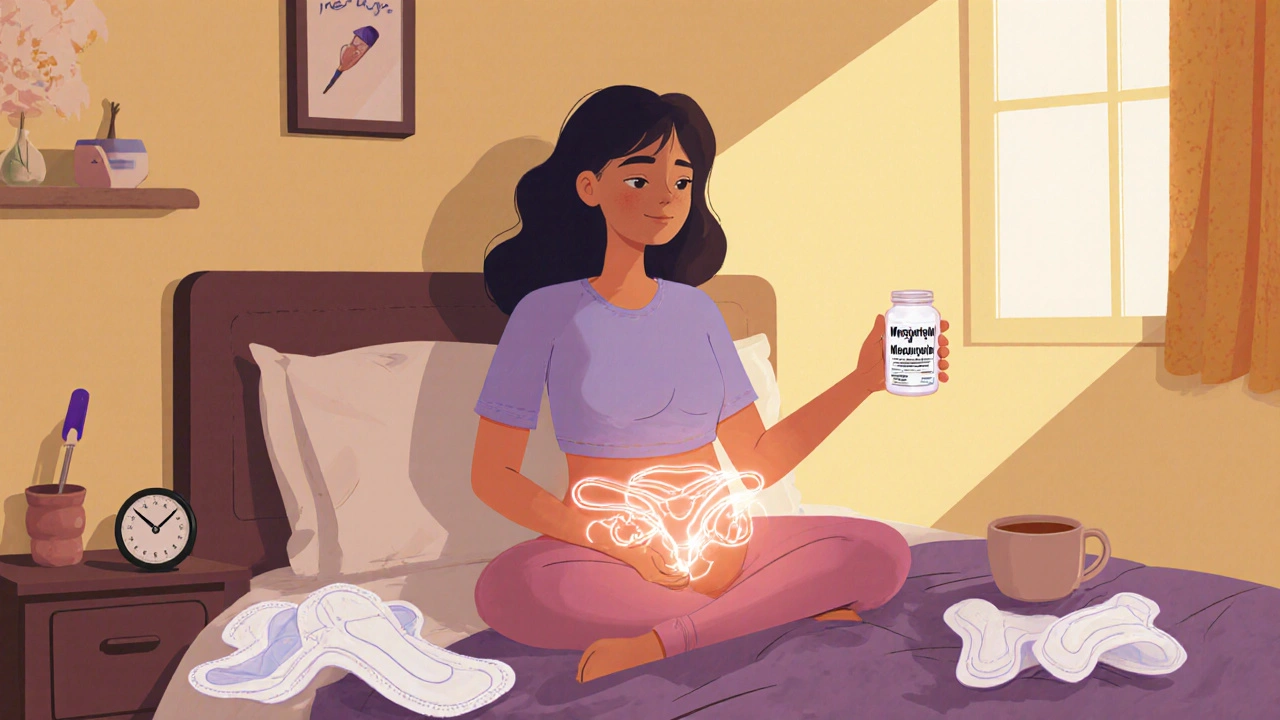
When a pregnancy ends on its own before 20 weeks, it’s called a miscarriage. For many people, waiting for the body to finish the process naturally can take days-or even weeks. That’s where misoprostol comes in. It’s a medication that helps the uterus contract and empty out, speeding up the process and reducing emotional and physical strain. Used alone or with mifepristone, misoprostol is now a standard part of miscarriage care in hospitals and clinics around the world, including in Australia.
How Misoprostol Works
Misoprostol is a synthetic version of prostaglandin E1, a hormone-like substance your body naturally produces during labor. When taken vaginally, orally, or under the tongue, it triggers strong uterine contractions. These contractions push out pregnancy tissue, similar to what happens during a natural miscarriage-but faster and more predictable.
Unlike surgery, misoprostol doesn’t require anesthesia or an incision. It’s a non-invasive option that lets people manage the process at home, with support from a healthcare provider. Studies show it works in 80-95% of cases when used correctly, depending on how far along the pregnancy was.
When Is Misoprostol Used?
Misoprostol is most commonly used for miscarriage management in the first trimester-up to 12 weeks of pregnancy. It’s also used after a missed miscarriage (when the embryo has stopped growing but no tissue has passed) or an incomplete miscarriage (when some tissue remains in the uterus).
In Australia, it’s often prescribed after an ultrasound confirms the pregnancy is no longer viable. Doctors may offer it as the first choice over surgical procedures like dilation and curettage (D&C), especially if the person prefers to avoid surgery or if they’re in a rural area with limited access to clinics.
How to Take Misoprostol for Miscarriage
The way you take misoprostol matters. There are three main methods: vaginal, oral, and sublingual (under the tongue). Each has slightly different timing and effectiveness.
- Vaginal: One tablet inserted deep into the vagina. This method is often preferred because it’s more effective and causes fewer side effects like nausea. Effects usually start within 2-6 hours.
- Sublingual: Four tablets placed under the tongue and held there for 30 minutes before swallowing. This works faster but can cause more chills, fever, or diarrhea.
- Oral: Swallowed with water. Less effective than the other two methods, so it’s rarely used alone for miscarriage.
Most Australian clinics recommend 800 mcg (four 200 mcg tablets) of misoprostol, given vaginally or sublingually. If bleeding doesn’t start within 24 hours, a second dose may be offered. Some providers use a combination of mifepristone (200 mg) first, followed by misoprostol 24-48 hours later. This combo increases success rates to over 95%.
What to Expect After Taking It
Bleeding usually starts within a few hours. It can be heavier than a normal period, with clots the size of a lemon or larger. Cramping is strong-like intense menstrual cramps or labor pains-and can last several hours. You might feel dizzy, nauseous, or have diarrhea. These are normal side effects, not signs of something going wrong.
Most people pass the tissue within 4-8 hours. Some may take up to 24 hours. You’ll likely need to use heavy-duty pads, not tampons, for the first few days. Rest is important. Avoid sex, baths, and inserting anything into the vagina for at least two weeks to reduce infection risk.
Feeling emotional is common. Even if the pregnancy wasn’t planned, losing it can bring grief, guilt, or relief. Talking to a counselor, partner, or support group helps. Many hospitals offer follow-up counseling.
When to Call a Doctor
Most people manage misoprostol safely at home. But you should seek medical help immediately if:
- Bleeding soaks through more than two maxi pads per hour for two hours straight
- You feel faint, dizzy, or have a rapid heartbeat
- You develop a fever over 38°C (100.4°F) that lasts more than 24 hours
- Severe pain doesn’t improve with ibuprofen or paracetamol
- You notice foul-smelling discharge
These could signal heavy bleeding, infection, or incomplete miscarriage. A follow-up ultrasound or blood test is usually scheduled 1-2 weeks later to confirm everything has passed.
Side Effects and Risks
Misoprostol is generally safe, but side effects are common:
- Chills and fever (up to 40% of users)
- Nausea and vomiting
- Diarrhea
- Headache
- Weakness or dizziness
Severe complications are rare but possible. These include:
- Heavy bleeding requiring transfusion (less than 1 in 100 cases)
- Incomplete miscarriage (5-10% of cases), needing a D&C
- Uterine rupture (extremely rare, mostly in people who’ve had prior C-sections)
It’s not recommended for people with certain conditions: adrenal failure, bleeding disorders, or an IUD still in place. Always tell your provider about other medications you take, especially blood thinners.
Misoprostol vs. Surgical Options
Many people wonder: should I choose medication or surgery?
| Factor | Misoprostol | Surgery (D&C) |
|---|---|---|
| Effectiveness | 80-95% | 98-99% |
| Recovery Time | 1-2 weeks | 1-3 days |
| Setting | Home or clinic | Clinic or hospital |
| Anesthesia | None needed | Usually required |
| Cost | A$20-$50 (PBS subsidized) | A$800-$1,500 (if not covered) |
| Emotional Experience | More control, private | Quick, clinical, less control |
For most, misoprostol offers a more natural, private, and affordable path. But if you’re in severe pain, bleeding heavily, or need it done quickly, surgery might be better. There’s no right choice-only the one that fits your needs.

Accessing Misoprostol in Australia
Misoprostol is available by prescription only in Australia. You can get it from your GP, an obstetrician, or a reproductive health clinic. Some pharmacies stock it, but you’ll need a script. Under the Pharmaceutical Benefits Scheme (PBS), misoprostol is subsidized, costing under $30 for concession card holders and around $32 for others.
It’s not sold over the counter or online without a prescription. Buying it from unregulated websites carries serious risks: fake pills, wrong dosages, or contaminated products. Always get it through a licensed provider.
Aftercare and Follow-Up
After using misoprostol, you’ll likely have a follow-up appointment. This might include a blood test to check hCG levels (the pregnancy hormone) or an ultrasound to confirm the uterus is empty.
You can get pregnant again soon after a miscarriage-sometimes as early as two weeks. But most doctors recommend waiting until after one normal period before trying again. This helps with accurate dating of the next pregnancy and gives your body time to heal.
Emotional recovery takes time. Don’t rush yourself. If grief feels overwhelming, or if you’re having trouble sleeping, eating, or functioning, reach out. Support lines like Pregnancy, Birth and Baby (1800 882 436) offer free, confidential help 24/7.
Common Myths About Misoprostol
There’s a lot of misinformation out there. Here are a few truths:
- Myth: Misoprostol causes birth defects if pregnancy continues. Truth: If the medication fails and pregnancy continues, there’s a small risk of fetal abnormalities. That’s why follow-up is critical.
- Myth: It’s the same as an abortion pill. Truth: Misoprostol is used for both miscarriage management and medical abortion. The drug is the same, but the context and intent differ.
- Myth: You need to be hospitalized. Truth: Most people manage it at home with phone support from their clinic.
- Myth: It’s dangerous. Truth: When used under medical guidance, it’s one of the safest options available.
Can I take misoprostol at home?
Yes, most people take misoprostol at home. Your doctor will give you clear instructions on how to use it, what to expect, and when to call for help. You’ll need someone nearby for support during the first few hours, especially if you’re feeling unwell. Having a thermometer, pain relief, and heavy pads ready makes the process easier.
How long does bleeding last after misoprostol?
Bleeding usually lasts 1-2 weeks, similar to a heavy period. It may come and go, with spotting continuing for up to four weeks. If bleeding stops and then restarts heavily, or if you pass large clots after the first week, contact your provider. This could mean tissue is still present.
Can misoprostol fail?
Yes, in about 5-10% of cases, not all tissue passes. This is called incomplete miscarriage. If your bleeding doesn’t improve after 48 hours or you still have pregnancy symptoms, you may need another dose or a surgical procedure. Follow-up care is essential to catch this early.
Is misoprostol safe if I’ve had a C-section?
It can be used safely in most cases, but there’s a slightly higher risk of uterine rupture. Your doctor will assess your history and may recommend surgery instead if you’ve had multiple C-sections or other uterine surgeries. Always disclose your full medical history before starting treatment.
When can I try to get pregnant again?
You can ovulate as soon as two weeks after a miscarriage. Most doctors suggest waiting until after one normal period to help with accurate dating of the next pregnancy. Emotionally, take as long as you need. There’s no medical reason to rush.
Final Thoughts
Misoprostol gives people power over a deeply personal experience. It’s not a cure, but it’s a tool that brings control, dignity, and speed to a time of loss. When used correctly, it’s safe, effective, and widely supported by medical guidelines in Australia and beyond.
If you’re facing a miscarriage, you’re not alone. Talk to your doctor, ask questions, and choose the path that feels right for you. There’s no shame in choosing medication over surgery. What matters most is your health, your comfort, and your peace of mind.





8 Comments
Misoprostol is an incredibly well-studied medication for early pregnancy loss, and its efficacy profile is robust across diverse populations. The vaginal route is consistently shown in randomized trials to have higher bioavailability and lower systemic side effects compared to oral administration, which is why most clinical guidelines - including those from RANZCOG and WHO - recommend it as first-line. The 800 mcg dose is standard, but some newer studies suggest 600 mcg may be non-inferior with fewer GI side effects. It’s also worth noting that the timing of follow-up matters: waiting 14 days for ultrasound confirmation reduces unnecessary interventions. Many patients don’t realize that passing tissue can look like large blood clots or even grayish membranes - that’s normal, not a sign of failure. Emotional support is just as critical as clinical follow-up; the grief response is highly individual and doesn’t correlate with pregnancy duration or intention.
For anyone considering this option, I strongly recommend having a trusted person nearby during the first 6–8 hours, keeping ibuprofen on hand, and using a heating pad. Avoiding tampons and baths is non-negotiable for infection prevention. And yes - you can absolutely get pregnant again quickly, but waiting for one period helps with accurate dating and reduces anxiety in the next pregnancy. This isn’t just medical care - it’s compassionate care.
Also, the PBS subsidy in Australia is a model other countries should emulate. Access shouldn’t be a barrier to dignity in loss.
The use of misoprostol in miscarriage management reflects a deeper shift in medical philosophy - from intervention to facilitation. We have moved from viewing the body as a system to be corrected, to recognizing it as an agent capable of healing itself when given the right conditions. Misoprostol doesn’t force an outcome; it gently aligns the body’s natural processes with clinical support. This is not merely pharmacology - it’s a reclamation of autonomy in the face of profound vulnerability.
Contrast this with surgical management, which, while efficient, often reduces a deeply personal experience to a procedural event. The clinical setting, the anesthesia, the sterile instruments - all of it can feel alienating. Misoprostol, by contrast, allows the individual to choose the space, the pace, the witnesses. It is, in a quiet way, a radical act of self-ownership.
That said, we must not romanticize it. The physical toll is real. The emotional weight is immense. But the dignity it affords - the ability to grieve in one’s own home, in one’s own rhythm - is irreplaceable. Perhaps the true measure of medical progress is not how well we fix things, but how well we honor the human experience within them.
I just want to say how much I appreciate this post. My sister went through this last year and she said misoprostol was the only thing that made her feel like she still had some control during an incredibly helpless time. She was terrified at first - thought she’d be alone in the bathroom for hours - but her doctor gave her a clear plan, a 24/7 hotline number, and even sent her a little care package with pads, ginger tea, and a handwritten note. That human touch made all the difference.
She didn’t pass everything on the first try, and had to get a D&C later, but she said she’d still choose misoprostol again because it gave her time to process, to cry, to sit with it - instead of being wheeled in and out like a machine. And honestly? The fact that it’s cheaper than a fancy coffee run in the city? That’s justice right there.
Also, the myth that it’s ‘the same as abortion’? So tired of that. It’s the same drug, yes - but the context? Totally different. One’s about ending a wanted pregnancy. The other’s about letting go of one that’s already gone. That distinction matters. A lot.
YES. This is exactly what people need to know. I’m a nurse in a rural clinic and I’ve seen firsthand how misoprostol changes lives - especially for those who drive 3 hours just to get to a hospital. One woman came in after her ultrasound and just whispered, ‘I don’t want surgery.’ We gave her the vaginal dose, she went home, her partner held her hand, and by midnight she’d passed everything. She texted us the next day with a photo of her cat curled up beside her and said, ‘I’m okay.’ That’s healing.
And let’s talk about the side effects - chills and fever? Totally normal. I tell patients to think of it like a really intense flu. Bundle up, drink water, take Tylenol. It’s not a sign you’re dying - it’s your body doing its job. And if you’re worried about bleeding? Two soaked pads in an hour? Call. But if it’s just heavy flow with clots? That’s the process.
Also - PLEASE stop saying ‘it’s just a miscarriage.’ It’s not ‘just’ anything. It’s loss. And you can grieve it without being judged. We need more of this kind of info out there. Seriously - share this post. Someone out there needs to read this right now.
They’re pushing this drug everywhere and nobody talks about the birth defects if it fails and you keep the baby - and they don’t even test for that! And why is it so cheap? Because it’s a cheap fix for a problem they don’t want to fix properly! I read somewhere that misoprostol was originally developed for ulcers - now they’re using it to induce labor and abortions and nobody knows what it’s doing to the next generation! And don’t get me started on the pharma companies - they’re just trying to replace surgery with pills so they can make more money! And what about the women who bleed out? Nobody checks on them! You think they’re gonna call the hospital? No! They’re home alone in pain and the system doesn’t care! And why is it legal here but banned in some countries? Because they’re hiding something! And the government won’t tell you because they’re in bed with Big Pharma! And you think your ‘follow-up ultrasound’ is gonna catch everything? HA! You’re being manipulated! Trust me - I’ve done the research! This is dangerous and they don’t want you to know!
Look, I’ve seen this in India - women taking misoprostol from unregulated clinics because they can’t afford proper care. It’s not ‘empowerment’ - it’s desperation dressed up as progress. And now you’re exporting this model to the West like it’s some noble innovation? Please. This isn’t healthcare - it’s triage with a nice pamphlet. The fact that it’s subsidized in Australia doesn’t make it safe - it just makes it convenient for bureaucrats who don’t want to fund proper maternity care.
And let’s be honest - most people who choose this don’t fully understand the risks. They’re told ‘it’s natural’ and ‘you’re in control’ - but control is an illusion when you’re bleeding in your bathroom at 3 AM with no one to call. This isn’t liberation - it’s abandonment with a prescription.
And don’t even get me started on the emotional manipulation - ‘no shame in choosing medication’? Who decided that’s the right narrative? Maybe some women just want to get it over with. Maybe they don’t want to be romanticized into a ‘journey.’
It’s not about choice. It’s about what’s left after the system fails you.
There’s a quiet arrogance in how we frame misoprostol as ‘empowering’ - as if the mere act of taking a pill somehow transforms grief into agency. But what about the women who don’t want to manage this alone? What about those who crave the clinical certainty of a procedure, the sterile calm of a hospital room, the reassurance of someone else’s hands doing the work? We’ve turned a profound human tragedy into a lifestyle choice - a checkbox on a wellness blog.
The truth is, no amount of pamphlets or ‘self-care’ tips can soften the shock of passing tissue you didn’t know you were carrying. And calling it ‘dignified’ feels like a euphemism for ‘we’re too busy to hold your hand.’
There’s no moral high ground here. Just pain. And sometimes, the most compassionate thing isn’t a pill - it’s a nurse who doesn’t rush you, a doctor who says, ‘I’m sorry,’ and a bed that’s not your own.
Let’s stop pretending this is about autonomy. It’s about cost, access, and the erosion of care - repackaged as empowerment.
It is imperative to note that the efficacy rates cited - 80–95% - are derived from controlled clinical settings with strict inclusion criteria. Real-world outcomes in decentralized or low-resource environments may vary significantly due to factors such as storage conditions, patient adherence, and availability of follow-up. The sublingual route, while faster-acting, carries a higher risk of systemic side effects including pyrexia and gastrointestinal distress, which may be misinterpreted as infection by untrained individuals. Furthermore, the recommendation to avoid tampons and sexual activity for two weeks is not universally supported by robust evidence; however, it remains prudent in the absence of conclusive data on endometrial colonization post-expulsion.
It is also worth emphasizing that the distinction between miscarriage management and medical abortion, while clinically valid, is often blurred in public discourse, leading to regulatory and ethical confusion. The pharmacokinetics of misoprostol are well characterized, but the psychosocial implications are not adequately addressed in most guidelines. A follow-up hCG assay is preferable to ultrasound in early gestation, as residual tissue may not be visualized until hCG levels plateau or rise. In summary, while misoprostol is a valuable tool, its implementation must be guided by rigorous clinical protocols - not anecdotal narratives.