
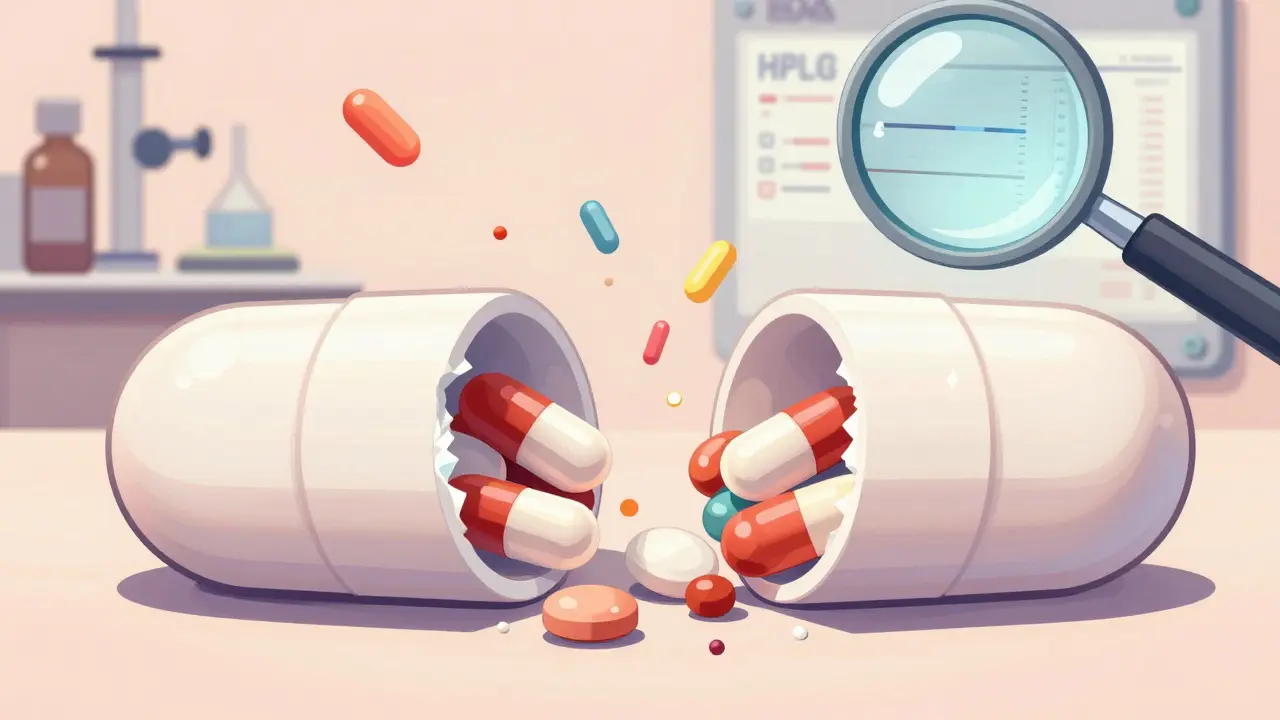
When you pick up a generic pill at the pharmacy, you might wonder: is this really the same as the brand-name drug your doctor prescribed? The answer isn’t as simple as ‘yes’ or ‘no’-but it’s far more controlled than most people think. At the heart of that question is pharmaceutical equivalence, a strict regulatory standard that ensures generic drugs match their brand-name counterparts in the most critical ways.
What Pharmaceutical Equivalence Actually Means
Pharmaceutical equivalence means two things: the generic drug has the exact same active ingredient as the brand-name version, and it delivers that ingredient in the same amount, in the same form, and by the same route. If your brand-name drug is a 50mg tablet taken by mouth, the generic must be a 50mg tablet taken by mouth-with the same active compound inside. That’s it. No exceptions. This isn’t guesswork. The U.S. Food and Drug Administration (FDA) requires generic manufacturers to prove this through lab testing. They use high-performance liquid chromatography (HPLC) to measure the active ingredient down to the milligram. The amount must be within ±5% of the brand-name drug’s labeled strength. If it’s off by more than that, the FDA rejects the application. This isn’t just a formality-it’s a hard scientific requirement. But here’s what most people don’t realize: the generic drug doesn’t have to look the same. It can be a different color, shape, or size. It can have different fillers, dyes, or coatings. Those are called excipients, and they’re not the active part of the drug. They’re there to help the tablet hold together, dissolve properly, or make it easier to swallow. The FDA allows differences here because they don’t affect how the drug works-unless they do. And sometimes, they can.Pharmaceutical Equivalence Is Just the First Step
Getting approved for pharmaceutical equivalence is only the beginning. It’s the first of three layers the FDA uses to judge whether a generic drug is safe to swap for a brand-name one. The next layer is bioequivalence. This is where things get more complex. Bioequivalence looks at what happens after you swallow the pill. Does the drug get into your bloodstream at the same speed and in the same amount? The FDA requires that the generic drug’s absorption profile falls within 80% to 125% of the brand-name drug’s. That range might sound wide, but it’s based on decades of clinical data showing that within those limits, the body responds the same way. For most drugs, this is enough. But not for all. Drugs with a narrow therapeutic index-like warfarin, lithium, or levothyroxine-are different. A tiny change in how much drug reaches your bloodstream can lead to serious side effects. That’s why the FDA watches these drugs more closely. Even if a generic passes pharmaceutical and bioequivalence tests, doctors and pharmacists often prefer to stick with one brand for patients on these medications. The third layer is therapeutic equivalence. This is the final stamp of approval. If a drug is rated ‘AB’ in the FDA’s Orange Book, it means it’s pharmaceutically equivalent, bioequivalent, and clinically interchangeable. As of June 2024, over 12,800 generic drugs in the U.S. carry that rating. That’s the vast majority. But about 2,500 are rated ‘B’-meaning they either haven’t been proven bioequivalent, or there’s uncertainty about their performance. Those aren’t approved for automatic substitution.Why Excipients Matter More Than You Think
You might think that because the active ingredient is identical, the drug will behave the same in every patient. But excipients can cause real problems-for some people. A 2022 survey in the Journal of the American Pharmacists Association found that 87% of pharmacists had seen at least one patient react to a generic drug’s inactive ingredients. One patient might be allergic to the dye in the tablet. Another might have trouble digesting lactose, which is used as a filler in many pills. A third might get stomach upset from a coating that’s different from what they’re used to. These aren’t rare cases. They’re common enough that pharmacists now ask patients: “Have you ever had a reaction to a generic version of this drug?” If the answer is yes, they’ll check the Orange Book for alternatives or contact the prescriber. The FDA doesn’t require manufacturers to list all excipients on the label in detail, which makes it hard for patients to track. But the American Society of Health-System Pharmacists is pushing for more transparency. In 2024, they called for a public database of excipients in all approved generics. That change is still in progress, but it’s coming.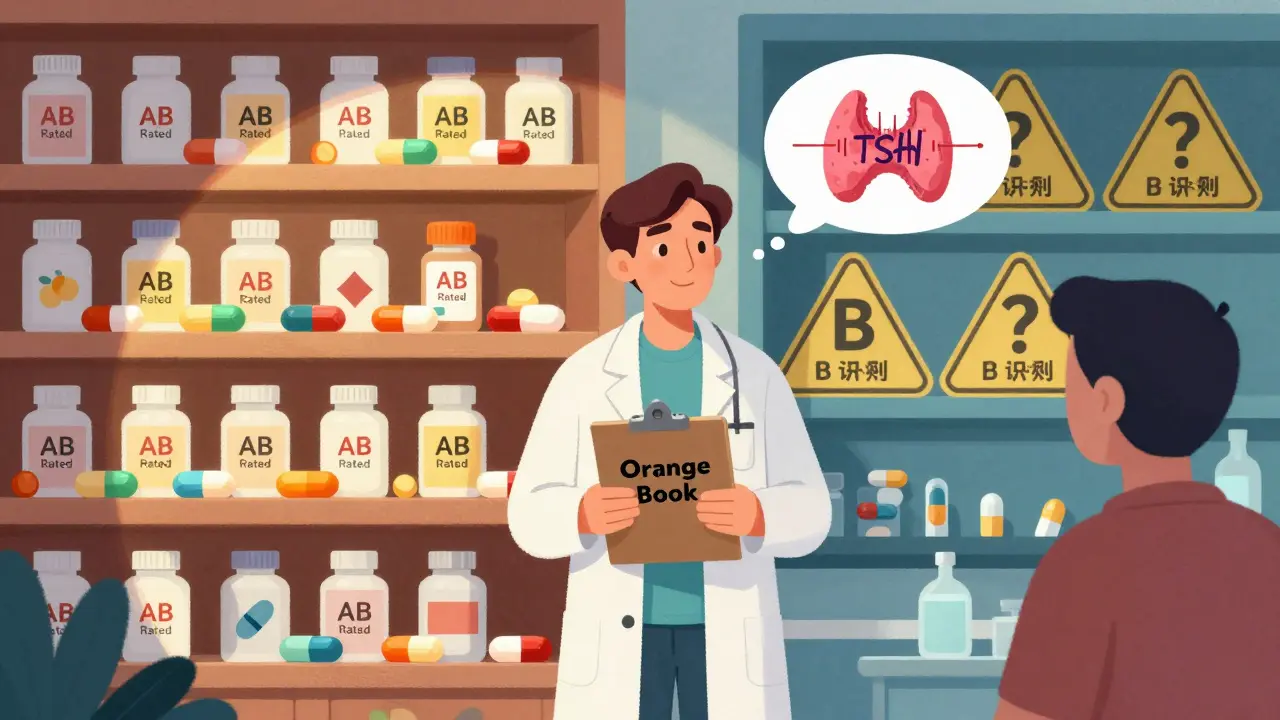
How This Plays Out in Real Life
Let’s say your doctor prescribes a 20mg tablet of atorvastatin (Lipitor). Your pharmacy fills it with a generic version. You take it. Your cholesterol drops. No problems. That’s the ideal scenario-and it happens in over 90% of cases. Now, imagine you’re on levothyroxine for hypothyroidism. You’ve been stable on one brand for years. Your pharmacist switches you to a different generic because it’s cheaper. A few weeks later, you feel tired, gain weight, and your TSH levels spike. Your doctor checks your labs, realizes your dose isn’t working, and switches you back. This isn’t a failure of pharmaceutical equivalence-it’s a reminder that bioequivalence matters more for some drugs. The FDA’s Orange Book helps here. It tells pharmacists which generics are rated ‘AB’ (safe to swap) and which aren’t. In U.S. hospitals, 68% of institutions require pharmacists to verify the rating before substituting a generic. That’s a safety net. But outside hospitals, it’s different. In community pharmacies, automatic substitution is the norm-unless the doctor writes “Dispense as Written” or “Do Not Substitute.” Most patients don’t know that. A 2023 Kaiser Family Foundation survey found that 42% of patients believed generic drugs contain only 80% of the active ingredient. That’s not true. It’s the absorption that can vary by up to 25%, not the amount in the pill.What’s Changing Now?
The FDA is updating its standards for complex drugs-things like inhalers, injectables, and topical creams. These aren’t simple pills. Their delivery systems matter. A generic inhaler might have the same active ingredient, but if the propellant or nozzle design is different, the drug might not reach your lungs the same way. In 2023, the FDA launched a new program called Complex Generic Drug Product Development. It’s requiring manufacturers to use advanced tools like Raman spectroscopy and X-ray diffraction to prove that the physical structure of the drug matches the brand. These aren’t just chemical tests-they’re physical ones. That’s a big shift. Also, the Generic Drug User Fee Amendments (GDUFA III), which took effect in 2022, cut approval times from two years to 18 months. That means more generics hit the market faster. But the FDA isn’t cutting corners. They’re just getting better at reviewing the data.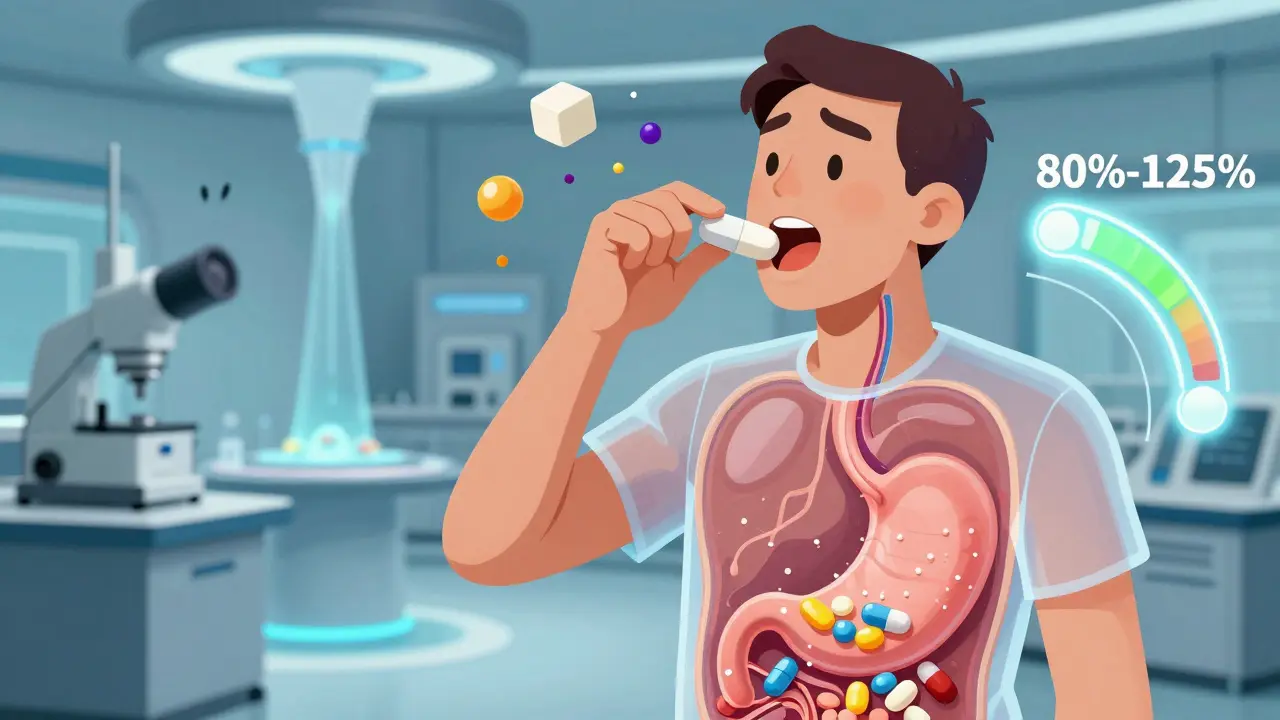
What You Should Know as a Patient
If you’re taking a generic drug and it’s working-no side effects, no changes in how you feel-you’re fine. Don’t switch unless your doctor or pharmacist recommends it. If you’ve had a bad reaction to a generic before, tell your doctor and pharmacist. Keep a note of the brand name and the generic you reacted to. That info can save you from a repeat problem. If you’re on a drug with a narrow therapeutic index-warfarin, digoxin, cyclosporine, levothyroxine, or seizure meds-ask your pharmacist: “Is this generic rated AB in the Orange Book?” If it’s not, ask if you can stay on the brand or a specific generic that’s been stable for you. And if you’re confused about why your pill looks different this time, don’t assume it’s weaker. Ask. Pharmacists are trained to explain pharmaceutical equivalence. They can show you the Orange Book rating. They can tell you if the change is safe.Why This System Works
Since the Hatch-Waxman Act passed in 1984, the U.S. has saved over $2.2 trillion on prescription drugs by using generics. In 2023, the average generic saved patients $1,008 per prescription. That’s not just a number-it’s a person who can afford their insulin, their blood pressure pill, their antidepressant. Pharmaceutical equivalence is the foundation of that savings. It’s what makes generics trustworthy. It’s not perfect, but it’s science-based, tightly regulated, and constantly improving. The goal isn’t to make the cheapest drug possible. It’s to make the safest, most effective generic version of a drug that works just like the original. You don’t need to be a scientist to understand it. You just need to know: if your generic drug is rated AB, it’s been tested to work the same way. And if it’s not? Ask why.Do generic drugs have the same active ingredient as brand-name drugs?
Yes. By law, generic drugs must contain the exact same active pharmaceutical ingredient (API) as the brand-name version, in the same amount and strength. The FDA requires lab testing to confirm this within ±5% of the brand’s labeled amount. The difference lies in the inactive ingredients, not the medicine itself.
Are generic drugs weaker than brand-name drugs?
No. Generic drugs are not weaker. They contain the same amount of active ingredient and are required to be bioequivalent-meaning they deliver that ingredient into your bloodstream at the same rate and to the same extent as the brand. The 80%-125% range used in bioequivalence testing accounts for normal biological variation, not lower potency.
Why do generic pills look different from brand-name ones?
Generic drugs can differ in color, shape, size, and coating because those are inactive ingredients, or excipients. U.S. law allows these differences to avoid trademark infringement. As long as the active ingredient, dosage form, and strength match, the appearance doesn’t affect how the drug works.
Can I switch between different generic brands safely?
For most drugs, yes. If both generics are rated ‘AB’ in the FDA’s Orange Book, they are considered therapeutically equivalent and interchangeable. But for drugs with a narrow therapeutic index-like warfarin or levothyroxine-it’s safer to stick with one brand or generic version to avoid small changes in how your body absorbs the drug.
How do I know if my generic drug is approved and safe?
Check the FDA’s Orange Book online or ask your pharmacist. Look for an ‘AB’ rating, which means the drug is both pharmaceutically and bioequivalent to the brand-name version. If it’s rated ‘B,’ it hasn’t been proven interchangeable and may not be suitable for substitution.
Do excipients in generics cause side effects?
Rarely, but yes. Some people are sensitive to dyes, lactose, or other fillers used in generics. If you notice new side effects after switching to a generic-like stomach upset, rash, or allergic reactions-tell your doctor and pharmacist. They can help identify the cause and switch you to a different version.




13 Comments
OMG I literally had a panic attack last month when my levothyroxine switched generics and I felt like a zombie for two weeks. Turns out the filler had lactose-I’m allergic. My pharmacist didn’t even ask. Don’t assume it’s ‘the same’-it’s not always.
That’s so true! I’ve been on warfarin for 12 years, and I’ve switched generics three times-each time, my INR went haywire. Now I only take the one with the blue tablet, even if it’s $15 more. My life literally depends on consistency. The FDA’s ‘AB’ rating is great-but it doesn’t mean ‘identical’.
It is imperative to note that pharmaceutical equivalence, as defined by the FDA, constitutes a rigorous and scientifically validated benchmark; however, the bioequivalence parameters-specifically the 80% to 125% confidence interval-are, in certain clinical contexts, insufficiently granular to account for inter-individual pharmacokinetic variance. This is particularly salient in the case of narrow therapeutic index agents, wherein even marginal deviations in absorption kinetics may precipitate clinically significant adverse outcomes.
I’ve worked in pharmacy for 18 years. I’ve seen patients break out in rashes from FD&C Yellow No. 5 in generics. I’ve seen diabetics crash because a new generic used a different binder that slowed absorption. We don’t talk about this enough. The system works-mostly. But the human body isn’t a lab. And sometimes, the difference isn’t in the pill-it’s in the person.
Let me tell you something... the pharmaceutical giants control everything. The FDA? A puppet. The generics? They are not the same. The real active ingredient is diluted, and the excipients are laced with microchips to track your compliance. They don’t want you to be healthy-they want you dependent. I switched to herbal supplements after my thyroid went rogue. The truth is buried under regulatory jargon.
My grandma takes 8 pills a day. Half are generics. She’s 84, sharp as a tack, and still gardens. If it works, it works. Don’t overthink it unless you feel something off. Then ask. Simple.
It’s fascinating how we’ve built a system that saves billions while still requiring patients to be their own advocates. The burden of tracking excipients, checking the Orange Book, and remembering which generic caused that rash shouldn’t fall on the individual. Transparency isn’t a perk-it’s a right. And we’re not there yet.
Wait, wait, wait-so you’re telling me I can’t trust my generic blood pressure pill? But I’ve been taking it for years! And now you say the dye might be the problem? I’m confused. Can I just… not take it? I’m not a scientist. Why is this so complicated?!
Generic? Pfft. In India we call them ‘copy-paste’ pills. They don’t even have the same quality control. Why should Americans trust them? I’ve seen generics that crumble in your hand. This whole system is a joke. You think the FDA cares? They’re paid by Big Pharma. End of story.
So let me get this straight… you’re telling me I could die because my pill is a different shade of blue? And the FDA says it’s fine? This is why I don’t trust medicine. They’re just trying to make money and they don’t care if you’re alive or not. I’m switching to CBD oil. At least I know what’s in it.
Bro I had the same thing happen with my antidepressant. Switched generics and felt like I was underwater for a week. Called my doc, they said ‘it’s the same’ but I knew it wasn’t. I went back to the brand. Worth every penny. Don’t let them gaslight you. Your body knows.
Canada doesn’t have this mess. We have strict equivalence rules, and generics are tested against the original brand in real patients-not just in a lab. The U.S. system is a joke. We don’t let pharmaceutical companies play roulette with people’s lives. Shame on you.
Pharmaceutical equivalence is a linguistic construct designed to mask the ontological discontinuity between the branded and the generic. The molecule may be identical, but the phenomenological experience of ingestion-its ritual, its texture, its symbolic weight-is irrevocably altered. The body does not merely absorb a compound; it interprets a narrative. And when the narrative changes, so does the healing.