
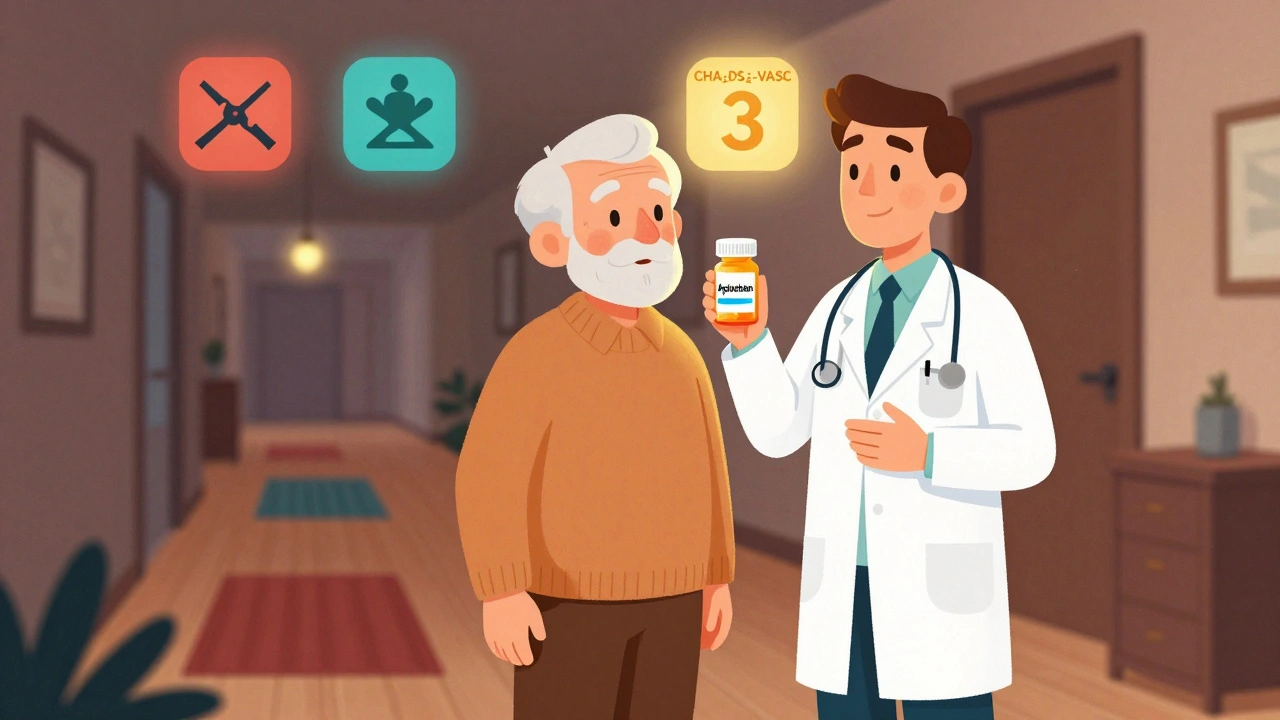
Stroke Risk Calculator for Anticoagulants
This calculator helps you understand your stroke risk based on the CHA2DS2-VASc scoring system. Your score determines whether you should be on anticoagulants (blood thinners) for atrial fibrillation. The article explains why fall risk alone should not stop these life-saving medications.
Many older adults on blood thinners are told to stop taking them because they’re at risk of falling. It sounds logical: if you’re likely to tumble, why risk a brain bleed? But this common practice is wrong-and it’s putting lives at risk. The truth is, fall risk alone should never be a reason to avoid anticoagulants. Stopping these medications because of falls increases your chance of stroke far more than it reduces your risk of bleeding.
Why Stopping Blood Thinners for Falls Is Dangerous
People with atrial fibrillation (AFib) have a 5 times higher risk of stroke than those without it. For someone over 70 with AFib and a CHA2DS2-VASc score of 3 or higher, the annual stroke risk is about 3%. Without anticoagulation, that risk stays high. But if you’re on a direct oral anticoagulant (DOAC) like apixaban or rivaroxaban, your stroke risk drops by 60-70%. Now, what about falls? About 30-40% of adults over 65 fall at least once a year. In nursing homes, that number jumps to over 50%. So yes, falls are common. But the fear that a single fall will cause a deadly brain bleed is exaggerated. Research shows the annual risk of intracranial hemorrhage (ICH) from a fall while on anticoagulants is only 0.2-0.5%. That’s less than one in 200 people per year. Here’s the math: to make the risk of bleeding from falls worse than the benefit of stroke prevention, a person would need to fall nearly 300 times in one year. That’s more than once a day. No one falls that often-even in frail, high-risk populations. The American College of Physicians, the American Heart Association, and the European Society of Geriatric Medicine all agree: fall risk is not a reason to withhold anticoagulation. Yet, surveys show nearly half of primary care doctors still avoid prescribing blood thinners because of falls. That’s not just outdated-it’s harmful.Which Blood Thinners Are Safest for Fall Risk?
Not all anticoagulants are the same. Warfarin has been around for decades, but it’s harder to manage. It needs frequent blood tests (INR checks), interacts with food and other meds, and carries a higher risk of brain bleeds. Direct oral anticoagulants (DOACs)-like apixaban, rivaroxaban, dabigatran, and edoxaban-are now the first choice for most people with AFib. Why? Because they reduce the risk of intracranial hemorrhage by 30-50% compared to warfarin. They also don’t require regular blood monitoring and have fewer food interactions. For someone with a history of falls, DOACs are the clear winner. Apixaban, in particular, has shown the lowest rate of major bleeding in real-world studies. It’s often the go-to choice for older adults with multiple fall risk factors. The only exceptions? DOACs aren’t recommended if kidney function is severely impaired (creatinine clearance below 15-30 mL/min, depending on the drug). In those cases, warfarin may still be used-but only with careful monitoring.How to Assess Fall Risk the Right Way
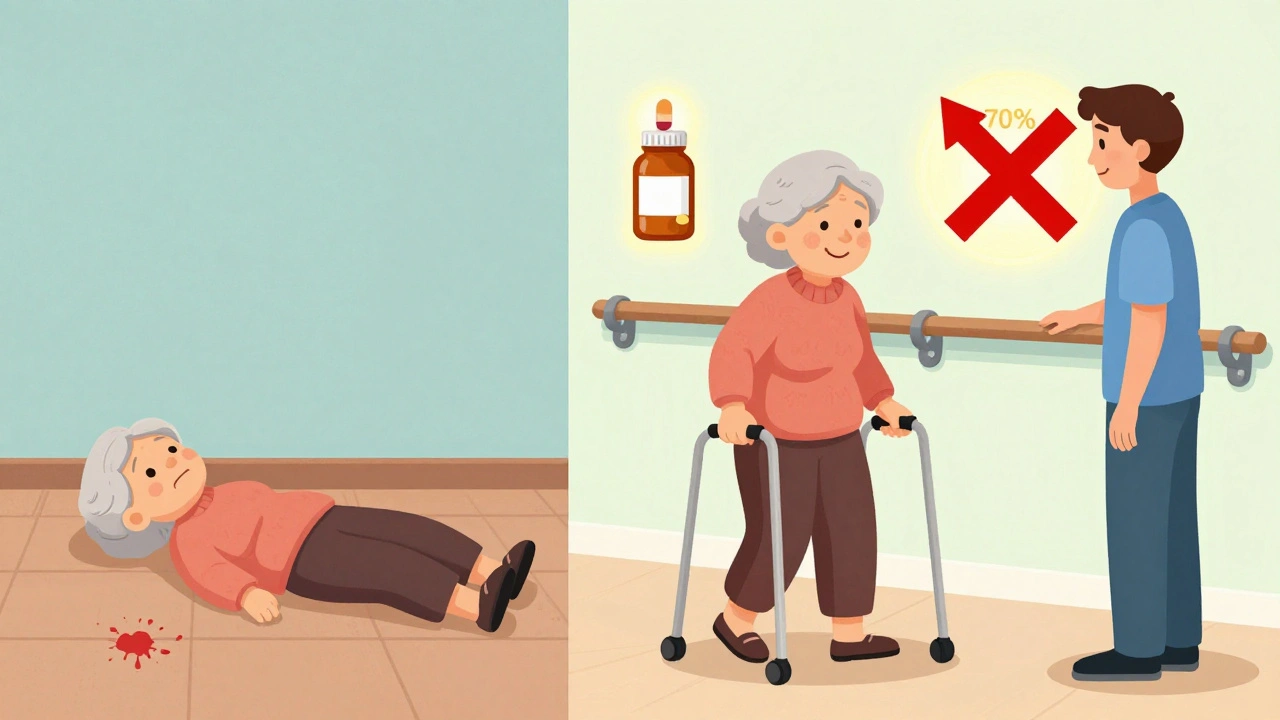
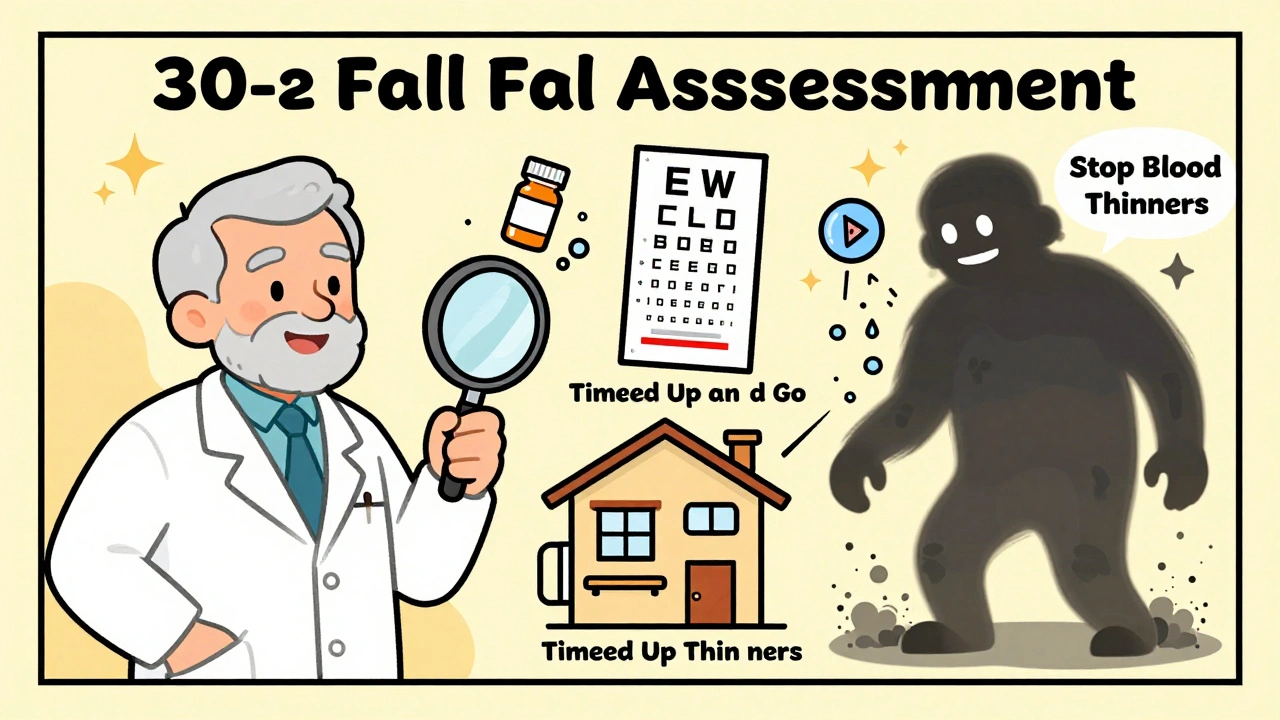
You don’t stop anticoagulation because someone might fall. You help them fall less. A proper fall risk assessment isn’t a quick check. It’s a full review that takes 30-60 minutes. Here’s what it includes:- Medication review: Sedatives, sleep aids, blood pressure pills, and antidepressants can make you dizzy. Some can be reduced or stopped entirely.
- Gait and balance testing: The Timed Up and Go test measures how long it takes someone to stand from a chair, walk 3 meters, turn, walk back, and sit down. If it takes more than 12 seconds, fall risk is high.
- Vision check: Cataracts, glaucoma, or outdated glasses can make stairs and steps dangerous.
- Home safety evaluation: Loose rugs, poor lighting, cluttered hallways, and no grab bars in the bathroom are major hazards.
- Orthostatic blood pressure: A drop in blood pressure when standing up can cause fainting. This is common in older adults on blood pressure meds.
What NOT to Do: Common Myths and Mistakes
There are several dangerous myths floating around clinics and nursing homes:- Myth: Lowering the DOAC dose reduces bleeding risk. False. Cutting the dose of apixaban or rivaroxaban doesn’t make bleeding less likely-it just makes stroke more likely. The FDA-approved doses are based on years of data. Don’t guess.
- Myth: INR should be kept below 2.0 in fallers on warfarin. No. Keeping INR too low (below 2.0) increases stroke risk without lowering bleeding risk. The target is 2.0-3.0, period.
- Myth: If someone fell last week, stop the blood thinner. One fall doesn’t mean you’re doomed. It means you need a fall prevention plan. Stopping anticoagulation after one fall is like stopping your seatbelt after a minor fender bender.
When Anticoagulation Might Not Be Right
There are real exceptions. Anticoagulation should be avoided if:- There’s active, uncontrolled bleeding (like a stomach ulcer or recent brain bleed)
- The patient has a known bleeding disorder (like hemophilia)
- Blood pressure is dangerously high (systolic over 180 mmHg) and can’t be stabilized
How to Get Started: A Simple Action Plan
If you or a loved one is on a blood thinner and worried about falls, here’s what to do next:- Ask your doctor for your CHA2DS2-VASc score. If it’s 2 or higher (men) or 3 or higher (women), you’re at moderate to high stroke risk-and you should be on a blood thinner.
- Ask if you’re on a DOAC. If you’re still on warfarin, ask if switching would be safer.
- Request a full fall risk assessment. Don’t settle for a yes/no answer. Ask for the Timed Up and Go test, vision check, and home safety review.
- Review all medications with your pharmacist. Can anything be stopped or reduced?
- Install grab bars, remove rugs, and get better lighting. These are low-cost, high-impact changes.
Real Stories: What Works
Mr. H, 78, had a CHA2DS2-VASc score of 3. He fell once after a dizzy spell and decided to stop his blood thinner. He ended up having a stroke six months later. Mrs. L, 82, also had a score of 3. She fell twice in a year. Instead of stopping her apixaban, her care team reviewed her meds, found she was on a sedative that wasn’t needed, adjusted her blood pressure pill, installed grab bars, and started her on physical therapy. She didn’t fall again for over a year-and she’s still on her blood thinner. The difference? One person gave up. The other got help.What’s Changing in 2025?
New guidelines are coming. The 2025 JACC review will look at how DOACs perform in the very elderly-those over 85. Early data shows they’re even more beneficial than we thought. Hospitals and insurers are also changing. Medicare now penalizes facilities that under-treat AFib with anticoagulants. Insurance companies are pushing DOACs as first-line therapy. The message is clear: fall risk isn’t a barrier to anticoagulation. It’s a signal to act-on prevention, not withdrawal.Should I stop my blood thinner if I fall?
No. One fall doesn’t mean you should stop your blood thinner. The risk of stroke from stopping far outweighs the small chance of a serious bleed from a fall. Instead of stopping, get a fall risk assessment to prevent future falls.
Are DOACs safer than warfarin for people who fall?
Yes. DOACs like apixaban and rivaroxaban reduce the risk of brain bleeds by 30-50% compared to warfarin. They also don’t require frequent blood tests and have fewer interactions with food and other drugs. For fall-risk patients, DOACs are the preferred choice.
Can I lower my DOAC dose to reduce bleeding risk?
No. Reducing the dose of a DOAC doesn’t lower bleeding risk-it increases your chance of stroke. DOAC doses are carefully studied and approved based on age, weight, and kidney function. Only change your dose if your doctor tells you to.
What’s the CHA2DS2-VASc score and why does it matter?
It’s a scoring system that estimates your risk of stroke if you have atrial fibrillation. Points are added for things like age, high blood pressure, diabetes, and past stroke. A score of 2 or higher in men (or 3 or higher in women) means you’re at moderate to high risk-and should be on a blood thinner, even if you fall.
How can I reduce my fall risk without stopping my medication?
Start with a fall risk assessment: review your meds, check your vision, test your balance with the Timed Up and Go test, and make your home safer. Remove rugs, add grab bars, improve lighting, and get physical therapy if needed. These steps cut fall rates by 20-30% and let you stay safely on your blood thinner.




11 Comments
One woman, 84, had been off apixaban for 18 months after a minor slip. She couldn’t walk to the mailbox without help. We restarted her, did a home safety audit, removed three rugs, got her new glasses, and cut her sleep med. She’s now walking her dog daily. No falls in 14 months.
Doctors aren’t evil. They’re overwhelmed. But this isn’t rocket science. It’s basic risk-benefit calculus. The fear of bleeding is real. But the fear of stroke is deadlier.